
Hojicha cream can lift a drink or dessert, yet a topping that collapses, bleeds into a latte or buries the tea under sugar will slow service and disappoint customers. Cafés and bakeries need to test powder dispersion, piping shape and portion cost in the finished menu item. Ratios are trial choices, not validated shelf-life or handling instructions.
1. What should hojicha cream contribute to a product?
Product brief
The Yu Tea hojicha whipped cream recipe pairs powder with cream for drinks and desserts. At a café counter, the topping also needs a defined deposit weight, pipeable height and roasted aroma that remains clear in the complete item. Judge those traits after assembly, since a good spoonful of cream can disappear on a sweet latte or weigh down a small cake.
A topping earns menu space when its aroma remains clear in the complete product. Write down whether roasted tea should be noticed before the first sip or emerge after the drink is stirred. For a cake, decide whether cream supplies the tea character or supports a tea sponge. Compare a plain cream control at identical portion weight. A strongly flavored spoonful may become faint on a sweet iced latte, and a large piped swirl can make a small dessert heavy. Photograph accepted shape, but judge taste and portion together. The target should name the finished item and price so sensory success has a practical meaning for the outlet. For a beverage, the accepted swirl should allow the cup lid to fit without crushing the topping or leaving an unpredictable amount of cream behind.
2. Which cream application should lead the trial?
Format decision
A drink topper has contact with warm or iced liquid. A cake filling carries layer weight. A plated dessert garnish may sit briefly before service. Select one application because each stresses foam differently.
Test a cup topper on both the cold or warm drink it will actually crown. Watch its surface after a realistic serving interval; melting and dilution change the consumer experience. For cake filling, pipe a defined mass between layers and check whether the structure carries the next layer without squeezing outward. A plated rosette faces less weight but may wait under service lights. These are different designs. Choose one lead use and write a separate acceptance check for any extension. If the outlet wants a single cream across drinks and pastry, test the same batch in both before accepting the convenience claim. If the same cream is proposed for pastry and drinks, run two separate deposit-weight checks; the visually similar rosette may weigh differently on each item.
| Use | Stress | Proof |
|---|---|---|
| Cold drink | Contact with ice and liquid | Shape after serving |
| Warm drink | Heat contact | Service trial |
| Cake filling | Layer weight | Assembly trial |
3. What tea powder and cream base should be selected?
Ingredient choice
Plain fine hojicha powder should be evaluated in the selected dairy or plant cream. Cream fat, sugar and stabilizers can change tea perception. Request lot identity and complete ingredient documents.
Ask the supplier for plain tea powder with a lot code and particle information. Compare samples in the exact cream base, since fat can soften roast notes while added sugar can mask them. Check powder dispersion before whipping: visible dry flecks can persist in a piped rosette and taste gritty. If a plant cream is used, request its complete ingredient and allergen statement as well. Keep the base composition fixed while comparing tea lots. Do not approve a powder only because it smells attractive from the bag; taste a finished topping and keep a reference sample under the kitchen’s quality procedure. Powder absorbed during a short rest may change color and flavor, so compare freshly mixed and service-ready samples under the site’s permitted handling plan.
4. How should tea dose and sweetness be screened?
Controlled formula trial
Compare a plain cream control and three tea levels while holding base cream, added sugar and whipping method steady. Weigh powder and finished topping by grams, not spoonfuls.
For the initial screen, make one plain cream and three tea levels in equal-weight base portions. Keep cream temperature, mixer, sugar and whipping endpoint as consistent as the kitchen can measure. Record added tea as grams per kilogram of starting base, then weigh finished yield. The matrix should reveal whether aroma improves before texture suffers. If a higher dose creates visible specks, do not hide the defect under extra sugar. Choose a promising tea level first, then run a separate sweetness or stabilizer test. A small bench ratio is a trial setting, not a commercial hold limit or validated recipe. Label every trial bowl with powder lot and start mass; a small amount left on the whisk can distort the apparent yield of a low-volume batch.
| Sample | Tea level | Fixed condition |
|---|---|---|
| Control | None | Chosen cream base |
| A | Low | Same sugar and mixer |
| B | Medium | Same sugar and mixer |
| C | High | Same sugar and mixer |
5. How can whipping and piping be made repeatable?
Production method
Whipping endpoint, powder addition order and holding method alter piping performance. Record visual peak state and finished yield on the actual mixer used by staff.
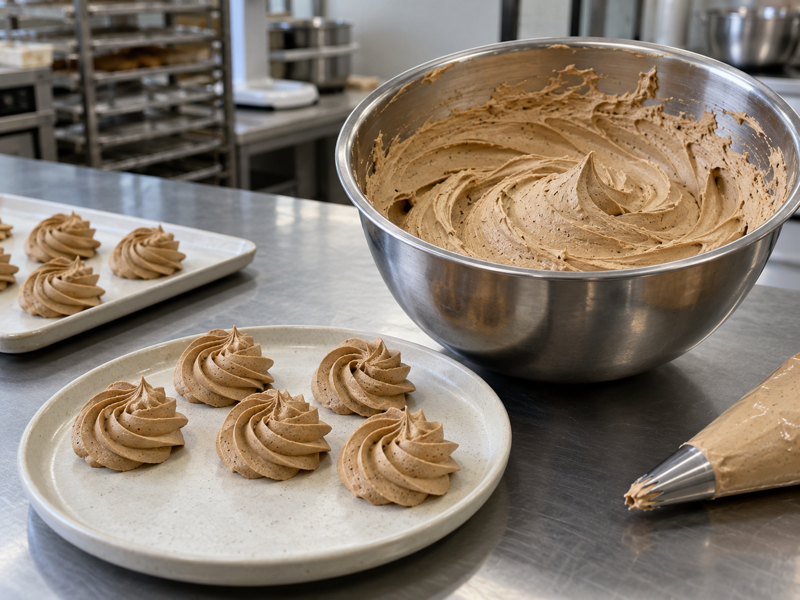
Pre-disperse tea using a method compatible with the chosen cream and line. Direct powder addition, a small cream slurry and a premixed dry blend can behave differently; test rather than assume. Record mixer speed, bowl load and an observable peak state. Stop before a rosette becomes coarse or grainy. Weigh cream in the piping bag and the residue left after service to understand yield. Train a second operator with photographs of accepted peaks and deposit size. If their output differs, revise the station method before ordering more powder. Do not borrow a household recipe’s minute count as a professional control. Piping-bag tip size affects rosette shape, so hold it constant during tea-dose tests and document any later change as a service-method revision.
6. What should a panel judge in a finished topping?
Sensory review
Taste a measured rosette alone, then on the intended drink or cake. Score roasted-tea recognition, sweetness, mouthfeel, shape retention and any grainy finish.
Give panelists identical portions on the actual product and ask them to describe roasted aroma, sweetness and finish. For drinks, score whether the cream can be enjoyed with the liquid rather than floating as an isolated dessert. For cake, sample a full forkful with sponge or filling. Record mouthfeel after the cream warms slightly; a powdery sensation may appear later than the first taste. Compare the tea topping against plain whipped cream at the proposed menu price. Ask which version they would reorder and why. A beautiful swirl that covers an already good drink needs a clear sensory or commercial reason to remain. A panel should taste one bite that includes the base dessert or drink; cream eaten alone can flatter roast aroma more than the sold item does.
| Attribute | Record | Decision |
|---|---|---|
| Roasted aroma | Description in full item | Detectable |
| Shape | Height photo | Meets station standard |
| Texture | Grain or weeping | Acceptable bite |
| Portion | Dispensed mass | Cost and consistency |
7. Why does hojicha cream weep or lose shape?
Defect analysis
Loss of shape may come from overwhipping, insufficient structure, warm equipment or excessive powder. Weeping after contact with a drink is a different problem from a weak rosette on a dry plate.
If the cream weeps in the bowl, examine base formulation, whipping endpoint and holding conditions under the site process. If it melts immediately on a hot drink, the contact environment may be outside its workable range. If piping is uneven, check particle pockets, mixer batch size and bag temperature. A rough texture might result from overwhipping rather than tea grind. Use a plain cream control and make one targeted change. Photograph the defect at the moment it occurs and record batch, operator and tea lot. A complaint after thirty minutes in service is not the same as a problem seen at the mixer. Defect photographs should show both a fresh rosette and the same application after the planned service interval, with the time recorded.
8. Which chilled handling and allergen checks apply?
Food safety and labeling
Dairy is an obvious allergen, while plant creams can contain soy or nuts. A commercial topping needs validated chilled preparation, utensil hygiene and product-specific use rules.
The FDA food-allergen guidance identifies major U.S. allergens, including milk and soy. Use full declarations for tea, cream, flavorings and the product being topped; shared piping tools can create cross-contact. A dairy-free claim needs an equipment and ingredient review, not simply a plant cream. A safe hold duration, refrigeration limit and microbiological specification require site-specific validation. Qualified food-safety staff must set the actual preparation, service and discard rules for the outlet. A cream used inside a retail cake needs separate final-product validation. Keep lot codes and formula revisions in the pilot record. For retail pastry, check whether the topping touches a lid or wrap, since that contact can damage shape even when the foam itself remains stable.
| File | Purpose | Owner |
|---|---|---|
| Cream and tea lots | Traceability | Quality |
| Allergen matrix | Menu and label | Regulatory |
| Chilled handling method | Safe service | Food safety |
| Application test | Product fit | Development |
9. How should a café cost each topping portion?
Unit economics
Tea costs only one part of a topping. Include cream, sugar, piping-bag loss, staff time and the actual grams deposited on each item. Variation can erase a planned margin.
Calculate cost per deposit from actual cream mass dispensed, not a theoretical spoonful. Include powder, cream, sweetener, stabilizer if used, disposable bags, labor and residue left in the bag. A large swirl can use enough cream to change beverage margin even when tea dose is small. Weigh several service portions across staff and compare them with the station card. A supplier quote should state pack size and traceability so future lots match the approved aroma. Price a topping option against the plain drink or pastry; assess whether customers choose it at the incremental price during a small paid pilot. If portion weights vary widely, adjust piping tools or training before assuming a cheaper tea powder will solve the menu-margin problem.
| Line | Input | Check |
|---|---|---|
| Cream | Measured grams | Portion drift |
| Hojicha | Actual dose | Aroma value |
| Waste | Bag residue | Yield |
| Labor | Piping time | Busy-shift fit |
For a paid pilot, weigh the first and last topping portion from each prepared piping bag. Compare both with the station target and record any leftover cream. This simple check shows whether the accepted cost still holds during a busy shift.
10. What should be signed off before menu rollout?
Five buyer FAQs
Approve the chosen topping in its intended service setting with ordinary staff. A second tea lot and a busy-shift trial test whether the standard can survive rollout.
Keep the approved powder lot profile, cream-base formula, mixing sequence, accepted peak photograph and portion weight together. A normal busy shift is a stronger test than a careful development session. Observe shape, taste and waste on drinks or desserts actually sold. Repeat with a second traceable tea lot before a chain-wide order. If the cream moves from beverage topping to cake filling, repeat the application trial and labeling review. Ask Matcha Village for powder matched to the chosen base and target roasted note, and provide the intended service channel when requesting a sample. The rollout sheet should identify who prepares, portions and discards the cream at each outlet so ownership of the process is unambiguous.
Q1: Can powder be folded into ready whipped cream?
It can be tested, but check dispersion and texture against other addition methods.
Q2: Will the same cream work on hot and iced drinks?
Only if both service environments pass separate tests.
Q3: Can plant cream be called allergen free?
No. Review its ingredients and shared equipment for the target market.
Q4: How long may the topping be held?
Use the site’s validated chilled handling and discard rules; a universal duration would be unreliable.
Q5: What should a supplier sample include?
Request a plain powder specification, lot ID and enough material for repeat topping trials.