
A hojicha chiffon cake has little margin for careless powder addition: a batter that loses foam may still smell of roasted tea but bake into a short, dense ring. Commercial trials should connect powder choice and meringue handling to the height, crumb and sellable slice yield. Bench ranges are starting points only; validated baking, labeling and product life belong to the bakery.
1. What defines a successful hojicha chiffon cake?
Product brief
The Yamasan hojicha chiffon cake recipe combines tea powder with an egg-foam sponge. For a bakery, the target is a ring that keeps both its roasted aroma and its height after cooling. A brown surface alone is weak evidence: cut the ring and inspect the lower crumb for compression before approving a tea dose.
A chiffon brief should specify a tall, even ring with springy crumb and an aroma that remains perceptible after cooling. Compare an unchanged plain chiffon beside tea versions at the same slice mass. Ask a panel to taste interior crumb rather than relying on the browned outer surface. Record height at four positions, because one proud section can hide collapse elsewhere. The tea color should be even, without dark powder pockets. Decide whether the cake is sold plain or with cream; a sweet topping can conceal roasted tea. The approved target should describe the finished bite a customer buys, not the batter’s aroma in the mixing bowl. Use a recorded cut face from the accepted ring as a training reference, because a dense lower band can be missed when only the top is photographed.
2. Which chiffon format should a bakery sell?
Format decision
A whole ring, individually wrapped slice and café plate each stress the cake differently. Slice packaging exposes fragile edges; a whole ring is easier to display but harder to portion consistently at different stores.
If the bakery sells whole rings, handling tests should include unmolding and transfer to display boards. Individual slices require repeatable cuts, clean wrapping and edges that do not shed crumbs. A plated café slice may carry fruit or cream, but that changes the flavor brief and labor cost. Choose the lead format before revising tea dosage. Document target slice angle, mass and presentation temperature. A small domestic tube pan cannot stand in for the bakery’s production molds. Pilot the actual mold material, fill level and oven loading, then use the resulting sellable yield in the channel decision. A separately topped café slice may command a higher price, but calculate topping labor and taste the assembled portion before comparing it with the plain ring.
| Format | Stress point | Evidence |
|---|---|---|
| Whole ring | Unmolding and transfer | Damage rate |
| Wrapped slice | Fragile cut edge | Dispatch trial |
| Café plate | Topping and service | Full-slice tasting |
3. What powder properties matter in an aerated sponge?
Ingredient choice
Fine powder reduces visible clumps, yet it can still weigh on foam. Compare candidate lots in the full batter and after baking. Dry aroma alone cannot predict what remains after heat and cooling.
Ask for plain roasted tea powder with lot traceability, grind information and a current ingredient declaration. Sift it with the flour portion using the bakery’s actual screen, then inspect any retained particles. Candidate powders may differ in color and roasted flavor even when both are called hojicha. Bake them in the same base and taste after full cooling. A very dark roast could deepen crust bitterness before improving the interior aroma. Keep a reference crumb and a sealed powder sample. Purchasing should approve performance across more than one lot, since a minor color shift is particularly visible in an airy sponge. If powder color varies by lot, decide how much crumb-tone variation the brand can accept under the actual display lighting used in stores.
4. How should tea levels be compared in the batter?
Controlled formula trial
Use one established chiffon base and replace a defined share of flour with tea powder across three levels. Keep egg quantity, pan dimensions and mixer settings unchanged for the initial screen.
Weigh tea relative to the combined flour-and-tea dry portion, and keep total dry mass comparable in the initial screen. Prepare a no-tea control plus low, medium and high levels. Deposit equal batter mass into identical molds immediately after folding. Record batter specific gravity if the bakery has a reliable method; it can signal lost air before baking. After cooling, compare height, mass and crumb texture. If higher tea lowers rise, do not immediately add more leavening. Run a separate process test to learn whether powder dispersion, folding or changed solids caused the difference. All levels are experimental, not a released formula. The initial comparison should also record the weight of each fully cooled ring, since equal batter deposit does not guarantee equal bake loss.
| Version | Tea change | Constant |
|---|---|---|
| Control | No tea | Known chiffon base |
| A | Low tea replacement | Same pan and batter mass |
| B | Medium replacement | Same pan and batter mass |
| C | High replacement | Same pan and batter mass |
5. Which meringue and folding controls should be recorded?
Production method
Meringue stage, folding strokes and batter deposit affect rise. Record observable foam state rather than relying only on minutes. A larger mixer and pan load can change how quickly batter loses air.
Make meringue to a defined visual endpoint and log mixer speed, bowl size, batch load and temperature. When incorporating yolk mixture and dry ingredients, use a repeatable fold method that distributes tea without knocking out excessive air. Batter waiting in a queue may behave differently from batter deposited at once; record elapsed time for each pan. Oven loading and airflow can create asymmetric rise. Cooling and unmolding should follow the bakery’s qualified method, and the cake should be inspected only after it reaches the intended handling state. Train a second baker with photographs of acceptable foam and batter so the method is less dependent on one person. A pan that waits while other batter is mixed can reveal foam decay; compare its finished height against the earliest pan in the same batch.
6. How should rise, crumb and aroma be scored?
Sensory review
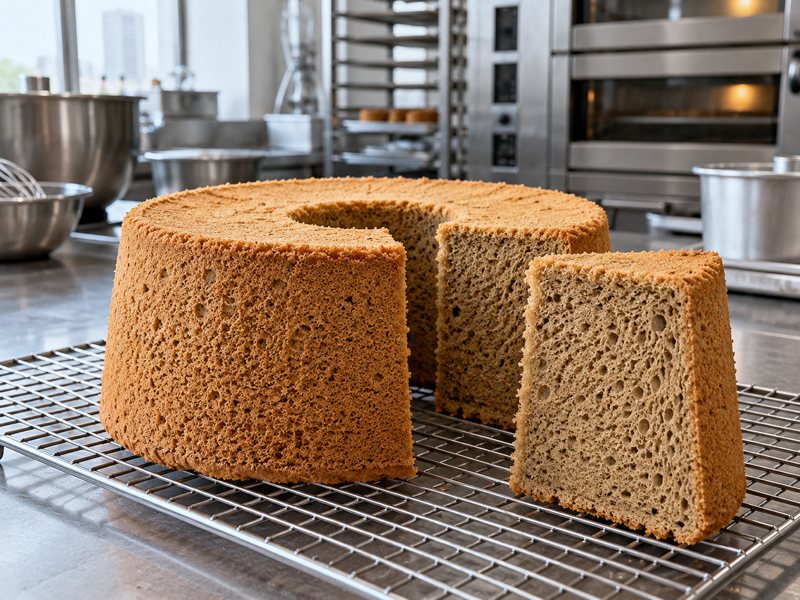
Measure cake height at several positions after cooling. Taste plain sponge, then the proposed plated or packed slice. Check whether roast notes survive without reading as scorched crust.
Sample slices from top, middle and base of a ring and note where tea flavor is strongest. Ask a blind panel to score springiness, dryness, roasted aroma, sweetness and any burnt finish. Photograph cut faces against a consistent background; a fine, even cell structure should be an observable standard rather than a vague promise of fluffiness. Taste again after the intended pack or display interval, without turning that observation into a shelf-life claim. Compare against the plain control at the proposed price. A slightly denser cake may still be acceptable if consumers prefer its tea flavor, but the trade-off should be documented before release. A trained panel can note whether tea appears in the crumb before the crust, which helps distinguish genuine flavor delivery from surface browning.
| Check | Record | Why |
|---|---|---|
| Height | Four positions | Find collapse |
| Crumb | Cell and spring notes | Judge foam quality |
| Tea flavor | Blind description | Check named flavor |
| Slice yield | Sellable count | Connect quality and cost |
7. Why does a chiffon cake collapse or taste burnt?
Defect analysis
Collapse may reflect foam strength, folding, oven profile or cooling, while bitterness may come from roast or overbrowning. Map each defect to pan position before changing powder dose.
If a ring collapses, compare the timing and location: collapse immediately after removal points toward a different investigation from gradual shrinkage during cooling. Review meringue endpoint, fold intensity, deposit delay and oven profile using the plain control. A speckled crumb suggests dry powder dispersion. A bitter crust may reflect baking exposure rather than a bad powder lot; taste the protected interior. Change one factor per repeat run and record pan position. Baking a higher tea dose into a weak foam is unlikely to solve a structural defect. A failure map saves product developers from changing the formula for what is actually a process problem. When collapse appears only on one side of the oven, repeat with rotated pan positions before changing the egg or tea ingredients.
8. Which allergen and handling reviews apply?
Food safety and labeling
Egg and wheat are expected in many chiffon bases, and toppings may add milk or nuts. Review the complete line and the exact selling format before making allergen or storage claims.
Keep declarations for eggs, flour, any dairy topping and shared equipment. The FDA allergen resource lists major U.S. allergens; regulatory staff must review the actual destination market. A tea certificate does not cover the whole cake. A cream-filled version needs its own handling and product-life validation, while a plain ring has different risks and quality changes. Do not copy a home recipe’s bake time or cooling period into a plant safety plan. Record tea lot, flour lot and egg ingredients in each pilot batch, then validate the chosen pan, oven and packaging before date coding. If the cake is later filled with whipped cream, add that operation to the food-safety plan and repeat the packed-slice quality study.
| Document | Use | Reviewer |
|---|---|---|
| Tea and egg lots | Traceability | Quality |
| Allergen matrix | Market label | Regulatory |
| Oven and cooling plan | Validated production | Operations |
| Product-life study | Pack/date decision | Quality |
9. How should a bakery cost a sellable slice?
Unit economics
A light cake can look large while yielding few undamaged slices. Count broken edges, trimming and wrapping loss alongside tea cost, labor and pan utilization.
Cost a sellable slice rather than a theoretical ring. Include tea powder, eggs, flour, sugar, pan preparation, oven time, wrapping and rejected pieces. Measure how much height variation forces trimming or produces undersized slices. If a richer tea powder reaches target flavor at a lower dose, calculate the actual dose cost before comparing supplier quotes. Packaging that protects edges may cost more but reduce breakage; test both effects in a normal dispatch trial. Compare the new chiffon with the existing plain cake at its realistic selling price. A larger-looking ring does not guarantee more revenue if portions break or vary in mass. Count pieces lost during unmolding separately from those broken during wrapping so the bakery knows which operation deserves investment.
| Line | Measure | Risk |
|---|---|---|
| Ingredients | Actual formula grams | Dose creep |
| Damage | Broken edges | Lost pieces |
| Labor | Unmold and wrap | Service burden |
| Pack | Protection cost | Margin |
10. What proves the chiffon is ready for rollout?
Five buyer FAQs
Lock a height range, crumb photograph, sensory reference and portion weight. Repeat on a normal production day with another tea lot before a multi-store launch.
A release file should hold the final batter formula, tea specification, meringue endpoint images, pan fill, accepted height range, slice standard and market label review. Make the cake with ordinary production staff on a normal oven load. Repeat with another traceable tea lot, then compare the retained crumb and tasting notes. A small customer pilot can record paid slice uptake and breakage at service. If a topping is added after approval, reopen the full-slice sensory and handling checks. Ask Matcha Village for powder samples with the intended roast profile and production volume, and state that the application is an aerated chiffon rather than a dense cake. Give store staff a visual reject example for shrinkage and torn edges, then track whether the agreed standard works during a normal morning service.
Q1: Can hojicha replace all flour?
No general substitution is safe for chiffon structure; use controlled partial screens.
Q2: Should powder enter the meringue?
Test a planned addition point, but protect foam formation and even dispersion.
Q3: Why does the base collapse?
Review foam, folding, deposit delay, oven and cooling conditions against a plain control.
Q4: Can a cream-topped version use the plain cake’s date?
No. Validate the finished topped product and its distribution route.
Q5: What should purchasing specify?
Roast, grind, lot documentation and performance in the approved chiffon base.