
Chocolate chips can make a hojicha cookie easier to sell and harder to distinguish from an ordinary chocolate cookie. The tea can vanish under sugar, browned butter, and dark chocolate. A bakery developing hojicha chocolate chip cookies should test the roast and chip load together, then check the cookie after cooling and packaging. This guide treats flavor, spread, texture, and batch yield as one commercial recipe. It does not offer a universal powder dose; the right amount depends on the tea lot and the bakery’s base dough.
Contents: brief · tea · chocolate · dose · mixing · bake · texture · pack · cost · launch
1. What should the cookie taste like?
Give roasted tea a recognizable role
Start with the bakery’s working chocolate-chip cookie and write what hojicha should add. A useful target could be a toasted-tea aroma on opening, chocolate in the first bite, and a clean roast finish. Another brand may want tea to lead and chocolate to punctuate it. Either goal is possible, but the team needs to choose. Otherwise, tasters may praise the sweetest cookie and call the tea successful even when nobody can identify it.
Ask for a blind description. Serve coded cookies without the name. If testers say “brown sugar chocolate” and never mention roasted tea, the formula has not met a hojicha brief. Keep a plain control cookie from the same dough and compare it at the same temperature. A tea cookie should not rely on a green or brown label to explain its flavor. Write negative notes as well: burnt finish, chalky powder, oily chocolate, or stale aroma. These words make later lot checks more useful than a simple pass/fail vote.
2. Which tea powder survives a cookie bake?
Compare roasts in the finished cookie
A lightly roasted powder can smell pleasant in a jar and fade under butter and sugar. A darker one can persist but bring an ashy edge. Ask a supplier for production-representative samples with a clear ingredient statement and lot code. Bake candidates at equal powder mass in the same dough, then taste them after cooling. If the bakery sells packaged cookies, repeat the comparison the next day. Powder fineness also matters; coarse particles may leave a dry feel that is not obvious in raw dough.
Keep the powder test narrow. Do not alter chip type, sugar, and bake time while comparing tea. If no sample works at the first dose, test a small dose ladder with the better roast. A clean, moderate roast may outperform a dramatic dark sample once the cookie is packed. Keep the approved powder as a reference and request the corresponding specification and lot file. If a later shipment differs, a small bake against that reference can reveal the change before thousands of cookies are mixed.
| Powder question | Check in cookie | Concern |
|---|---|---|
| Roast strength | Tea after cooling | Weak or burnt |
| Grind | Mouthfeel | Sandy finish |
| Batch consistency | Early and late trays | Uneven flavor |
| Lot trace | Pack and COA | Unknown source |
3. How much chocolate can the tea carry?
Test chip load before changing tea dose
Chocolate type, piece size, and inclusion rate can all shift the balance. A large dark chunk may dominate a small cookie; a lighter chip may make the dough taste sweeter. Make a controlled chocolate ladder with the same tea dough. Count chips by weight rather than a scoop volume, and keep piece size consistent. Taste a bite with chocolate and one without. The cookie should still have a reason to be called hojicha when a chip is absent.
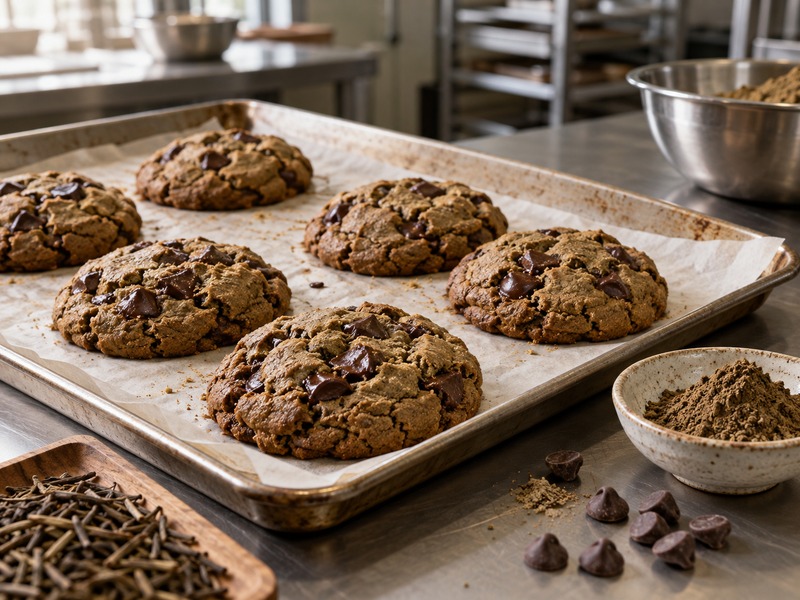
Use the final chocolate. A development kitchen may have a premium couverture that the production line cannot source at the planned price. Test the commercially available inclusion from the start. If the brand wants a visible tea dough, avoid relying on extra powder simply to darken it. The photograph should reflect the regular piece, not a chip-heavy hero cookie. Check whether chocolate melts and stains the pack during transport. A balanced cookie must be both distinctive and serviceable at ordinary temperature.
4. What tea dose belongs in the first trial?
Weigh powder against dough mass
Choose several measured tea levels in one working base dough. Record the dose as a percentage of total dough or flour weight, whichever the bakery uses consistently. Keep sugar, fat, eggs, flour, chip load, portion weight, and bake schedule fixed. A low dose may not survive; a high dose can make the dough dry or bitter. Weighing rather than spooning is important because powder packs differently from batch to batch. Serve equal-size cookies blind after cooling.
Do not chase color alone. More tea may make the dough look convincingly brown while the finish turns harsh. Ask tasters separately about tea recognition, chocolate balance, sweetness, and texture. If tea flavor improves but spread changes, retain the promising dose and adjust one base variable at a time in a second round. For a café, test the cookie with the beverage it will be sold beside. A strong coffee can bury a gentle hojicha note; a plain milk drink may reveal it.
| Trial | Fixed factors | Decision |
|---|---|---|
| Powder dose | Dough and chips | Flavor and spread |
| Chocolate load | Approved tea dose | Tea recognition |
| Roast profile | Equal powder mass | Clean finish |
| Serving drink | Cookie recipe | Menu pairing |
5. When and how should powder be mixed?
Distribute it without overworking dough
Sifting hojicha powder with dry ingredients is a sensible first test, but the bakery’s mixer and dough size determine whether it works. A coarse or clumped powder can leave visible dark pockets. Mixing longer may disperse it but also change gluten development or temperature. Record the dry-mix time, addition order, finished dough appearance, and weight of the first and last portion. Cut a few baked cookies to check distribution.
Look at the end of the bowl. The first tray can be perfect while concentrated powder or chocolate remains near the bottom. If the line deposits cookies over a long interval, compare early and late pieces for spread and tea flavor. A brief rest or chill can be part of a cookie method, but its duration should be tested rather than copied from an unrelated recipe. Dough temperature affects portioning and spread; record it if the bakery already tracks it. The final mixing route must work during a normal shift, not only under careful laboratory attention.
6. How should the cookie be baked?
Control size, load, and endpoint
Roasted tea makes dough darker, so the edge color may be a less reliable doneness cue than in a plain cookie. Use the bakery’s usual measures for finished weight, texture, or endpoint. Compare a standard oven load with a small test tray. Pan position, airflow, and portion size can shift spread and dry the edges. Photograph the cookie after cooling, when its final shape is visible. A dramatic freshly baked center may set into a different texture an hour later.
Sample the awkward tray. Inspect pieces from the middle and edges of the oven, not only the most photogenic one. If tea bitterness appears only in a darker tray, the bake may be too aggressive for that formula. Avoid changing powder dose to solve an oven inconsistency. A cookie intended to be thick and soft needs a different endpoint from a crisp packaged biscuit. Write the target texture in the brief so staff know what a normal piece should feel like before it reaches a customer.
| Bake check | Record | Failure signal |
|---|---|---|
| Portion mass | Before and after bake | Inconsistent size |
| Spread | Diameter after cooling | Flat or uneven |
| Edge texture | First and late trays | Dry bitterness |
| Center texture | At sale time | Raw or hard |
7. What texture should survive the next day?
Judge a cooled, held cookie
A cookie can taste excellent warm but lose its tea aroma after a day in a bag. Check the approved serving point: display case, sealed pack, or takeaway box. Record whether the edge stays crisp or the center remains chewy, according to the intended style. Tea powder adds solids; a large dose may make a cookie feel dry after holding. Chocolate can also change texture as it sets and softens with temperature.
Open a normal pack. Smell before tasting, then try a bite with and without a chocolate chip. If the roast is only noticeable in the warm kitchen, either the powder, formula, or sale window needs work. Do not infer microbiological shelf life from a flavor check. The bakery must validate its own ingredients, pack, and storage. Keep the test at the actual ambient or chilled condition expected in stores, and include a transport trial if cookies are shipped rather than made on site.
8. Which label and allergen details need review?
Describe the whole cookie
The finished cookie may contain wheat, milk, egg, soy from chocolate, sesame, nuts, or other ingredients depending on the exact recipe and line. Do not let a tea supplier’s ingredient statement stand in for the cookie’s finished label. Check the final chocolate specification, substitutions, shared equipment, and market-specific labeling rules with the brand’s qualified team. If the menu calls the product vegan or gluten-free, that claim needs the complete formula and process reviewed.
Plan substitutions before launch. Chocolate supply changes are common, and a new chip can alter both allergen status and flavor balance. Record which changes require a new tasting and label check. A tea lot change may also affect the approved roast reference. Keep a dated formula and ingredient file rather than a casual recipe note. A small café still needs staff to know what is in the cookie, particularly if it is sold beside other tea desserts with different ingredients.
| Change | Review |
|---|---|
| Chocolate brand | Flavor and allergens |
| Tea lot | Roast and texture |
| Flour or fat | Spread and label |
| Pack film | Holding and shelf life |
9. What is the cost of one sellable cookie?
Include portion and reject rates
Cost the weighed dough, tea, chocolate, energy, labor, pack, and the number of cookies that meet the display standard. A formula with many broken or misshapen pieces has a higher real cost than its ingredient sheet suggests. Compare tea candidates by cost per approved cookie, not price per kilogram. A stronger tea may need less powder; it may also require a lower chocolate load to remain clear. Either change affects the margin and the customer’s experience.
Track the end-of-day waste. If a cookie only tastes of hojicha on bake day, it may belong in a small daily batch rather than a long-life retail pouch. That decision changes labor and pack needs. Test a realistic selling day, including slow hours. If the product is sold as a coffee pairing, include the expected attach rate and the service time needed to pack it. Financial approval should follow sensory and safety approval, because pricing a recipe that will later be changed wastes the team’s work.
10. When is the cookie ready for the menu?
Test a normal run without special handling
Give the signed formula to regular staff and ask them to mix, portion, bake, cool, and pack a production-sized batch. Compare early and late pieces. Taste at the planned sale point, count sellable yield, and check the label. Keep a reference cookie photograph and the approved tea lot. If the best result depends on one developer hand-placing every chip, the process is not ready for scale.
Leave a clear receiving rule. When the next powder lot arrives, bake a small comparison against the retained reference. If tea seems weaker, check the lot before increasing the dose across production. A bakery can ask Matcha Village for a roasted powder sample and explain its chip type, intended cookie texture, pack, and holding period. That brief helps select a roast for this cookie rather than a generic drink powder.
| Launch gate | Pass evidence |
|---|---|
| Tea flavor | Recognizable in held cookie |
| Texture | Meets written style |
| Process | Early and late pieces match |
| Label | Current ingredient review |
| Yield | Saleable count supports price |
Final recommendation
Make chocolate share the cookie with roasted tea. Approve the formula after cooling and holding, when customers will eat it, and keep a controlled bake for the next tea lot.
FAQ
Q1: Should hojicha powder replace flour directly?
Treat it as a separate dry ingredient in a measured trial; changing flour and tea together hides the cause of texture changes.
Q2: Which chocolate works best?
The answer depends on the target cookie. Test actual production chocolate at several loads with a fixed tea dough.
Q3: Why do the cookies taste less like tea the next day?
Packaging, roast strength, and competing flavors may all matter. Compare a held cookie with a fresh control.
Q4: Can darker color prove more hojicha flavor?
No. Use a blind tasting and check the finish for harshness.
Q5: What must be on the production card?
Tea item and dose, chip specification, mixing order, portion weight, bake endpoint, pack, and holding standard.