
Chia pudding looks easy to batch overnight, but a café can end up with dry seeds at the bottom, a watery top, and roasted tea that disappears behind sweet milk. Hojicha chia pudding needs a clear mixing and holding method before it becomes a grab-and-go item. This guide focuses on tea dispersion, seed hydration, texture, service, and refrigerated quality. It is for café operators and packaged-food teams, not a claim that any overnight jar is safe to sell for a particular number of days. The final formula and holding time must be validated for the ingredients and channel.
Contents: brief · tea · liquid · hydration · sweetness · texture · toppings · holding · cost · launch
1. What should the finished pudding be?
Set a spoonable texture and recognizable tea note
Define whether the product is breakfast, dessert, or a café snack. A breakfast cup may be less sweet and larger; a dessert jar may need a richer base and topping. Decide whether hojicha should lead or sit behind fruit and grains. Write the desired spoon texture, visual appearance, and served temperature. Chia thickens as it hydrates, so the target is a held jar, not the liquid just after mixing. Ask testers to describe the flavor blind; if they only say “sweet oat milk,” the tea brief has failed.
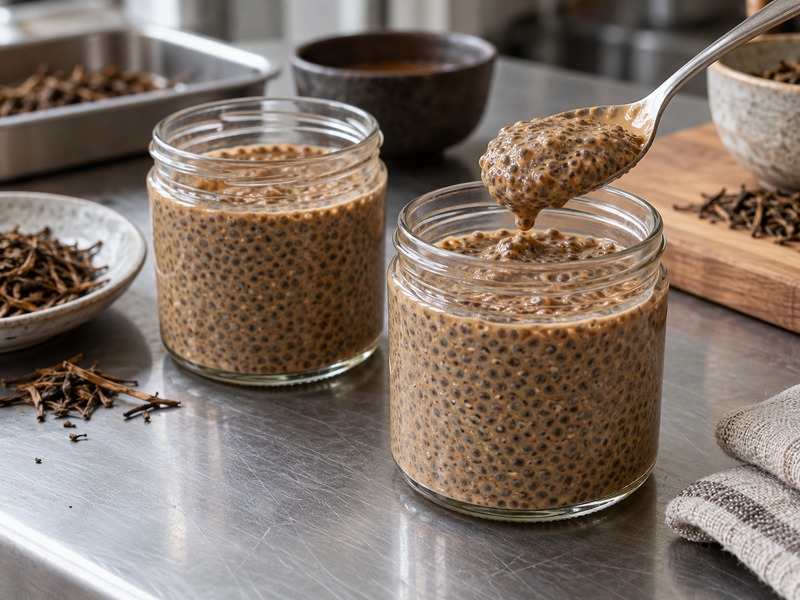
Start with one plain jar. Do not begin with layered fruit, granola, sauce, and whipped topping. These can hide problems with seed hydration and powder dispersion. Make an ungarnished control using the planned milk base, chia, and tea. Taste it at the point a customer will buy it. Keep a non-tea chia control too. The difference should be more than color. A good product description can be plain: roasted tea chia pudding with the actual milk and toppings named. Avoid implying health benefits from tea or chia without a substantiated claim review.
2. Which hojicha form should the team test?
Compare a powder with a brewed concentrate
Powder can bring stronger tea body and color but may add particles that complicate a seed-rich texture. A leaf concentrate can be smoother yet may dilute the base or taste weak once chilled. Test both at equal finished jar weight and comparable tea intensity. Record the tea mass or brew parameters, not only the volume poured. If a sweetened premix is used, its sugar and milk ingredients change the recipe and label, so treat it as a separate formulation.
Taste after hydration. A tea base that tastes assertive before chia rests may seem quiet the next morning. Chilled service also changes aroma perception. Compare samples in the actual serving container and at the intended temperature. A supplier’s powder selected for hot lattes may not be the best one for this cold, textured food. Ask for food-grade samples from production and request the lot file needed for the selling market. Keep the approved roast and mixing method together on the recipe card.
| Tea form | Benefit | Check |
|---|---|---|
| Fine powder | Strong color and body | Grit or clumps |
| Leaf concentrate | Clear liquid | Dilution of pudding |
| Sweetened mix | Fast preparation | Sugar and label |
| Ready tea base | Simple portion | Stability and cost |
3. How should the liquid base be chosen?
Test flavor and allergen implications
Dairy milk, oat drink, soy drink, and coconut-based products each bring their own sweetness, fat, and thickness. A base that works in a latte may separate or feel slimy in chia pudding. Choose one commercial base for the first trial and keep it fixed while testing tea and seed levels. Record its ingredient statement and handling instructions. If the product will be labeled dairy-free or vegan, review the exact base, toppings, processing aids, and shared equipment rather than relying on appearance.
Compare the chilled jar. Coconut can dominate a delicate roast; strongly sweetened oat drink can flatten the tea. Soy may add a bean note. These are possible sensory outcomes, not universal rules, so run a small panel. If a base separates, note whether stirring restores an acceptable texture or merely conceals the problem for a minute. A packaged product should be tested after transport too. The goal is a consistent spoonful from top to bottom, not just a balanced sip of the liquid before chia is added.
4. How can chia hydrate evenly?
Use a documented mixing sequence
Chia seeds clump when dry seeds meet liquid unevenly. A practical trial compares adding seeds to the fully prepared tea base, mixing in stages, and using the actual production vessel. Record seed mass, liquid mass, initial mixing time, any second stir, and the wait before packing. The correct method depends on seed quality, viscosity, and batch size. Do not copy a home-recipe “two tablespoons” rule into a 200-jar production run. Weigh ingredients and check jars filled at the beginning and end of the batch.
Open the bottom jar. Sedimentation can leave late-filled jars with a different seed-to-liquid ratio. Check top, middle, and bottom portions after the planned hydration interval. If one jar is thin while another is stiff, review mixing and filling before changing the recipe. Chia can continue thickening after initial setup; taste at opening, mid-hold, and the end of the approved service window. A product that is perfect after four hours but rubbery the next day may need a different seed level or sales plan.
| Hydration variable | Record | Failure signal |
|---|---|---|
| Seed mass | Grams per jar | Thin or over-set |
| Mixing sequence | Time and tool | Dry clusters |
| Batch hold | Time before fill | Uneven jars |
| Chilled rest | Time before sale | Texture drift |
5. How much sweetness belongs in the base?
Keep tea visible beneath sugar
Hojicha’s toasted character can pair with sugar, honey, or a syrup, but sweetness can also mask it. Choose one sweetener and compare measured levels at a fixed tea and chia ratio. Taste the jar cold, because sweetness and aroma can present differently from a warm bench sample. If the final menu includes fruit, test the base with and without it. A berry layer may contribute acidity and sweetness that makes the original base too sweet or makes tea seem thin.
Write the sugar into the recipe. Do not let staff “sweeten to taste” each batch if the product is sold under one nutrition panel or menu description. A liquid syrup changes total water, while dry sugar must dissolve before seeds create a gel. Sweetener choice also affects labeling and customer claims. A café can offer a less sweet variant, but it should be a separate measured recipe. Keep a blind control without hojicha to see whether customers prefer the tea or simply the sweeter jar.
6. What makes the texture pleasant rather than muddy?
Test the full spoonful
Chia naturally creates a gel around each seed. Roasted tea powder adds fine solids and may make the pudding feel heavy if the liquid base is already thick. Evaluate a spoonful from the top, center, and bottom of the jar. Look for dry seeds, watery pockets, a gritty tea residue, or clumps that survive stirring. If the powder itself is rough, a different grind may help more than a change in seed ratio. If the gel is too dense, review seed and liquid weights before adding more sweetener.
Check the last spoonful. A jar may taste balanced at the top while the bottom contains concentrated powder. Use a clear vessel during development to inspect settling, then confirm in the commercial pack. A topping can add crunch, but it should not be required to hide a poor base. If the product will be eaten with a small disposable spoon, test that utensil. A thick jar that works with a large kitchen spoon may be frustrating in the format customers actually receive.
| Texture issue | Possible source | Trial |
|---|---|---|
| Dry seed clumps | Mixing order | Second timed stir |
| Watery top | Poor hydration or fill | Compare jars |
| Gritty bottom | Tea grind or settling | Powder comparison |
| Over-thick gel | Seed-to-liquid ratio | Measured reduction |
7. Which toppings earn their place?
Protect the tea identity
Fruit, toasted oats, chocolate, sesame, and cream can make a jar more attractive. Each adds labor, allergens, cost, and a new texture change during holding. Start with one topping that supports the roast. Taste plain pudding and the topped version blind. If the tea disappears, reduce topping intensity or revise the base. Keep wet fruit away from crisp elements until service if the product requires a crunch; a prepacked jar may need a separate topping compartment.
Treat layers as ingredients. A fruit compote can bleed color into tea pudding, while granola can soften. Test a normal transport and the full approved hold, not only a freshly arranged jar. Ask whether staff can portion the topping consistently during a rush. A gorgeous prototype that needs careful tweezers is a poor grab-and-go format. Review the complete ingredient and allergen statement after the topping is finalized. Even a small garnish can change a “dairy-free” or “nut-free” message.
8. How should the jar be held and sold?
Separate sensory quality from food safety
Chia pudding is a ready-to-eat moist food made from ingredients that can be perishable. The operator needs validated preparation, refrigeration, sanitation, packaging, and shelf-life procedures for the exact formula. A tea supplier cannot assign a safe life to a finished pudding. Record fill temperature, sealing method, chilled storage, display conditions, and the time jars are out of refrigeration during delivery or service. Qualified food-safety review should set the commercial limits.
Taste the late jar. After safety limits are established, check whether tea flavor, seed texture, topping, and appearance remain saleable through that window. A product can be safe under a validated process yet disappoint customers before the printed date. Recheck if the milk base or topping changes. Put the production date, lot link, and allergen information where staff can identify the correct batch. A café should have a clear discard rule that is easy to follow during a busy shift.
| Holding check | Who owns it | Evidence |
|---|---|---|
| Safe life | Qualified quality team | Validated process |
| Texture | Product team | Held jar tasting |
| Label | Regulatory review | Current ingredients |
| Stock rotation | Store team | Date and lot |
9. What is the cost per sellable jar?
Count labor and unsold stock
Calculate tea, chia, liquid base, sweetener, topping, cup or jar, lid, label, labor, refrigeration, and waste. A dense base can fill fewer jars than expected if staff overportion. Weigh finished units at the first and last fill. If a small jar looks attractive but customers perceive it as poor value, the format may need revision before pricing. A stronger tea can raise ingredient cost while making the product distinct; compare it with the actual customer response and repeat purchase.
Do not price from the ideal batch. Use an ordinary production run and a realistic sales window. A refrigerated item with short demand can generate significant unsold waste. Consider whether made-to-order cups, smaller batches, or prepacked jars fit the channel better. Separate the economics of a plain jar from an elaborate layered dessert. If a supplier quotes bulk tea powder, include the open-pack use rate at the expected jar volume so a low price per kilogram does not become an expired ingredient problem.
10. When is the recipe ready for a café trial?
Approve a repeatable jar from first fill to last sale
Run a pilot with regular staff and the intended mixing vessel, filling method, pack, transport, and refrigeration. Sample jars from the start and end of the batch after the full hydration time. Check tea clarity, texture, portion weight, topping condition, and the product’s validated life. Keep a dated recipe card with powder item code, seed mass, liquid base, sweetener, mixing sequence, fill mass, and discard rule.
Have another shift make it. If the second team cannot reproduce the texture without the developer’s coaching, simplify the process before launch. Keep an approved tea reference and request a new trial if the roast changes. Matcha Village can discuss powder samples for cold dairy or plant-based applications; share the planned jar size, base, sweetness, and holding conditions. The supplier can help choose an ingredient, while the operator retains responsibility for the finished pudding’s process and claims.
| Launch gate | Pass evidence |
|---|---|
| Tea | Roasted note in held jar |
| Texture | Even spoonful throughout |
| Service | Normal staff can repeat |
| Safety | Validated chilled process |
| Economics | Sellable jar cost works |
Final recommendation
Build the tea base and seed hydration as measured steps, then judge the cold jar at the point it will be sold. A topping should support a pudding that already works.
FAQ
Q1: Can hojicha powder go straight into a chia jar?
Test that route against pre-dispersion. Direct addition may leave clumps or settled powder.
Q2: Is brewed tea better than powder?
It can be smoother but may dilute the base. Compare both at the same finished jar weight.
Q3: How long can a café sell the pudding?
Use a validated process and shelf-life decision for the complete formula and packaging.
Q4: Should toppings be packed in the jar?
Only if a holding test shows that texture, appearance, and label remain acceptable.
Q5: What is the best first trial?
Start with an ungarnished jar and vary tea or seed level one factor at a time.