
Commercial bakeries and dessert chains need more than a home recipe for layered hojicha cake. They need a repeatable sensory target, a supplier specification and a process that works in the intended channel. This guide provides a controlled trial route for hojicha cake. All stated quantities are bench starting points; commercial safety, shelf life and labeling require product-specific validation.
1. What makes a hojicha cake taste of tea?
Product brief
The reference pairs vanilla with hojicha. For a bakery, vanilla can support roasted tea, yet sweet frosting can erase it. Test sponge and filling separately before promising a tea-forward cake. The target unit is one finished cake slice. Describe where roasted aroma should appear, which texture matters and how a control without tea should compare. The linked home recipe Vanilla and Hojicha Cake Recipe is useful as application context, not evidence that a commercial formula has been validated.
Set a full-slice target. Ask tasters to take sponge and frosting in the same bite. A plain sponge that smells strongly of roasted tea may still taste like vanilla buttercream once assembled. Decide whether the product should lead with tea or offer tea as a supporting note. Record sponge color after cooling and after a day in the intended display condition; frosting can change how dark the layers appear. Make an unchanged vanilla cake for comparison. If buyers cannot tell which slice carries tea without seeing the menu name, a darker photograph will not solve the flavor problem. Keep this decision separate from sweetness and decoration changes.
2. Which cake format should the bakery choose?
Channel decision
A café slice, celebration cake and wrapped loaf ask different things of the crumb. Choose one format and portion size. A tall layer cake may need more structural strength than a plain loaf. For commercial bakeries and dessert chains, the immediate route is a bakery display slice. A shelf-stable packaged cake requires a separate technical brief. Record buyer questions about portion, pack and intended eating or drinking state before ordering ingredients.
Choose the cake before the pan. A layer cake sold by the slice needs even layers that survive cutting and plating. A whole celebration cake can tolerate a thicker frosting coat, which may demand more tea flavor in the sponge. A wrapped loaf has less cream but more concern about crumb breakage and packaging contact. Pick one lead format and define slice mass, number of layers and planned display state. Then test the same formula on the equipment and pan geometry used for sale. Mixing results from a small round pan may not predict height or edge dryness in a full sheet. Channel choice belongs in the product brief, not after the recipe is approved.
| Decision | Trial choice | Evidence |
|---|---|---|
| Serving format | a bakery display slice | Buyer response at stated price |
| Alternative route | a shelf-stable packaged cake | Separate process validation |
| Portion | one finished cake slice | Weighed yield and consistency |
3. What powder will survive sponge and frosting?
Ingredient specification
Tea fineness affects visible flecks and mouthfeel. Compare powder lots after baking and after adding frosting. A strong tea note in plain sponge may disappear in a sweet assembled slice. The proposed tea ingredient is fine hojicha powder. Judge it after contact with vanilla sponge and cream or buttercream, because that matrix determines perceived flavor and physical behavior. Record differences against the approved lot.
Screen powder in the assembled cake. Ask for a traceable plain hojicha powder with particle information and an ingredient statement. Sift a measured sample through the bakery’s normal screen and inspect retained oversize material. Compare two candidate lots in one sponge formula, then add the same frosting weight to every slice. Note whether a darker powder gives clearer roasted aroma or merely darkens crumbs and flecks. Test the powder in water as a quick identity check, but make the purchase decision from baked cake. Store a reference slice under the site’s quality procedure so a later lot can be compared using the same assembly and tasting method.
4. How should a sponge trial vary tea level?
Trial design
Begin with the bakery’s known sponge, changing only tea replacement level. Weigh batter per pan and note height after cooling. Later tune sugar or vanilla if the chosen tea level remains balanced. Replace a small share of flour with tea powder across three bench levels while keeping pan size, batter mass and bake conditions fixed. Record the purpose of each sample before tasting, then decide which variable to change next.
Separate tea dose from aeration. Weigh batter for each pan, record batter specific gravity if the bakery uses that control, and measure cooled sponge height at several points. Replace a defined share of flour with tea powder in the trial, keeping total dry solids comparable. Make an unmodified control and three coded tea levels. Record moisture perception after cooling, since extra dry powder may change the bite even when height looks acceptable. If the preferred level reduces rise, run a later process test rather than changing sugar, oil and leavening simultaneously. This sequence shows whether tea dose or mixing behavior caused the defect. It also leaves a clear formula trail for production.
| Sample | Change | Constant |
|---|---|---|
| Control | No hojicha | vanilla sponge and cream or buttercream |
| A | Low tea level | Same process and portion |
| B | Medium tea level | Same process and portion |
| C | High tea level | Same process and portion |
5. Which mixing and layering steps need control?
Process method
Mixing order affects tea distribution and sponge aeration. Record batter temperature, mixing duration and oven load. Assemble only after layers have cooled under established site procedures. Disperse powder in the planned dry or wet phase, mix a consistent batter, deposit by weight, bake under the approved program and cool before layering. Watch another operator follow the written sequence and revise unclear instructions.
Protect the foam and the tea. Chiffon-style and creamed cakes use different mixing mechanics, so the station card must name the chosen method. Add tea at a point that distributes it without visible streaks or unnecessary mixing after the batter is aerated. Deposit each pan by weight and log oven position. Cool layers under the bakery’s normal procedure before leveling; cutting warm layers can obscure crumb defects and waste product. For a frosted cake, document filling mass per layer and the time between baking and assembly. A second operator should reproduce height, color and portion weight without guidance. These observations matter more than copying a consumer recipe’s clock time.
6. How should a full slice be tasted?
Sensory evaluation
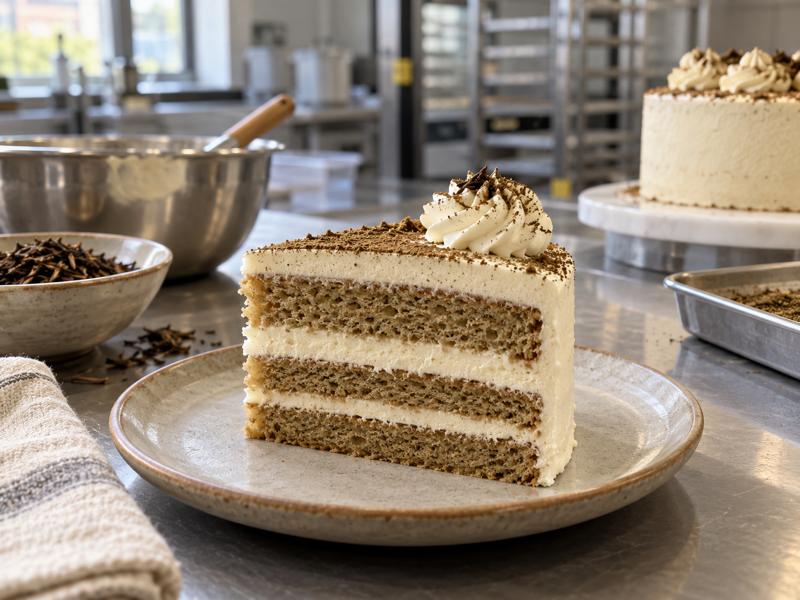
Panelists should taste a complete slice and plain sponge. Compare top, middle and edge portions for moisture and tea strength. A pretty cross-section does not guarantee a pleasant full bite. For this item, score tea aroma, sponge height, crumb color, moistness, layer stability and finish. Taste at the actual serving state rather than relying on an attractive production sample.
Taste the cake people buy. Serve coded slices at the intended temperature, with the planned frosting and any filling. Score roasted aroma before the fork reaches the plate, then flavor, sweetness, crumb moisture and aftertaste in a complete bite. Also taste a plain piece of sponge so a panel can locate a masked tea note. Compare top, center and edge portions from the same bake. A layer that tastes good in the center but crumbles during cutting may hurt retail yield. Ask panelists to choose between the hojicha slice and a vanilla control at the proposed price. A scorecard should capture that choice and the reasons, not only an average liking number.
| Attribute | Record | Decision |
|---|---|---|
| Roasted aroma | 0–5 and description | Recognizable in finished unit |
| Texture | Defect notes | Acceptable at eating state |
| Appearance | Photo and observation | Matches approved reference |
| Price acceptance | Choice at proposed price | Supports a pilot |
7. Why do cakes dry out or hide the tea?
Defect diagnosis
Dryness can result from extra solids or excessive bake. Uneven rise can reflect mixing or leavening. If frosting masks tea, reduce frosting intensity before adding more powder. Look specifically for dry sponge, uneven rise, dark flecks, tea hidden by frosting or crumb breakage. Each symptom should trigger a narrow experiment with an unchanged control.
Trace each cake defect to a step. A dry crumb may reflect flour substitution, overbaking or time exposed during cooling. A dark spot may be undispersed tea rather than a roast characteristic. If frosting hides aroma, prepare a lower-frosting comparison before adding tea powder; extra tea could darken the sponge without improving balance. Uneven rise needs checks on batter weight, aeration and oven position. Photograph the defect beside a ruler or cut guide and record its pan location. Change one condition in the next bake. A trial that changes powder, oven time and cream dose together cannot show which action fixed the problem.
8. What label and handling checks apply?
Food safety and labeling
A cream-filled cake may require chilled handling, while a plain sponge has different risks. Validate the actual format and market label. Do not claim a generic shelf life for both. The format requires review of wheat, milk, eggs, filling hygiene, chilled handling where applicable and validated product life. Verify the actual market and process before approving any claim or date code.
Validate the exact assembled SKU. A plain sponge and a cream-filled layer cake have different handling needs. Keep ingredient declarations for flour, egg, dairy, fillings and toppings alongside the tea lot file. The FDA allergen resource identifies major U.S. allergens; a regulatory reviewer must check the destination market and shared bakery line. A supplier’s tea certificate cannot validate the finished cake. Product-life studies must use the final frosting, pack, temperature route and portion format. Avoid putting a storage date or caffeine statement into marketing copy until the relevant finished-product evidence has been reviewed.
| File | Purpose | Owner |
|---|---|---|
| Formula revision | Links weights and lot codes | R&D |
| Allergen declaration | Market-specific label review | Regulatory |
| Process validation | Supports safe production | Quality |
| Product-life study | Supports final date code | Quality |
9. How should the finished slice be costed?
Unit economics
Cost the finished slice, including frosting, decorating labor and trimming. A slightly more expensive powder can be justified only if sensory value survives the complete cake. The cost model must capture sponge yield, cream use, decoration labor, tea dosage and slice rejects. Use actual sellable yield rather than theoretical batch weight.
Count slices, not theoretical cake weight. Cost the approved formula using actual powder, sponge ingredients, cream, board, box and decorating labor. Record usable slice count after leveling and trimming. A powder that costs slightly more per kilogram may still be a sensible choice if it gives flavor at a lower dose, but that claim needs a controlled comparison. Rejected slices from tearing or uneven height have a direct effect on margin. Compare a decorated product against a simpler version as well as the current vanilla cake. The sales team can then decide whether the extra work and tea cost fit the proposed price, rather than assuming a distinctive ingredient supports any premium.
| Cost line | Input | Question |
|---|---|---|
| Hojicha | Actual use × delivered price | Does the tea level earn its cost? |
| Base and pack | Measured per sellable unit | Are format choices controlled? |
| Loss | Observed pilot rejects | Can the process reduce waste? |
| Supply | Lead time and pack size | Can replenishment match demand? |
10. What proves a cake is ready for a chain?
Five buyer FAQs
Confirm repeatable rise and flavor across two production days. Request traceable powder samples and communicate desired roast strength and crumb appearance to purchasing. The pilot should show that layered hojicha cake remains consistent across operators and a second ingredient lot. Keep final decisions in a signed launch file.
Release one reproducible cake. Keep a signed formula, pan loading plan, accepted slice photograph, sensory reference and ingredient records together. Run the cake with ordinary bakery staff on a normal production day, then repeat using another traceable powder lot. Ask purchasing to put roast profile and approved quality attributes into the order specification. Check that packaging protects frosting and cut edges in the intended channel. A limited sale can measure actual slice uptake and returns; a tasting panel cannot stand in for those results. If the second run differs, resolve it before making chain-wide menus or ordering branded packaging.
Q1: Can tea go only in frosting?
Yes, though a sponge-and-frosting comparison is needed to meet the intended flavor target.
Q2: Does powder replace flour by weight?
That is a useful bench screen, not a final formula rule.
Q3: Should vanilla be removed?
Test the assembled slice; vanilla may support or mask the roast note depending on dose.
Q4: Is a cream cake shelf stable?
Do not assume so. Validate handling and product life for the exact cake.
Q5: What should purchasing specify?
Roast profile, grind, lot documentation and performance in a baked sponge.
Ask Matcha Village for a traceable fine hojicha powder sample suitable for layered hojicha cake trials. Send the planned one finished cake slice, target roast and destination market with the request so the sample conversation begins with an actual application.