
A coconut matcha latte combines powdered tea with a coconut-derived milk, cream, syrup, or flavor component. A café can make an appealing sample quickly, but commercial service exposes problems that a home recipe hides: variable coconut fat, muted tea flavor, separation, topping waste, and unclear ingredient statements. A sound brief fixes the intended cup, tests coconut formats in that cup, and sets a service method before bulk purchasing. The result should taste coherent hot or iced and remain recognizable at customer handoff.
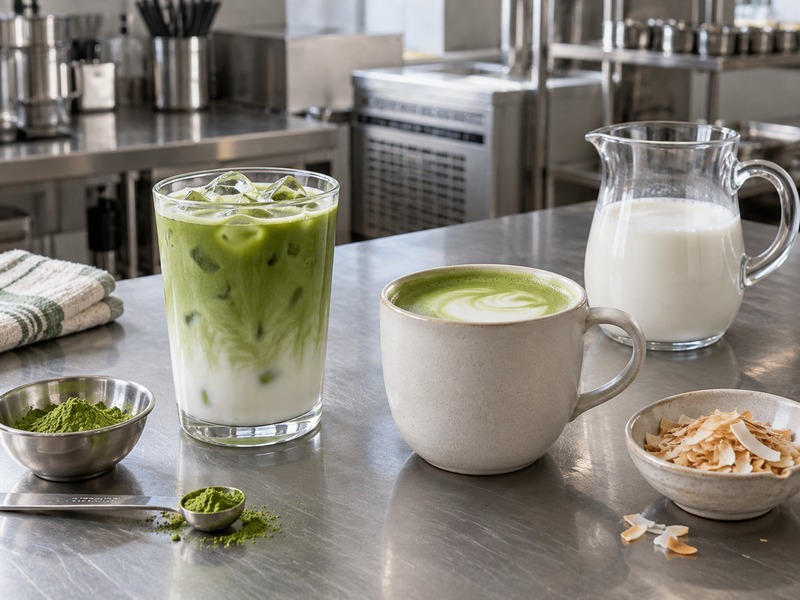
For: café groups, beverage brands, and ingredient buyers. Decision: which coconut and matcha system can meet the approved sensory profile with manageable operation and documented supply.
Contents: 1 · 2 · 3 · 4 · 5 · 6 · 7 · 8 · 9 · 10
1. What is a coconut matcha latte for commercial use?
State the menu job
A coconut matcha latte may be a dairy-free core drink, a seasonal flavored latte, or a dessert-like specialty. Those positions call for different coconut intensity and sweetness. Define the intended serving size, temperature, vessel, channel, and price boundary before asking suppliers for samples. Name the target cup: a light tea-forward latte should not be judged against the same reference as a sweet toasted-coconut drink. Both can be valid, but they need separate acceptance criteria.
The brief should distinguish coconut milk used as a liquid base from coconut cream used for richness, coconut syrup used for sweetness, and toasted coconut garnish used for aroma and appearance. One supplier may offer several formats that look interchangeable in a catalog but behave differently in a hot drink. Include matcha dose, water step, ice plan, milk-to-tea balance, and any foam or topping requirement. A consumer recipe shows one serving; a commercial specification covers normal ingredient variation, staff handling, and a backup source. Procurement should receive the same signed recipe as R&D, so a low-priced substitute is not approved solely because it says “coconut” on the case.
| Menu position | Coconut role | Main acceptance question |
|---|---|---|
| Tea-forward latte | Soft background | Is matcha still clear? |
| Coconut feature | Primary aroma | Does tea remain identifiable? |
| Dessert drink | Richness and topping | Is sweetness controlled? |
| Retail bottle | Base and label | Does it remain uniform? |
2. Which coconut formats suit the intended menu?
Screen function before brand
Coconut milk varies in fat, solids, added sugar, stabilizers, and flavor. Coconut cream often delivers more body but can overwhelm matcha or separate under certain conditions. Syrups can add a clear coconut note with predictable dosing, yet they may bring sweetness that the recipe does not need. Powders can simplify shipping and storage while requiring careful reconstitution. Read the full specification: the word “coconut” alone cannot tell a developer how a product will foam, blend, or label.
Make a candidate matrix using the same finished-drink target. Ask each supplier for ingredient statement, nutrition data, allergens or cross-contact information, storage conditions, shelf-life basis, pack size, and lot traceability. Taste candidates both alone and with matcha, because a pleasing coconut base may have a strong cooked note that clashes with tea. Evaluate empty-pack waste and time needed to open, measure, or mix each format. A UHT carton, frozen cream, and dry blend create different station work. If a supplier changes stabilizer or coconut source, the brand should know before a new lot reaches stores.
| Format | Useful feature | Pilot concern |
|---|---|---|
| Liquid coconut base | Fast pour | Fat and flavor variation |
| Coconut cream | Rich body | Separation and tea masking |
| Coconut syrup | Easy aroma dosing | Added sweetness |
| Reconstituted powder | Storage flexibility | Mixing and sediment |
3. How can matcha and coconut flavors be balanced?
Run a finished-cup ladder
A matcha tasted in water may disappear behind coconut fat and sweetness. Raise or lower tea dose in small controlled steps while keeping the coconut component fixed. Then adjust coconut intensity and sweetness separately. This gives R&D a map of where tea remains visible, where coconut tastes natural, and where bitterness appears. Change one variable at a time: a recipe trial that swaps tea, base, syrup, and ice together cannot explain why a cup improved.
Use coded cups at the intended temperature. Ask tasters to describe first aroma, tea flavor in the middle, coconut finish, sweetness, and any chalky or oily residue. Record the actual mass of matcha per serving and the cost of an accepted cup. A stronger powder may need less dose than a mild one; a lower-priced tea may require more powder and still taste harsh. Compare lots in the complete latte rather than accepting grade labels as flavor guarantees. The pure matcha product page can guide an ingredient inquiry, but selection needs a trial with the chosen coconut base and service process.
4. What changes between hot and iced service?
Give each temperature a method
Heat can change coconut aroma, fat behavior, and foam. Ice dilutes the drink and changes how matcha spreads through a glass. A single written recipe with “serve hot or iced” may therefore produce two different products. Build separate preparation steps and acceptance cups for each format. Test at handoff: the relevant appearance and flavor are those after the drink has passed through ordinary service, not only immediately after a laboratory pour.
For the hot version, control the water step for matcha dispersion and check the coconut base at the intended heating method. Avoid assuming every plant base tolerates steaming the same way. For the iced version, fix ice format, cup size, and pour sequence, then taste after a realistic wait. A hot slurry may melt ice and thin the drink. A cold base may need more mixing to prevent tea specks. If the café uses a pre-mixed concentrate, food-safety and operations staff must define its preparation and holding conditions. Distinct methods cost more training, but they also prevent a rushed employee from adapting the hot procedure by guesswork.
| Variable | Hot cup check | Iced cup check |
|---|---|---|
| Coconut base | Foam and heat response | Body after dilution |
| Matcha slurry | Dispersion before steaming | Ice melt after pour |
| Vessel | Surface and aroma | Layers through glass |
| Handoff delay | Film or separation | Sediment and dilution |
5. How can separation and sediment be evaluated?
Observe the whole serving window
Coconut fat can form a visible layer, while matcha particles can settle at the bottom. These are different failures and may need different fixes. Prepare the drink with the approved method, then inspect at assembly, handoff, and the longest realistic consumption delay. Note whether stirring restores the cup and whether taste changes after a few sips. Describe the defect: “thin oil line at the rim” gives a supplier more direction than “unstable.”
A small test should compare the actual coconut bases and tea lots, not only one ideal sample. Record temperature, ice, mixing time, vessel, and whether the cup was disturbed. If separation starts with a new coconut carton, check its ingredient and fat specification before changing matcha. If green sediment appears in every base, revisit powder dispersion and dose. Ready-to-drink bottling adds a much longer shelf-life question and may require a different formulation and qualified validation program; café data cannot be transferred to a sealed product. Give the team a rejection rule for severe separation or gritty residue and a retest path after a method or ingredient change.
6. Which toasted coconut cues require validation?
Separate aroma from garnish
Toasted coconut flavor can come from a flavor system, toasted flakes, or both. Flakes add visible texture but also create inventory, portioning, and cleanup work. A flavor system may deliver aroma without garnish but changes the ingredient statement. Do not assume a brown topping means the drink itself tastes toasted. Taste blind first: compare the base drink without a visual cue, then add the proposed garnish and check whether it improves the cup at the intended cost.
Ask whether the toasted note remains after matcha, milk, and ice are combined. Check for burnt or stale impressions during storage and service. If flakes are used, specify portion and placement; a handful that falls to the bottom may look generous in a photo and feel unpleasant in the last sip. Evaluate pack freshness and a plan for opened containers. Marketing images should show only the topping routinely served. A home recipe may suggest several ways to toast flakes, but a chain should use an approved ingredient and method that staff can repeat without making hot pans part of every drink order.
| Toasted cue | What to test | Operational cost |
|---|---|---|
| Flavor system | Aroma after mixing | Dosing and label review |
| Toasted flakes | Crunch and appearance | Storage and topping labor |
| Both | Balance and finish | More inventory controls |
7. What should labels and allergen files cover?
Review each approved variant
The ingredient file should cover the coconut input, matcha, sweeteners, flavors, stabilizers, milk alternatives, and garnish. If a café offers dairy and plant versions, shared tools and preparation areas also matter. A supplier statement should not be copied to a finished-drink label without checking the complete formula. Track substitutions: a new coconut base can alter nutrition, ingredients, or allergen cross-contact even if the menu name stays the same.
For U.S. packaged food, the FDA food-allergies guidance describes major allergen labeling and cross-contact controls. Other markets may classify or label ingredients differently, so the brand’s regulatory team should review the destination rules. Avoid broad “allergen-free” or health language from an ingredient list alone. Check whether “toasted coconut” in the product name accurately describes the recipe. Keep approved artwork, supplier specifications, and formula versions linked. When a seasonal drink becomes a retail bottled item, route it through a new labeling and shelf-life review rather than recycling a café sign.
8. How do pack formats change operations?
Follow material through the station
A liquid carton can be fast to pour but creates opened-pack holding and waste questions. A larger bag-in-box may fit high-volume service yet require compatible dispensing equipment and cleaning. A powder can reduce liquid freight but needs calibrated reconstitution and checks for clumps. A concentrated syrup may simplify flavor dosing while adding a separate milk base. Measure the whole workflow: receiving, storage, opening, dosing, mixing, disposal, and restocking all influence cost per accepted cup.
Run a service trial with the actual pack sizes and containers. Record spills, unserved remainder, operator time, and rejected cups with clear denominators. A lower purchase price does not compensate for repeated dilution errors or short opened-pack life. If the final product is sold as a retail powder mix, the consumer will use different equipment from the café; test the pack directions in an ordinary home method as well. The matcha latte powder page can frame a private-label inquiry, but a coconut variant needs its own formulation, ingredient declaration, and sensory test. No generic latte powder specification proves a coconut version is ready.
9. What should buyers ask coconut and tea suppliers?
Ask for comparable evidence
Request a current specification, ingredient statement, lot code, storage guidance, shelf-life basis, quality documents relevant to the target market, and a contact for change notification. For matcha, discuss powder identity, color, flavor, particle behavior, and pack barrier. For coconut inputs, review fat or solids basis, sweetness, stabilizers, and intended use in hot or iced drinks. Compare like with like: quotes need the same unit, usable yield, freight assumptions, and accepted-cup recipe.
Ask for samples from a commercial lot, then repeat a key cup test with a second lot if possible. Confirm whether the supplier can maintain the chosen pack size and lead time during a seasonal promotion. A backup supplier needs qualification before the primary source fails; a carton with the same front-label name may give a different foam and flavor. Keep one signed reference cup and a list of controlled substitutions. If the tea or coconut supplier cannot provide needed change information, record that risk in the purchasing decision rather than assuming the R&D sample will represent every delivery.
| Supplier question | Why it matters | Trial evidence |
|---|---|---|
| Lot and change notice | Repeatability | Second-lot cup |
| Pack and storage | Station fit | Open-pack test |
| Ingredient details | Label accuracy | Approved formula file |
| Lead time | Promotion supply | Order plan |
10. What should the launch pilot decide?
Approve one reproducible cup
The pilot should test hot and iced versions separately, using ordinary operators, actual equipment, and planned ingredient packs. Score flavor, color, separation, cycle time, waste, and customer-facing description. Set a rejection rule before tasting so a beautiful cup does not excuse a recurring oily rim or a sourcing gap. Close with a decision: approve the recipe, revise a defined variable, or stop the variant.
Keep the winning formula with lot-coded samples and a photograph of normal service. Define who can authorize a replacement coconut base, matcha lot, garnish, or pack. When a menu photo is produced, compare it with a cup made by store staff rather than a stylist’s version. The reference recipe below explains consumer interest in toasted coconut and matcha; this B2B decision depends on accepted cups across shifts. Next, send suppliers a specific sample request and run a controlled trial at the planned serving size. Record the cost per accepted serving, not just the price of powder or syrup.
Reference: Toasted Coconut Matcha Latte. Used only for consumer search-intent context; its recipe was not copied.
FAQ
Q1: Can coconut milk replace dairy in the same recipe?
It may require changes to tea dose, sweetness, foam method, and allergen information. Test the complete cup.
Q2: Does toasted coconut flavor require flakes?
No. Flavor and garnish are separate design choices; the product name must still describe the approved recipe accurately.
Q3: How should a café assess separation?
Observe matched cups at assembly, handoff, and a defined later point, then record the visible defect.
Q4: What documents should suppliers provide?
Request current specifications, ingredient details, lot traceability, storage guidance, and change-contact information.
Q5: Should hot and iced versions share one specification?
They can share a concept, but each needs its own recipe, service method, and acceptance cup.