
A ceremonial matcha set suggests a deliberate bowl preparation and presentation. The term needs care: it is used widely in marketing and is not, by itself, proof of a standardized tea grade or a particular cultural practice. This first-set article illustrates the buyer interest. A retailer or hospitality buyer should define what its own set actually contains, how the tea is documented and what experience the instructions can truthfully support.
Contents
- 1. What does ceremonial mean in this offer?
- 2. Which preparation is the set designed for?
- 3. What evidence supports the tea description?
- 4. Does the bowl support the intended use?
- 5. Is the whisk appropriate and replaceable?
- 6. Which additional tools truly help?
- 7. How should cultural context be presented?
- 8. Can the set be cleaned and stored properly?
- 9. Does the packaging serve the product?
- 10. What controls keep reorders consistent?
1. What does ceremonial mean in this offer?
Write the product definition before the copy
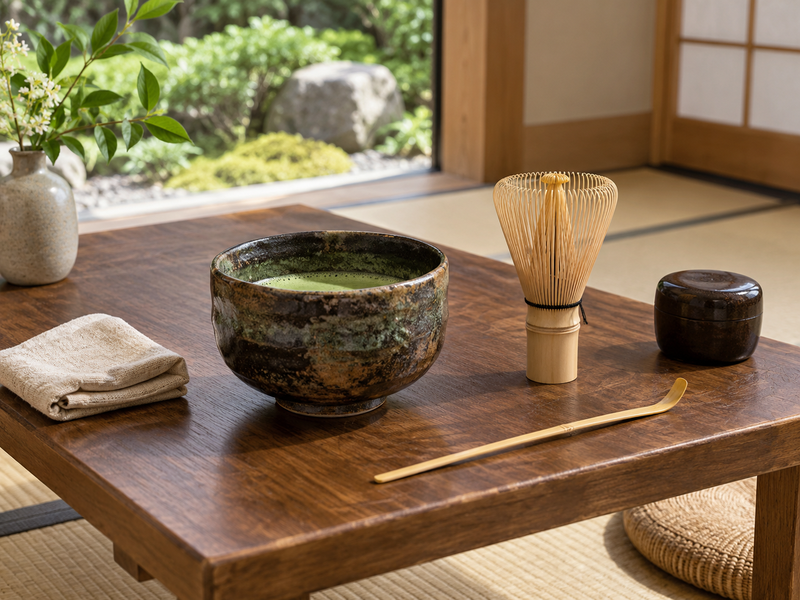
Decide whether the word refers to a set intended for a quiet, unsweetened bowl, to a style of tools, or simply to the tea described by the supplier. Those are different promises. A retailer should avoid letting a shopper infer that the kit teaches a formal Japanese tea ceremony if it only contains a bowl, whisk and scoop with a short home recipe. Define the actual experience in plain terms on the product page and the box.
The tea label needs its own support. “Ceremonial grade” has no single universal grading authority that converts the phrase into a specific harvest, cultivar or test result. Ask the tea supplier what it means in its product system and document verifiable attributes separately. If origin or farming claims appear, connect them to the exact lot and relevant records. This protects both the customer and the buyer from a vague premium story. The set can still be appealing through excellent fit, careful sourcing and precise instructions.
2. Which preparation is the set designed for?
Test one bowl from start to finish
Set a preparation brief: tea amount, water amount, vessel size and the expected service setting. A small plain matcha bowl at a hospitality counter requires different pacing and cleanup from a gift opened at home. The box should supply the tools needed for the method it teaches. If a scale, sifter or separate pouring vessel is required, either provide it or state that the user supplies it. A beautiful assortment is incomplete if the printed recipe cannot be followed with the contents.
Make the bowl with the proposed production tea, not only a demonstration sample. Observe whether the whisk moves comfortably and whether powder collects in a difficult corner. For hospitality service, test repeated orders and cleaning between them. For retail, let a user unfamiliar with the set follow the instructions unaided. Record the resulting practical changes, such as a wider bowl or clearer dose note, before discussing decorative options. This keeps the set anchored to a real cup.
| Intended use | Core test | Likely specification need |
|---|---|---|
| Home bowl | Uncoached first preparation | Clear measured recipe |
| Café table service | Repeated preparation and clearing | Durable handling and spare whisk |
| Gift | Opening and first use | Protected pack and concise card |
| Demonstration | Visibility and transport | Stable bowl and secure components |
3. What evidence supports the tea description?
Keep tasting notes and factual claims separate
Request a specification for the tea actually packed into the set: product identity, net weight, origin information as documented, lot code, packaging and storage directions. If the supplier uses a house grade such as “ceremonial,” ask how it distinguishes that SKU from its others. Taste it as a plain bowl at the intended preparation strength. A pleasing result is important, but it does not by itself prove a farming method, harvest date or laboratory outcome.
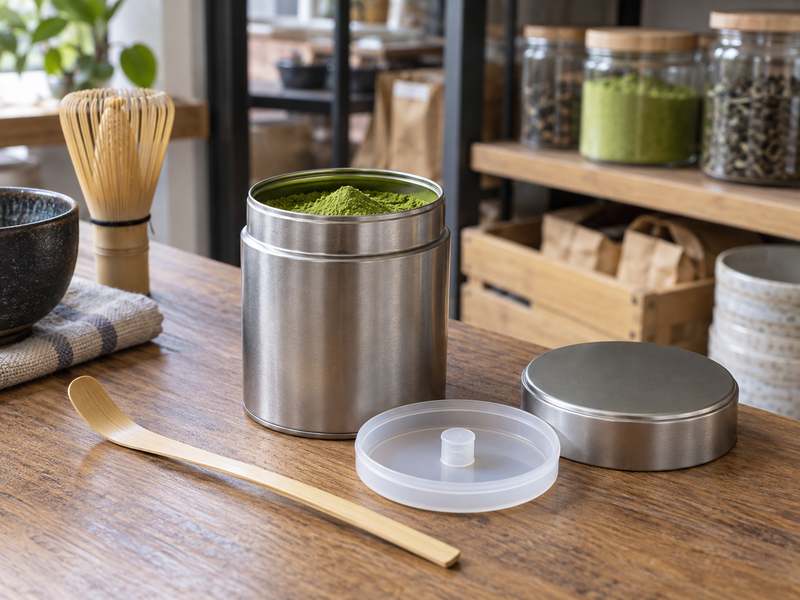
Review every claim on the box against the documents supplied for that product and the destination market. Avoid borrowed descriptions from a vendor blog that were written for another tea. Maintain an approved sample from the commercial lot where possible, and decide how a later lot will be assessed for sensory fit. Matcha is an agricultural product; consistency comes from an explicit sourcing and acceptance process, not from a label word alone. The packet should also be practical to open and close after the first cup.
4. Does the bowl support the intended use?
Inspect form, finish and handling
The bowl should allow the selected whisk to move without striking the wall or forcing the user to fill it to an awkward level. Test the base on a real tabletop, the rim while drinking or pouring, and the interior after whisking. Ask for the material and applicable food-contact information for the exact bowl. An intentionally irregular handmade appearance can be welcome, but define what constitutes an unacceptable chip, unstable foot or rough glazed area.
Avoid treating visual style as proof of tradition or quality. A heavy, expressive ceramic bowl may suit a home ritual yet be slow to handle in a café. A lighter bowl may be easier for training or events. Compare samples by making the same drink in each and cleaning afterward. If the supplier changes kiln, glaze or dimensions, retest the whisk fit and packing insert. The approved bowl is part of a working system, not an isolated art object in a product image.
| Bowl feature | Handling question | Receiving check |
|---|---|---|
| Interior width | Can the whisk move freely? | Compare with master sample |
| Foot | Does it sit firmly? | Test on flat surface |
| Rim | Is drinking or pouring comfortable? | Inspect rough edges |
| Finish | Is it cleanable as instructed? | Examine glaze variation |
5. Is the whisk appropriate and replaceable?
Check actual use and care
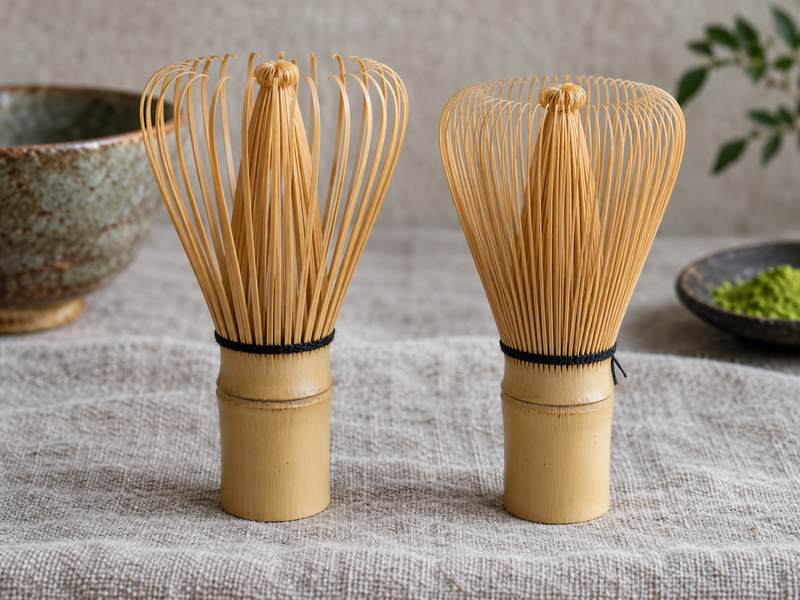
Inspect several whisks from the proposed supply, including units that have traveled in the final package. Look for intact tines, a comfortable handle and enough movement in the chosen bowl. Test the same preparation that the set teaches. Different whisk designs may feel different, but no tine count by itself guarantees a superior result. A claim about performance should come from a comparison in the actual set.
Whisks wear and can be damaged by rough handling. The purchase plan should identify a compatible replacement and the printed guide should explain care and drying according to the maker’s directions. If a holder is provided, test whether it supports this whisk without bending the tines. A set sold as refined should still be maintainable after months of use. For service buyers, keep spare whisks available and inspect them before guests see the presentation. A broken whisk undermines the intended experience more quickly than a modest box design.
6. Which additional tools truly help?
Make every inclusion earn its space
A bamboo scoop can transfer tea attractively, but its portion is approximate; a scale is the reference when dosing must be consistent. A sifter may help if the proposed matcha forms dry clumps in the intended preparation. A whisk holder can help with storage. None should be included only because an online photograph of a “ceremonial set” displays it. Test each addition for benefit, care burden and fit in the box.
For a café, consider what happens between services. Where are the scoop and sifter stored? Can staff clean them under the site’s process? For a home user, can the additional parts be identified without a demonstration? Keep a component list that uses clear names and describes the purpose of each piece. If an item is decorative rather than functional, label it honestly. Cost comparisons should use the complete set, including replacements and protective packaging, so an inexpensive extra does not disguise a weak core bowl or tea.
| Optional item | Include when | Caution |
|---|---|---|
| Sifter | Tested powder benefits from it | Adds cleaning work |
| Whisk holder | Matches included whisk | May not fit substitutes |
| Scoop | Useful transfer tool | Portion is not fixed mass |
| Tea caddy | Protects intended tea pack | Confirm closure and material |
7. How should cultural context be presented?
Use accurate, modest language
Tea ceremony has specific histories and practices that a commercial home kit cannot capture merely by including familiar utensils. If the product references Japanese terms or traditions, have someone knowledgeable review the language and imagery. Explain the names of the tools correctly and avoid claiming that a brief instruction card teaches a formal ceremony. A simple description such as “a set for preparing a hand-whisked bowl at home” may be both clearer and more respectful.
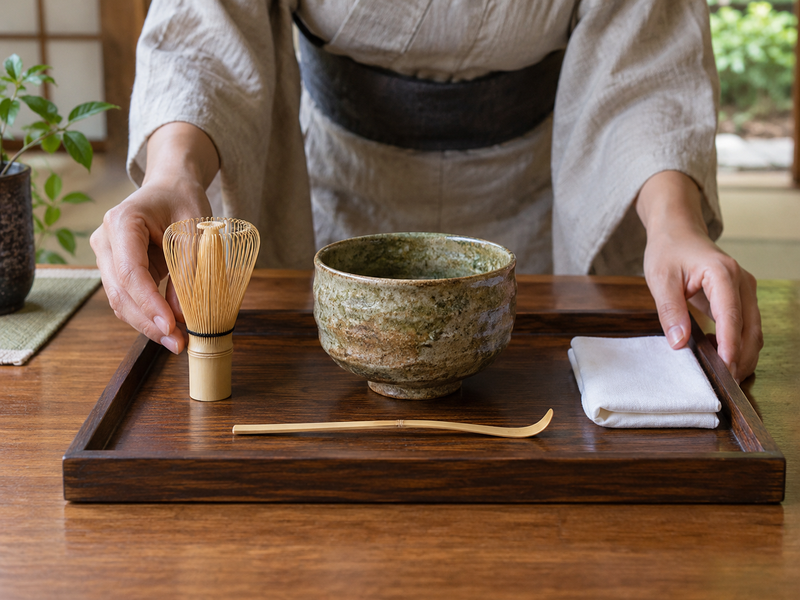
The same restraint applies to photographs. Show the actual included components and a preparation the set supports. Do not use a staged ceremonial scene that requires items or training absent from the box. For hospitality venues, train staff on what they are presenting and what they should avoid claiming about the tea or practice. A specific, well-run bowl service conveys care better than a script full of unverifiable tradition. Ask whether the customer can understand the preparation steps without relying on cultural stereotypes.
8. Can the set be cleaned and stored properly?
Validate the end of the experience
Run the set through its proposed cleaning method. Review maker directions for ceramic, bamboo, metal and any lacquered or decorated pieces separately. Inspect the bowl for residues, the whisk for damaged tines and the scoop for trapped moisture. A generic dishwasher statement should not be applied to every material in a mixed set. For café service, incorporate the tool into the existing documented cleaning routine and verify that staff have time and space for it.
Tea storage also matters. The package should protect matcha until opening and tell the customer how to keep the remaining powder according to the supplier’s instructions. Do not store damp tools next to an open tea pack in a closed gift box. A holder or breathable storage layout may help, but it must fit the actual whisk and shelf space. Test a second bowl after the set has been cleaned and stored. It often exposes practical faults that an elegant first unboxing hides.
| After-use step | Observe | Revision trigger |
|---|---|---|
| Wash bowl | Residue and finish | Hard-to-clean interior |
| Rinse whisk | Tine condition | Poor care instruction |
| Dry tools | Storage arrangement | Moisture trapped in box |
| Close tea | Seal or transfer method | Powder left exposed |
9. Does the packaging serve the product?
Protect fragile pieces without false signals
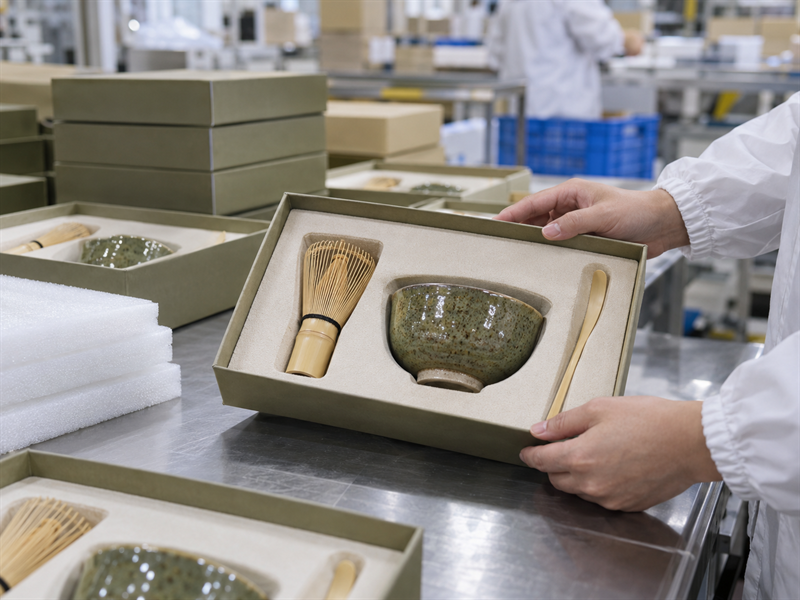
The bowl must be separated from the whisk, tea pack and any metal sifter. Inspect a packed sample after the distribution route the buyer actually uses. A premium box can still permit the bowl to chip or the whisk to flatten if the insert lacks support. Record damage by component and revise the insert before scaling. The pack should also make opening and repacking intuitive; a user should not have to force the bowl out of a tight cavity.
Packaging copy should state exact contents and tea weight. If the box uses images of traditional tools, ensure those images correspond to what is inside. Avoid unsupported environmental or artisan claims about materials and making processes. A physical proof can reveal text that is too small or a decorative sleeve that hides required information. For wholesale buyers, specify outer-carton count and protective layers as carefully as the display box. The delivered set, rather than the shelf rendering, is what the customer receives.
10. What controls keep reorders consistent?
Preserve the tested combination
Create a component specification with item codes for the bowl, whisk, scoop, optional pieces and tea. Attach approved physical samples, dimensions that affect fit, care directions, label artwork and pack-out photographs. Require notice before material, size, finish or tea substitutions. A reordered bowl can look similar yet have a narrower interior; a new whisk can fit the insert but not the bowl. Check complete sets rather than accepting components individually.
At incoming inspection, prepare at least one bowl from a sampled unit, then clean and repack it. Check tea identification and seal, bowl stability, whisk condition, component count and printed claims. Track customer feedback by issue so breakage, difficult preparation and flavor preference are not mixed into a single score. When the set evolves, revise the instructions and product page with the new specification. A controlled change is better than an accidental drift toward whatever accessories are available that month.
| Control item | Record | Reorder check |
|---|---|---|
| Tea | Product and lot documentation | Label and sensory fit |
| Tools | Codes and master samples | Bowl-whisk compatibility |
| Copy | Approved claims and card | Matches current contents |
| Pack | Insert drawing and sample | Post-route protection |
FAQ
Q1. Is “ceremonial grade” a universal standard? No. Ask the supplier what it means for the specific tea and verify separate factual claims with product records.
Q2. Does a set teach a formal tea ceremony? Only if it genuinely includes qualified instruction for that purpose. Most retail sets teach a home preparation method.
Q3. Must the bowl be handmade? No. Choose a bowl that fits the whisk, user and handling requirements, with clear material and care information.
Q4. Is a sifter required? Include one if the supplied tea and method benefit from it in testing.
Q5. What is the strongest bulk-order check? Make, serve, clean and repack a bowl from a packed production sample.
The most credible set makes a modest promise and fulfills it carefully: documented tea, compatible tools and instructions that lead to the bowl shown on the box.