
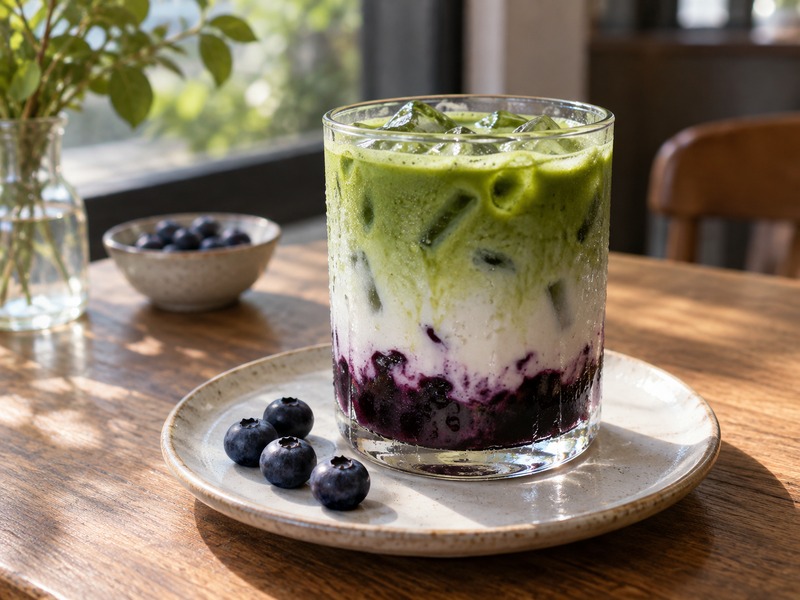
Blueberry matcha is usually an iced latte with a berry layer beneath milk and tea. The contrast is striking, but the cup succeeds only if blueberry tastes like fruit and matcha remains visible in the final sip. Sarah’s Vegan Kitchen’s blueberry matcha latte uses a blueberry-vanilla syrup in a consumer version. A café must choose its berry format, manage seeds and pulp, and make the drink repeatable when fruit lots and baristas change.
This guide is for beverage developers, café operators and ingredient buyers. The recommendations below are trial decisions; finished recipes, handling limits and label claims require validation for the actual market.
1. What should blueberry add to matcha?
Give the fruit a distinct role
Blueberry can add a jammy note, mild acidity and deep color. It should not function only as purple syrup at the bottom of a green latte. Write a sensory target for the first sip, the stirred drink and the last third. Decide whether the menu promises fresh fruit character, dessert sweetness or a lighter tea-fruit combination. If vanilla is used, keep it in service of blueberry rather than allowing the cup to taste like vanilla milk with a berry garnish.
Taste without the photograph. Layered drinks can persuade a team that a formula is better than it tastes. Run a blind comparison of the full drink and ask tasters to name the fruit and identify the tea. Then show the cups to assess visual appeal separately. Check the proposed straw and lid, since a straw can deliver concentrated berry before the matcha. A strong blueberry base that stays unreachable at the bottom is a poor drinking experience even when its color is beautiful.
| Drinking point | Target | Warning sign |
|---|---|---|
| First sip | Clear berry and tea cue | Only sugary fruit |
| After stirring | Balanced latte | Muddy, indistinct flavor |
| Last third | Smooth finish | Seed or matcha sediment |
2. Which blueberry input should a café use?
Compare whole fruit, purée and syrup
Fresh or frozen berries can support an honest fruit story, but their size, sweetness and skin content vary. Purée gives more predictable portioning if its ingredients and texture are specified. A cooked syrup may deliver a clean pour and stronger color, but it can taste jammy and include more sugar. Compare candidates at the same final drink volume and equivalent fruit impact. Weigh usable yield and measure prep time. A cheap berry input can become expensive if staff strain away a large portion or discard half-open packs.
Check the dispensing method. Berry skins and seeds may clog pumps or narrow straws. If the syrup is strained, record the loss and confirm the remaining flavor. If whole berries are crushed at the station, time the work during a rush and inspect consistency between baristas. Ask suppliers for ingredient statements, storage and open-pack requirements, and relevant composition data. A change in berry blend can alter color and sweetness even when the front label still says “blueberry.”
| Berry input | Advantage | Main trial |
|---|---|---|
| Fresh or frozen fruit | Strong fruit identity | Prep yield and consistency |
| Purée | Measured portioning | Pulp, seeds and open-pack use |
| Syrup | Fast service | Sugar level and authenticity |
3. How should matcha be selected for a berry latte?
Choose the tea in the final drink
Berry and vanilla can mute delicate matcha. A powder that tastes pleasant in water may need a different dose in this latte; another may become sharp beside fruit acidity. Prepare candidate teas with a fixed water method, then add the selected berry and milk. Compare the full cup rather than dry color. The green layer should be attractive, but taste matters more than an exceptionally vivid photo. Ask suppliers for lot-linked specifications, samples and required safety records.
Set a dose by acceptance, not price. Record grams per cup and whether the customer can still taste tea after stirring. A low-price powder may need more mass and leave sediment. A high-price tea may provide little extra benefit under a rich berry syrup. Inspect the last sip for green grit. Keep an approved sensory reference and test new lots in the same berry formula. Stores should not compensate for a weak lot with an unmeasured scoop.
4. How should the berry base be prepared?
Keep sugar, fruit and viscosity linked
A syrup that holds a defined bottom layer may need body; too much body can make it hard to drink. Develop the berry component with measured fruit and sugar, then record its finished yield. If heating is used, compare aroma and color with a less-cooked option. The home reference uses blueberry vanilla syrup, but a chain should decide whether vanilla belongs in the berry base, milk or nowhere. Placing it in different phases changes the first sip and the way flavors meet after stirring.
Test over an open-pack cycle. A prepared syrup may thicken in a refrigerator or become harder to pump as fruit solids settle. Mix and dispense it the way stores will. Check whether the first and last portions from a container have similar color and taste. The quality team must validate any handling and shelf-life plan for the actual fruit formula. Do not copy a household recipe’s storage advice into a commercial operation.
| Berry-base defect | Possible cause | Check |
|---|---|---|
| Too sweet | High syrup dose | Lower sweetness at fixed fruit note |
| Hard to sip | High viscosity or pulp | Test straw and blend |
| Uneven color | Settling fruit solids | Check mixing and dispense |
| Flat fruit aroma | Excess cooking or old pack | Compare process and age |
5. What milk keeps the drink balanced?
Test the chosen dairy or plant option
Milk adds body and a pale band between purple fruit and green tea. Different dairy and plant milks change sweetness, acidity perception and layer stability. An oat drink may add cereal notes, while a coconut drink can turn the cup tropical. Choose the primary milk through full-cup tasting. If several milk choices will be sold, test them separately rather than assuming a substitution preserves the same formula. Review ingredients and allergens for each option under the operation’s menu and cross-contact rules.
Measure the ice and cup. A large amount of ice can make a layered drink look full while leaving too little liquid to integrate berry and tea. A smaller cup may deliver stronger flavor and better visual contrast. Use a fixed fill line and check the cup at handoff and after ice melt. A berry milk that looks attractive immediately can become greyish after vigorous stirring; that may be acceptable if the flavor is good, but the brand should know what customers will see.
6. How can baristas build the layers quickly?
Standardize the pour and allow ordinary variation
A practical sequence is berry component, ice, milk and prepared matcha, but the exact ingredients may mix differently. Trial the actual berry viscosity, milk and matcha temperature. Define pump or gram portions and the pour location. A slow layered pour may look excellent on video yet be too slow for a queue. A fast pour can push green tea into berry and create muddy streaks. Find a method several staff members can reproduce in a realistic service test.
Train with accepted examples. Photograph a clean target cup and one acceptable variation. The latter matters: baristas should not remake every drink because a layer is slightly irregular. Also define a reject example for visible clumps, missing berry or major color mixing. Record order-to-handoff time, spills and rework during consecutive orders. If the process depends on an expert’s hand, adjust the formulation or cup instead of writing a longer training document.
| Step | Control | Failure prevented |
|---|---|---|
| Berry dose | Measured pump or weight | Excess sweetness |
| Ice | Standard fill | Variable dilution |
| Milk | Fixed volume | Weak or muddy bands |
| Matcha | Premix and pour point | Green clumps |
7. What happens during takeaway or delivery?
Test the actual cup after movement
The berry component may move when the cup is carried, and matcha may settle as ice melts. Test an assembled drink in the intended lid and straw through a realistic route. Check leakage, cup wall stains, fruit trapped under the lid and the balance of the final sip. If the product will be delivered, it may arrive partly mixed. Evaluate whether that mixed drink still tastes intentional. A perfect three-color photograph is not enough evidence for a delivery menu.
Set a quality window. Sample at handoff and after the typical customer delay. Record how color, fruit aroma and tea flavor change. Keep safe-handling requirements for berry and milk in the qualified food safety plan. A fresh in-store latte and a bottled ready-to-drink version are different development projects. A chain should not assign a shelf-life claim from the beverage’s visual stability alone. Use the pilot to decide where this drink belongs in the menu.
8. What should buyers request from suppliers?
Tie specifications to cup performance
For matcha, collect specification, lot-linked analysis and traceability records required by the buyer’s program. For berry purée or syrup, collect ingredient statement, fruit content or other relevant composition, pack size, storage and change-notice information. Milk suppliers should provide ingredient and allergen records. These documents help a team assess the product, but a new lot must still be tasted and tested in the finished latte when variation matters.
Keep a comparison standard. Retain samples or controlled records from the approved tea and berry lots. If later stores report a dull drink, compare fruit color, syrup dose, matcha strength and cup build in that order. A supplier change should trigger a small finished-cup trial. The purchasing brief should name the expected berry flavor and tea impact, not only the cheapest available products with the right ingredient names.
| Input | Evidence | Cup effect |
|---|---|---|
| Matcha | Lot and sensory records | Green shade and tea taste |
| Blueberry base | Composition and handling | Fruit note and viscosity |
| Milk | Ingredients and allergens | Body and label |
| Cup and lid | Handling trial | Visual and delivery performance |
9. What should a serving cost model include?
Count usable fruit and remake labor
Price the drink from the accepted grams of matcha, berry component, milk, sweetener if separate, ice and packaging. Include fruit loss during straining, pump residue, opened-pack waste and drinks remade for clumps or incorrect layering. A lower-cost syrup may contain less recognizable fruit and require a higher dose, raising cost and sweetness. A more expensive prepared purée may lower store labor. Compare options at equal accepted flavor, not equal purchase volume.
Check more than one store volume. High-traffic sites may use a chilled fruit pack quickly; smaller sites may waste it before its validated use period ends. A single-size pilot simplifies dose control. If the brand plans a premium price for visible fruit and tea, verify that customers can taste both through the whole cup. A layered appearance creates trial, but repeat purchase depends on a drink that remains balanced when the layers merge.
10. What should the launch pilot prove?
Repeat the cup across staff and ingredient lots
Shortlist one berry base and two matcha candidates. Fix cup, milk and ice, then compare full-cup flavor and service handling. Have multiple baristas prepare consecutive orders from a draft card without coaching. Measure fruit dose, build time, reject rate, appearance at handoff and taste after the expected wait. Include a takeaway route if it is part of the business. Test a second berry or matcha lot where possible so the menu is not approved on a single favorable sample.
Release a useful standard. State formula, supplier specification, mixing order, acceptable visual range, safe-handling controls and reject examples. A failed drink should lead to a targeted change: fruit viscosity, tea dose, pour or package. The first purchase should support a limited menu launch, with enough volume to learn how ordinary stores actually make and sell the drink.
Reference
Sarah’s Vegan Kitchen, “Blueberry Matcha Latte” is a consumer example with blueberry-vanilla syrup and matcha. The commercial sourcing and service checks above are separate proposed tests.
FAQ
Q1: Can blueberry matcha be made with frozen berries?
Yes. Compare the resulting fruit base for flavor, texture, yield and service time.
Q2: Why does the berry layer stay at the bottom?
Dense syrup or purée settles; test viscosity and the intended straw or stirring instruction.
Q3: Can a café use plant milk?
Yes, after tasting the complete drink and reviewing ingredients and allergens.
Q4: How can the matcha remain noticeable?
Select powder and dose through full-cup tasting against the approved berry base.
Q5: What should be checked after a new berry lot?
Fruit flavor, sweetness, viscosity, color and the completed cup’s balance.