
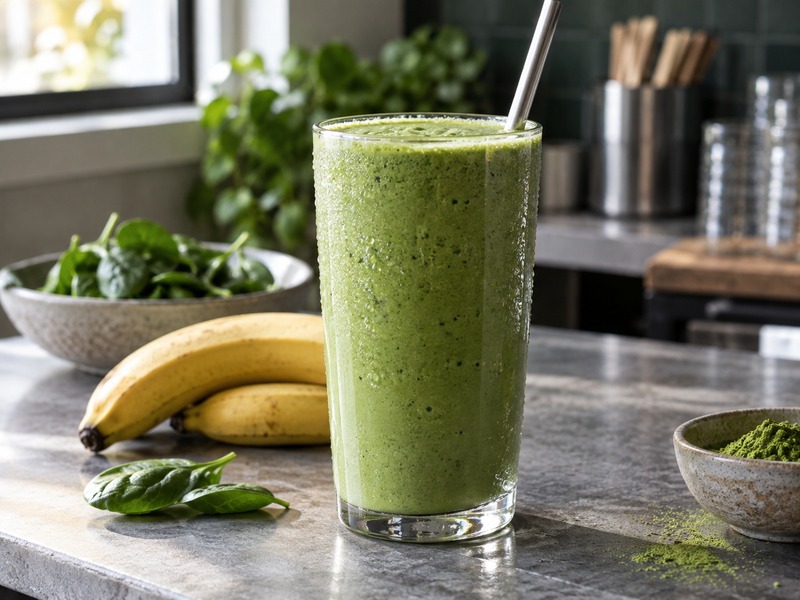
A matcha smoothie should taste like tea and fruit blended into one cold drink. Many bench versions look promising for a minute, then separate, turn thin or leave powder at the bottom. Cafés need a formula that works with their blender, frozen inventory and service speed. Magda Mag Das’s vegan recipe uses frozen banana, pineapple, plant-based yogurt and milk as a home example. A commercial menu should test its own ingredient lots, portion sizes and cold chain before promising the same result across stores.
This guide is for product developers, operators and ingredient buyers. It treats ratios as trial decisions, not universal specifications, and avoids health claims unsupported by the finished product and its regulatory review.
1. What role should matcha play in a smoothie?
Keep tea identifiable after fruit and dairy
Some smoothies add a pinch of matcha as a color cue. That creates a green drink but may disappoint a customer who orders it for tea flavor. Decide whether the product is a fruit smoothie with a mild matcha note or a matcha drink with fruit for body. Write the target in ordinary sensory terms: grassy or mellow tea, bright or creamy fruit, and a finish without chalkiness. Test the matcha alone in the chosen liquid before blending the full recipe. A powder that seems fragrant in water may disappear beside banana and yogurt.
Taste more than the first sip. Blended fruit can rise or settle, and sweetness can mask bitterness at first then fade as ice melts. Sample at handoff and after the expected takeaway interval. Record whether the drink can pass through the proposed straw without straining. A very thick smoothie may carry tea flavor well but make service slow; a thin smoothie may drink easily but lose the intended texture. The target should include flavor, viscosity and the time for which those traits should remain acceptable.
| Positioning | Matcha target | Main tradeoff |
|---|---|---|
| Fruit-led | Noticeable tea finish | Fruit can dominate |
| Tea-led | Clear matcha aroma | Higher powder cost |
| Meal-style | Balanced with yogurt or protein | More ingredient and label controls |
2. Which fruit base makes the drink repeatable?
Test the actual frozen supply
Frozen banana adds body and sweetness; pineapple can brighten the flavor. The reference recipe uses both, but the best commercial mix depends on intended taste and store equipment. Frozen fruit reduces some prep variation yet creates its own problems: bag clumps, variable piece size and more strain on a small blender. Fresh fruit changes with ripeness and requires trimming. Purée can speed service but may add sugar or reduce the dense texture customers expect from a smoothie.
Compare on finished yield. Weigh fruit after any trimming or thawing, then blend with the same matcha and liquid. Measure the resulting cup fill and taste, not merely the ingredients going into the jar. Record how much product remains on blender walls. If banana makes the drink too sweet or dull, adjust the fruit balance before masking it with more matcha. Ask fruit suppliers about cut size, ingredient additions, pack format and handling requirements. A good recipe should survive ordinary lot variation without a barista making subjective corrections.
| Fruit format | Service advantage | Check before approval |
|---|---|---|
| Frozen pieces | Cold body without much ice | Piece size and blender load |
| Fresh fruit | Flexible flavor | Ripeness, waste and labor |
| Purée | Fast portioning | Sugar, viscosity and open-pack use |
3. How should matcha be added to the blender?
Prevent dry powder pockets
Dumping matcha onto frozen fruit can leave green dust stuck near the blender lid or clumps hidden in the finished cup. One route is to disperse the measured powder in a small portion of liquid before it meets the fruit. Another is to blend the powder with the liquid first, then add frozen ingredients. Trial the route that fits the station. The goal is consistent suspension without extending blend time so long that the drink warms and thins. Sifting may help a clumpy powder, but a preparation step should not disguise a recurring supplier or storage problem.
Control the dose. Use a scale during development and a verified store measure after the formula is approved. Evaluate powder candidates at equal grams and again at the dose required for equal tea impact. A low-priced powder may cost more per drink if it needs a heavy dose. After service, inspect the cup and blender for sediment. The matcha source, batch and storage conditions belong in the product brief because powder flow and flavor can change between lots.
4. What gives the smoothie body without excessive sweetness?
Balance fruit solids, liquid and yogurt
Body can come from frozen fruit, yogurt, other permitted ingredients or a smaller liquid portion. Each choice changes taste and label. More banana is easy at the bench but can bury matcha and make the smoothie taste like banana dessert. Less liquid thickens the drink but may overwork the blender or leave unprocessed chunks. Yogurt adds creaminess and acidity; a plant-based version may behave differently from dairy. Run small trials changing one component at a time while keeping the cup size fixed.
Use an observable texture test. Pour the blended drink into the intended cup and watch its flow. Does it level within a few seconds, mound like soft serve, or separate after a short hold? Check straw draw and spoonability. Record blend time and ingredient temperature alongside texture, because a warm fruit bin can make an otherwise correct recipe thinner. If a stabilizer is considered for a packaged version, make it a separate development path with its own label and validation rather than adding it casually to a fresh café formula.
| Symptom | Possible variable | Trial action |
|---|---|---|
| Too thin | Fruit temperature or liquid | Fix temperature, then adjust liquid |
| Too thick | Frozen load or yogurt solids | Check blender and serving method |
| Gritty | Matcha clumps or fruit fibers | Change dispersion or fruit input |
| Rapid separation | Formula or hold time | Re-test after realistic service wait |
5. What blending method works in a rush?
Standardize the jar load and sequence
A bench recipe made slowly in a large blender may fail in a busy store’s small jar. Specify ingredient order, measured liquid, frozen fruit load, blend cycle and visual endpoint. Loading frozen chunks before any liquid can stall the blades. Overfilling can leave uneven pieces. Trial several drinks in sequence, because the machine and jar warm during repeated use. Check whether baristas can follow the method without opening the lid to scrape down every cup.
Measure full service time. Include fetching frozen fruit, weighing or scooping, blending, pouring and washing the jar. A thirty-second blend cycle can still produce a slow drink if every order needs several trips to the freezer. Consider pre-portioned fruit packs only after calculating packaging waste and storage space. Have different staff members make the same recipe and compare cup fill, texture and tea intensity. Any step that depends on an expert’s eye should be translated into a measure or a clear visual standard.
6. How should a café handle milk and plant-based versions?
Treat each as a tested formula
Replacing dairy yogurt or milk with a plant-based option may change acidity, sweetness, thickness and allergens. The reference example is plant-based, but its proportions are not a guarantee that every store brand will blend the same way. If the menu offers both versions, decide whether they can share the same fruit and matcha doses or need separate cards. Taste and measure both after a short hold. A product that is appealing with dairy can become watery with a different plant drink.
Review the claim. Ingredient and allergen statements must match the actual formula and the way stores handle tools. “Vegan” or other dietary claims need a suitable review for the specific market and preparation environment. Train staff on separate utensils or cleaning where the company’s allergen program requires it. Procurement should maintain approved alternatives instead of making last-minute substitutions based only on pack size or price. A different yogurt can shift the smoothie enough to change the tea dose decision.
7. What happens between blending and the last sip?
Follow melting, separation and temperature
A matcha smoothie leaves the blender at its best texture, but customers may carry it for ten minutes or more. Frozen fruit warms, ice melts if used, and solids can separate. Test the drink in the actual cup and lid through a realistic pickup or delivery route. Assess straw draw, sediment, visible liquid pooling and tea flavor. A smoothie that looks attractive in an open glass may smear the lid and arrive as a thin green drink in a delivery cup.
Set a service window. Use the quality team’s safe-handling plan for dairy, fruit and other perishable ingredients. The final formula, temperatures and route determine any holding limit. Do not infer a commercial shelf life from a consumer recipe. If the drink is for immediate service, tell stores to make it to order and set an appearance standard at handoff. If a packaged ready-to-drink version is planned, it is a separate product with processing, stability and microbiological validation needs.
| Checkpoint | Record | Decision |
|---|---|---|
| At pour | Texture and cup fill | Recipe release |
| At pickup | Separation and lid condition | Handoff window |
| After route | Temperature and sip quality | Delivery suitability |
| Last third | Sediment and sweetness | Full-cup balance |
8. Which supplier records matter most?
Link each record to a problem it can solve
Request matcha specifications, lot-linked analysis and traceability information required by your program. For frozen fruit and yogurt, collect ingredient statements, allergen information, storage instructions and pack sizes. Ask how changes to fruit cut, sweetening or yogurt formulation are communicated. Those changes can alter blend time and texture even when a product name remains the same. Sample new lots in the finished smoothie rather than approving ingredients only by appearance in their unopened packs.
Keep a reference. Photograph the accepted smoothie under the same lighting and retain a written flavor and texture standard. If a later lot creates a thinner drink, compare fruit temperature, liquid measure and ingredient variation in that order. Do not instruct staff to add more powder or extra banana without a controlled retest. A small incoming-sample protocol can prevent inconsistent drinks from being shipped across a chain before a supplier change is recognized.
| Input | Approval evidence | Change that triggers review |
|---|---|---|
| Matcha | Sensory and lot records | Blend or powder lot shift |
| Frozen fruit | Cut and ingredient specification | Size or sweetness change |
| Yogurt | Composition and allergen statement | New formula or substitute |
| Cup and straw | Full-drink handling trial | New packaging size |
9. How should the smoothie be costed?
Count usable yield and equipment time
Smoothie margin depends on more than ingredient grams. Frozen fruit lost from open bags, product left in blender jars, spills from thick pouring and jar-washing labor all affect accepted servings. Weigh the actual finished yield from a measured batch. Calculate matcha cost at the dose customers can taste. Add the cup, lid, straw and any extra packaging needed for delivery. A low-cost fruit may have poor usable yield if staff must reject icy clumps or spend time breaking apart bags.
Compare during real service. Run a short pilot at the planned order rate and record drinks remade for wrong texture or fill. If the blender becomes a queue bottleneck, the opportunity cost can be larger than a minor ingredient saving. Test whether a pre-portioned fruit kit saves enough time to justify its pack cost and freezer space. Price the drink only after the team has an accepted recipe and service time, not from a supplier brochure’s theoretical portions.
10. What would a credible rollout test prove?
Repeat the drink across operators and lots
Select two matcha candidates and a small number of fruit formulas for the first trial. Fix cup size, equipment and liquid. Blind-taste the complete drinks, then have several staff members make the preferred version during a timed service simulation. Measure blend time, finished yield, appearance at handoff and quality after the expected customer wait. Test a second fruit or matcha lot if repeat supply is central to the launch. A beautiful one-off sample does not prove a menu item is operationally sound.
Write a release sheet. It should state ingredient masses, temperature assumptions, load order, blend endpoint, accepted texture, cup and straw, food safety checks and supplier references. If the result fails, change one input and record the consequence. The next purchase should support a limited launch with enough servings to expose ordinary store variation. Expand only after those stores can make the same drink without a developer standing beside the blender.
Reference
Magda Mag Das, “Refreshing Quick Vegan Matcha Smoothie” is a consumer example using frozen fruit, plant-based yogurt and milk. The commercial tests above are proposed operating checks, not results reported by that recipe.
FAQ
Q1: Does a matcha smoothie need added ice?
Not necessarily. Frozen fruit can supply cold body; test the final texture and temperature before adding ice.
Q2: Can a café batch the finished smoothie?
Only after quality and safe-handling tests for the exact formula and hold conditions.
Q3: Why does matcha settle at the bottom?
Check powder dispersion, dose and holding time. Matcha is a suspension and may settle.
Q4: Is a plant-based version automatically vegan?
Review every ingredient and the preparation environment before making a market claim.
Q5: What should a matcha supplier sample be tested in?
Use the approved fruit, liquid and blender method so the buyer sees the powder’s actual performance.