
Banana gives a hojicha latte body and natural sweetness, but it can also turn the cup into a thick fruit smoothie with almost no tea flavor. Fresh banana varies in ripeness and oxidizes after preparation; puree and syrup solve some problems while creating others. This guide develops a café version through measured fruit, tea, milk, texture, and service tests.
Contents: flavor goal · fruit form · ripeness · tea · milk · recipe · appearance · holding · cost · launch
1. What should a banana hojicha latte taste like?
Keep fruit and tea in balance
Banana can make roasted tea feel rounded and dessert-like. Its aroma can also dominate so completely that a customer cannot tell whether hojicha is present. Write a sensory target before adjusting sugar: recognizable banana, identifiable toasted tea, a smooth but drinkable body, and a finish that does not feel pasty. Taste without the name card. Ask blind tasters what they notice. If they say “banana milkshake,” the tea role is too weak or the fruit dose is too high. Compare the drink with a standard hojicha latte and a plain banana milk drink. The combined version should offer something neither control does. Decide whether it is a breakfast-style beverage, an iced café latte, or a dessert special. Each position suggests a different sweetness and portion. A clear menu description should state banana, roasted green tea, and the standard milk rather than implying a coffee drink.
| Target | Pass signal | Failure |
|---|---|---|
| Banana | Fresh fruit note | Candy-like flavor |
| Hojicha | Toasted tea remains clear | Tea hidden |
| Body | Smooth and drinkable | Thick or chalky |
| Finish | Balanced after several sips | Clinging sweetness |
2. Should the café use fresh banana, puree, or syrup?
Choose by flavor and station control
Fresh banana can give convincing flavor and body, but staff must peel, portion, and blend it; waste rises when fruit ripens faster than sales. A commercial puree can simplify dosing if its ingredient statement and storage conditions fit the operation. Banana syrup is quick but may supply sweetness and flavor without the same fruit texture. Compare honestly. Prepare each option at a similar banana flavor strength in the same tea and milk base. Note how long it takes, how much cleanup it creates, whether the cup separates, and what remains in the blender jug. Check for added sugar, acid, color, or flavor in a puree. If the menu says “made with fresh banana,” use fresh fruit in the standard recipe and manage its variation. A product development team should not select a fruit format from a photograph; the stirred, held drink and real service process decide.
3. How ripe should the banana be?
Define a usable range
Banana changes quickly from firm and starchy to soft and very sweet. That change affects flavor, sweetness, texture, and how much fruit a recipe needs. Weigh peeled fruit and record visible ripeness. Use a reference photo. “One banana” varies too much in size, while “ripe” means different things to different shifts. Test the recipe at the lower and upper ends of the fruit range the shop can realistically buy. A firmer banana may leave more starchy texture; a very ripe one may make the cup sweeter and browner. If fruit is frozen, test it after the actual thaw or blending process and include liquid released during thawing. Do not assume the same syrup dose works with every fruit lot. A recipe may need a defined adjustment rule, but it should be simple enough for staff to follow and limited enough that customers still receive one recognizable product.
| Fruit state | Likely change | Control |
|---|---|---|
| Firm | Less sweetness, more starch | Reject or adjust within rule |
| Ripe | Target flavor and body | Reference range |
| Very soft | Sweeter, darker, wetter | Limit or separate use |
4. Which hojicha holds up against banana?
Seek roasted clarity, not sheer darkness
Banana brings a broad sweet aroma that can bury a gentle tea. A powder slurry often provides enough presence in milk, though grind and dose need testing. A brewed concentrate may feel cleaner but can disappear once fruit and ice enter the cup. Compare at least two tea profiles with one controlled banana batch. Taste the tea base first. A dark roast that seems strong dry may become bitter with banana and dairy. A medium roast might offer a clearer toasted contrast. Keep fruit and milk fixed while adjusting tea mass in measured increments. Record whether tea is identifiable immediately and after ten minutes, when the fruit aroma may soften and powder can settle. If the café already sells a hojicha latte, use its tea as a control but do not assume it is automatically the best choice here. A sourcing brief should describe the fruit and milk environment in which the powder will be used.
5. Which milk gives the right body?
Avoid making an already thick drink heavier
Dairy milk can smooth a roasted tea and banana blend, but a high-fat or very sweet base may make the drink feel more like a dessert. Oat drink adds cereal notes that may reinforce hojicha or create a heavy finish. Almond and soy alternatives have different flavors and allergen implications. Test the exact carton. Use the milk brands planned for service and hold banana and tea constant in the comparison. Taste the drink through the supplied straw; if it is too thick, staff may quietly add more milk, changing flavor and cost. A hot version needs its own test because banana puree can behave differently when heated and may affect foam. If several milks are offered, approve each substitution or limit choices. Review ingredient labels and shared blender equipment before claiming a dairy-free option. The standard menu photo and nutrition calculation should reflect the milk used in the default cup.
| Milk trial | Main question | Observe |
|---|---|---|
| Dairy | Is body balanced? | Sweetness and finish |
| Oat | Are cereal notes too heavy? | Thickness |
| Soy | Is aftertaste compatible? | Foam and texture |
| Almond | Does tea remain clear? | Nutty competition |
6. What recipe should the pilot start with?
Weigh banana and tea separately
For a development cup, a team might trial 4 g pure hojicha powder in 40 g warm water, 60 g peeled banana, around 150 mL milk, and a measured ice charge. These are pilot inputs, not a final standard. Blend the banana and milk, disperse the tea powder separately, then combine; this lets the team identify whether a texture fault comes from fruit or tea. Hold the cup size constant. If banana mass rises, reduce another component deliberately rather than overfilling. Trial a banana-dose ladder and a tea-dose ladder as separate experiments. Taste without added syrup first; ripe fruit may provide enough sweetness. Then test one measured syrup level if the target audience needs it. Write blender setting, seconds, pour order, cup size, and finished weight on the card. Ask two operators to reproduce the preferred version from that card without coaching.
7. How can the drink keep an attractive appearance?
Expect banana to change after preparation
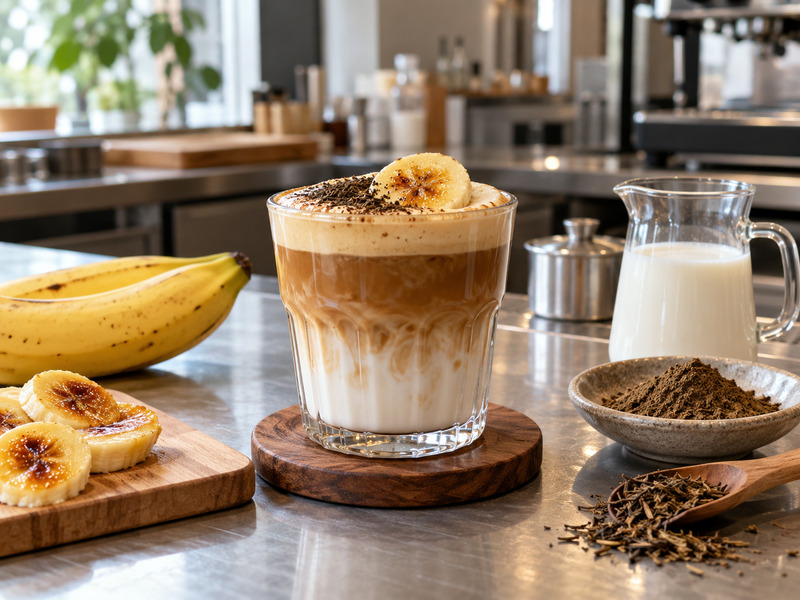
Fresh banana can darken after blending, and fruit solids can settle or cling to the cup. A layered tea-and-banana drink may look elegant at handoff but muddy after stirring. Watch the ten-minute glass. Photograph a normal cup immediately, after a short carry, and after stirring. Taste each stage. If a puree is held before service, inspect color and aroma at the planned end of hold. A garnish slice may brown even faster than the drink and can obstruct a lid. Do not rely on a garnish to signal banana if the base tastes of artificial syrup. A very light-colored milk layer can make brown tea powder specks look like a defect, so dispersion matters. A shop may choose a fully mixed presentation that remains consistent rather than a delicate gradient that staff struggle to reproduce. The normal sellable cup should be the one shown online.
8. How should banana prep and holding be managed?
Build a safe, short workflow
Fresh cut fruit and prepared puree need defined receiving, preparation, storage, dating, and discard practices under the operation's food-safety plan. A banana base mixed with milk adds further handling needs. Label the batch. Record fruit lot, preparation time, container, and approved use window. Do not borrow an arbitrary countertop hold from a social-media recipe. The FDA Food Code provides retail guidance for temperature-controlled foods, but the shop must apply it to its exact formula and jurisdiction. Clean blenders and utensils between uses according to the allergen and sanitation procedure. If a banana base is made in advance to speed service, test its flavor and appearance at the end of the planned window. A fresh-made drink can be appealing, but it may be too slow for a high-volume station; the pilot should measure both options and choose one that is safe and repeatable.
| Prep option | Benefit | Control need |
|---|---|---|
| Fruit per order | Fresh flavor | Speed and waste |
| Chilled base | Fast assembly | Holding and color |
| Commercial puree | Portion control | Supplier and storage |
9. What does the cup actually cost?
Include fruit trim and blender residue
Cost peeled banana mass, not whole-fruit purchase weight alone. Add tea, milk, ice, optional syrup, packaging, labor, and cleanup. Measure the loss. Some thick banana mixture remains in the blender jug and on the lid after pouring. A fresh-fruit program also has overripe fruit that cannot be used in the approved recipe. Record those losses during the pilot. Compare the result with a puree option at equal sensory quality. A cheaper fruit input can require more labor; a convenient puree may carry higher unit cost but lower waste. If the drink sells as a premium item, the cup should offer a clear banana-tea pairing rather than simply a large portion of sweet fruit milk. Watch sales of the existing hojicha latte to see whether the banana version brings new demand or mostly shifts customers from a simpler, faster drink.
10. When should the latte enter the menu?
Require repeatability across fruit lots and shifts
Have different operators make the drink from a gram-based card using bananas from more than one delivery. Test flavor, texture, color, preparation time, and the final sips after a realistic carry. Ask whether tea is still there. If the answer depends on an unusually dark roast or a large powder dose that leaves grit, the concept needs revision. Keep a reference cup and a photograph of the normal service version. Review milk and fruit handling, allergens, and any nutrition statements. Recheck after a tea, fruit puree, or milk supplier change. Matcha Village can supply hojicha powder for a B2B trial; tell the supplier that the application includes banana and the milk you plan to use. The final cup, not the dry tea sample, determines fit.
Before rollout, compare a normal cup from an early fruit delivery with one from the next delivery. Banana is the moving part in this recipe, so a single beautiful prototype tells the team little about the following week. Keep the tea and milk fixed during that comparison. If the fruit range produces visibly different thickness, revise the accepted ripeness range or portion rule before printing a permanent menu description.
| Final check | Pass evidence | If it fails |
|---|---|---|
| Fruit acceptance | Peeled mass and reference ripeness | Reject fruit outside range |
| Tea clarity | Blind tasting after a short carry | Revise tea dose or roast |
| Service speed | Timed normal orders | Simplify prep method |
Final recommendation
Treat banana as a measured ingredient, not a casual add-in. A banana hojicha latte succeeds when the fruit supports roasted tea and the drink remains smooth and appealing after the first photograph.
FAQ
Q1: Can banana syrup replace fresh fruit?
It can create a faster drink but changes texture and ingredient claims. Compare finished cups honestly.
Q2: Does a ripe banana remove the need for syrup?
Possibly. Taste the chosen fruit and tea together before adding measured sweetener.
Q3: Can the drink be served hot?
Yes if a separate hot recipe passes texture and flavor tests; do not simply heat the iced blend.
Q4: Why does the cup turn brown?
Roasted tea and changes in prepared banana can both affect color. Test the normal holding interval.
Q5: What is the most useful service test?
Prepare several cups from different banana lots and taste them after a realistic carry, including the final sips.
Sources: Japan MAFF, Uji tea categories; FDA, Food Code 2022; FDA, food allergens.