
Nishio in Aichi Prefecture has a documented tea tradition, but a supplier’s use of its name does not identify the source and route of a particular matcha lot. For a Nishio matcha production claim, request the cultivation and processing locations tied to the specific SKU. Nishio City’s own tea page describes local tencha and a regional brand history. A buyer still needs a coded sample, origin evidence, product records and a supply plan for the proposed grade. Use the regional story to ask sharper questions, then let the individual powder earn approval. The matcha supplier Japan guide places a regional claim in a wider buying review.
Contents
- 1. What Nishio claim will appear in the buyer’s offer?
- 2. Where were the tea leaves grown?
- 3. How does the supplier handle tencha?
- 4. Which site mills and packs the powder?
- 5. What can a coded tasting reveal?
- 6. Which origin and product documents should be reviewed?
- 7. How should a regional brand claim be checked?
- 8. Can the selected grade be reordered?
- 9. What should a Nishio quote include?
- 10. When is the Nishio product ready for purchase?
1. What Nishio claim will appear in the buyer’s offer?
Write the words before checking them
“Nishio matcha” may be used in a product name, a sales pitch or a label. Ask your team exactly which statement it wants to make and why. Does the business require leaves cultivated in Nishio, tencha prepared there, milling there or all of those steps? Nishio City’s description of its regional brand names a production route involving Nishio and neighboring Anjo. That description is a useful prompt for questions, but it is not evidence that the supplier’s individual lot followed it.
Keep the claim tied to one SKU. Ask the seller for a written description of the proposed item’s leaf source, tencha processing and milling sites. If material from another area can enter a blend, state how the product would be named when that happens. Have your market specialist review printed origin wording before artwork approval. A precise statement may be less romantic than an open-ended regional story, yet it gives purchasing a testable rule for the next shipment. Record uncertainty rather than silently upgrading a supplier’s suggestion into a guarantee.
2. Where were the tea leaves grown?
Trace cultivation through the offered lot
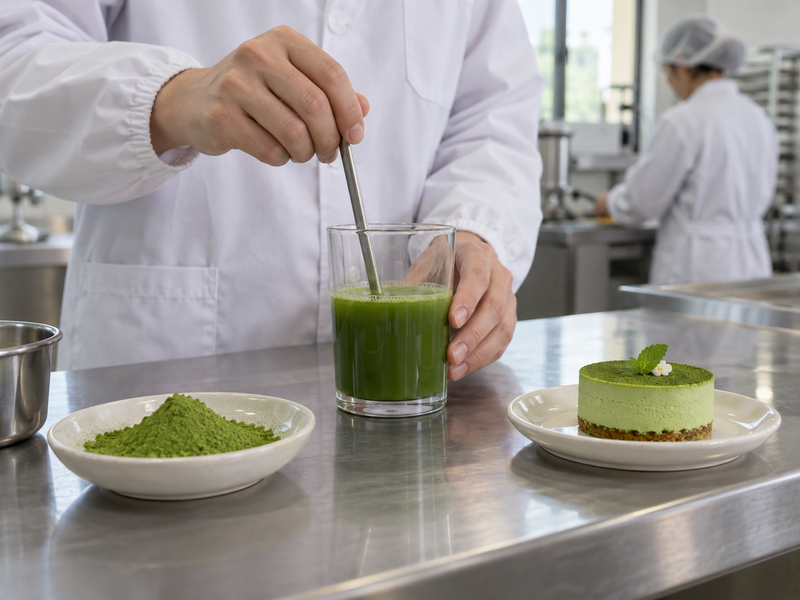
Ask the supplier whether it sources from its own fields, a growers’ group or tencha processors. Request an origin statement that identifies the allowed area for the SKU and a lot trail that connects source material with finished powder. A buyer may receive masked source records when individual growers are confidential. That can still support a controlled review if quality can verify how source eligibility is checked and how input lots are identified.
Consider continuity. A narrow leaf-source requirement may affect availability across harvests. Ask which substitute fields or suppliers are allowed and whether a change would require your consent. A café group focused on a stable drink may accept more flexibility than a retail line built around a precise place. Put the answer in the specification. Do not infer that all tea cultivated near Nishio tastes alike, and do not infer that a seller operating in Nishio uses only local leaves. A regional address is a starting point for verification, not its endpoint.
| Source issue | Supplier answer | Evidence |
|---|---|---|
| Allowed area | Written source definition | Product file |
| Incoming tea | Lot identification | Intake record |
| Blending | Source list | Blend record |
| Change | Notice rule | Agreement |
3. How does the supplier handle tencha?
Look before the grinding stage
Tencha is the leaf material that is ground into matcha. Ask where the supplier receives or produces it, how it sorts material for the proposed grade and how it stores containers before milling. The Japanese agriculture ministry describes tencha as steamed and dried without rolling. Your supplier may perform some stages and purchase the result of others. Ask for its real chain rather than projecting a general process article onto its operation.
Choose one source code. Trace it into a tencha batch and then into the sample’s milling record. Ask how partial containers and multiple source lots are handled. If a product is sold as single source, the records should preserve that boundary. If it is intentionally blended for a consistent flavor, the allowed sources and blend decision should be clear. Quality does not need every proprietary setting, but it needs evidence that the right material reaches the mill. A polished powder sample cannot answer that source question by itself.
4. Which site mills and packs the powder?
Map the final route
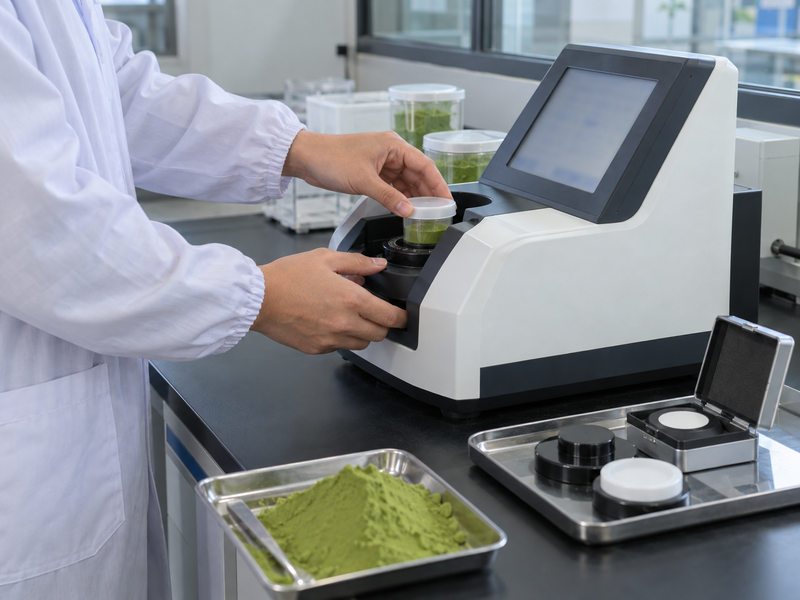
Ask whether the supplier operates its own mill and packing line or uses partners. Record site names and addresses for the proposed item. A regional product may cross organizational boundaries without losing its identity if each transfer carries a controlled code. The buyer should know which company owns the batch record, who signs the finished lot report and who investigates a complaint. A mill visit provides useful context, but a carton code should also link back to material when nobody is giving a tour.
Inspect a finished pack. Compare its SKU, lot code and origin wording with the specification and quote. Ask how the packer checks artwork version and seal integrity. If the supplier wants to change pack format for a larger order, test the format and review its effect on storage and staff handling. A site that mills excellent powder may still rely on another company for the unit your warehouse receives. Put that packer in the approval chain rather than treating packing as an administrative footnote.
| Final stage | Record to request | Buyer concern |
|---|---|---|
| Milling | Equipment and run code | Sample identity |
| Transfer | Material movement | Traceability |
| Packing | Line and lot code | Label accuracy |
| Release | Quality decision | Ship status |
5. What can a coded tasting reveal?
Test the actual application
Prepare a Nishio candidate beside other coded powders using the same dose and method. For straight tea, record texture, aroma, bitterness and finish. For a latte, test with the intended milk and sweetener, then observe the drink at the service hold time. A bakery or confectionery buyer should use the planned recipe and heat exposure. The point is to choose a powder for a product, not to validate every regional tasting note repeated online.
Repeat under ordinary conditions. Let staff who will make or consume the product evaluate samples without seeing the supplier name. Keep a record of water or recipe temperature, mixing time and sample code. Ask for another production lot if a long-term program is planned. A single excellent cup may reflect one unusually favorable batch; a stable product needs a workable range. If the selected grade fails after a recipe change, rerun the trial. Its Nishio origin should not override an operational problem visible in your own kitchen.
6. Which origin and product documents should be reviewed?
Keep the file product-specific
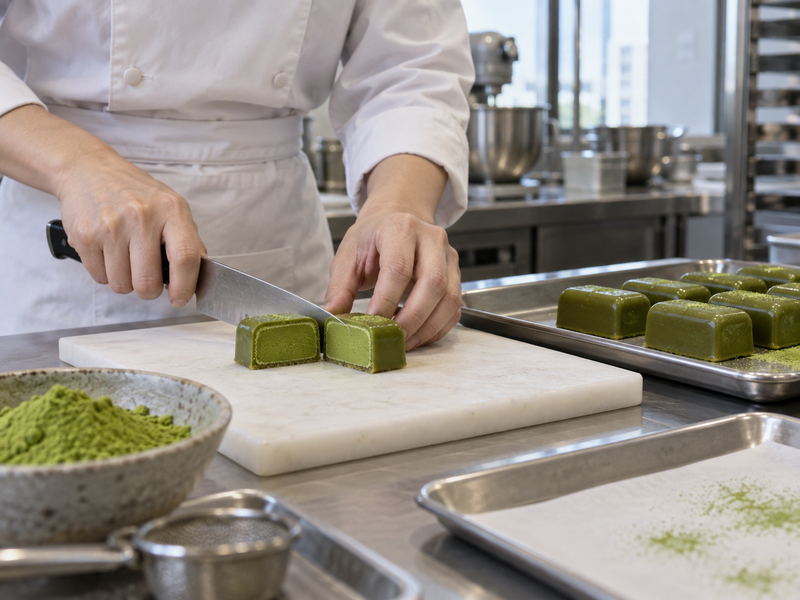
Ask for a specification naming the grade, ingredients, pack and revision. Request the origin statement, production-site map, lot coding method and a sample lot report. Where the seller offers certifications, review current entity, activity and site scope. A certificate for a distributor may not cover a partner mill. For testing, check the reported lot, method, units and limits chosen by your quality team. Your importer should confirm current destination needs rather than assuming Japanese origin settles them.
Reconcile names and codes. The product identity on the quote, sample, specification and proposed shipment documents should match. If a supplier uses a house blend name internally and a different marketing name externally, record the cross-reference. Ask who may alter the specification and how buyers hear about such a change. A compact document set with precise links can be more useful than a large bundle of unrelated certificates. It lets another colleague audit the decision months later without reconstructing it from emails.
| Document | Match to | Reviewer |
|---|---|---|
| Origin statement | Source route | Brand/compliance |
| Specification | Sample SKU | Quality |
| Lot report | Finished code | Quality |
| Quote | Pack and grade | Purchasing |
7. How should a regional brand claim be checked?
Verify current status and permission
Regional brand language may involve trademarks, association rules or other schemes that change over time. Nishio City’s page describes a regional collective trademark history. Japan’s agriculture ministry also records that an earlier geographical indication registration for “Nishio Matcha” was cancelled in 2020. Do not treat an old certificate image or article as proof of current GI protection. Ask the supplier which mark, if any, it proposes to use and who can authorize that use.
Separate three questions. Is the product geographically and technically consistent with the wording? Does the supplier have permission to use a particular logo or protected mark? Does your destination accept the planned label presentation? Your legal or brand team should answer the latter two with current evidence. The buyer can still purchase a Nishio-sourced product without printing a special mark. Avoid turning a legitimate regional story into a claim that the current documents do not support. Keep the final approved wording attached to the SKU file.
8. Can the selected grade be reordered?
Ask about supply of this powder
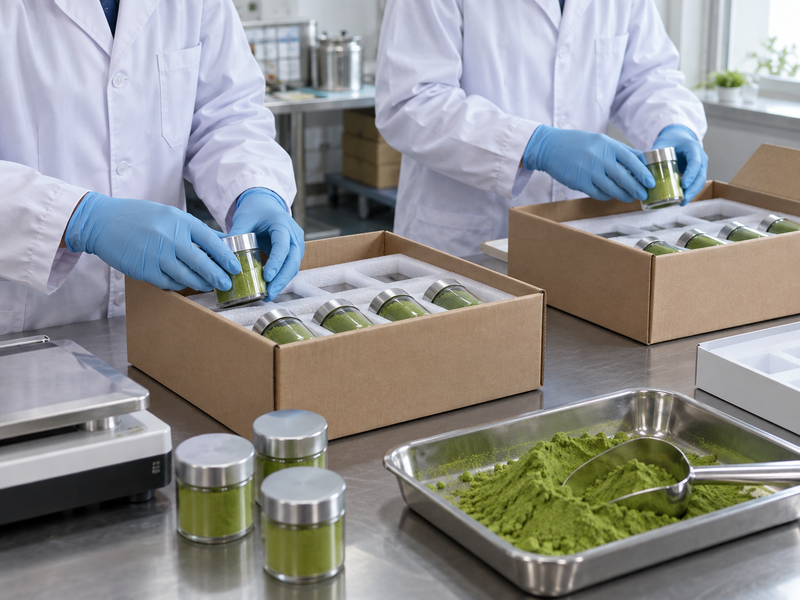
A region’s reputation and total tea acreage do not tell you how much of one approved grade is available to your business. Ask whether the quote covers existing stock or future production, and discuss expected order cadence. Which material sources can maintain the grade and origin statement? What happens if a preferred tencha lot is exhausted? The seller may offer a blend designed for repeatability or a limited seasonal lot. Each can be useful if your product plan matches it.
Define a substitute route early. If you need continuous café supply, test another acceptable grade before the chosen one becomes scarce. If you sell a seasonal single-lot product, set a clear end-of-lot plan and avoid promising permanent availability. Request notice before changes in source, mill or specification. Ask how the supplier reserves stock, confirms each order and handles a short shipment. A useful supply plan includes possible constraints instead of claiming that a respected region can always provide identical powder.
| Program type | Main risk | Planning answer |
|---|---|---|
| Seasonal lot | Stock exhaustion | End-of-lot date |
| Ongoing blend | Source change | Allowed inputs |
| Café chain | Menu disruption | Approved alternate |
| Retail pack | Label mismatch | Claim review |
9. What should a Nishio quote include?
Compare a usable offer
Request the exact product code, pack format, quantity, price, currency, delivery point, validity period and any conditions for future orders. A tasting sample and quote should refer to the same grade. If the supplier proposes a different pack or a lower-cost alternative, ask for a new coded sample. Compare cost at the use rate found in your application trial, adding freight and storage assumptions from your own operations. A celebrated origin does not excuse vague commercial terms.
Discuss the claim cost honestly. Narrow origin requirements can constrain substitution and affect price or availability. Your brand team should decide whether that value matters to customers before finance treats it as an unavoidable premium. Ask the seller how a source change would be priced and notified. Do not use a travel article’s regional reputation as a proxy for current market rates. A written, time-bound offer lets purchasing compare Nishio candidates fairly with other powders while protecting the exact product quality selected by operations.

10. When is the Nishio product ready for purchase?
Close the separate approvals
The origin team should approve the precise claim from a source and process trail. Quality should approve the specification, lot records and supplier scope. Operations should approve a coded sample in the intended application. Purchasing should approve the current offer and replenishment terms. A product can pass one gate while another remains open; record that status rather than making a single vague “approved” note.
Make the file reusable. Save the accepted SKU, sample code, route, pack, label wording and change-notice condition. Set a plan to compare the first commercial lot with the approved sample. Matcha Village’s supplied company profile concerns Chinese tea sourcing and manufacturing, so it cannot provide evidence for a Nishio-origin SKU. For a Nishio claim, request records from the actual Japanese chain. This discipline lets a compelling regional product become a reliable B2B ingredient without asking buyers to rely on the region’s name alone.
If the supplier offers both a seasonal single-lot powder and a continuing blend, give them separate item codes. Staff can then sell the seasonal product honestly while keeping a dependable ingredient for routine use. Otherwise, purchasing may mistake a similar product name for permission to replace one with the other after a harvest lot runs out.
| Gate | Pass evidence | Next action |
|---|---|---|
| Origin | Route and source record | Approve wording |
| Product | Trial and specification | Approve ingredient |
| Supplier | Site and quality review | Approve source |
| Commercial | Current quote | Place order |
FAQ
Q1: Does a Nishio seller always use Nishio-grown leaves? Do not assume so. Ask for the proposed lot’s source definition and trace.
Q2: Is an old GI image proof of current status? No. Japan’s agriculture ministry records cancellation of the earlier Nishio Matcha GI registration.
Q3: Must a Nishio powder taste a certain way? Set your own sensory target and test coded lots in the intended product.
Q4: Can a buyer use a regional logo freely? Check current permission and destination label rules before printing.
Q5: What should be retained after approval? Keep the coded sample, specification, source statement, site map, quote and agreed change conditions.
Final thought
Nishio’s tea history can help a brand tell a specific story. A buyer makes that story dependable by checking the proposed lot, its production route and repeat supply. Approve the powder your team tested and the claim your supplier can document.