
Matcha wholesale for restaurants starts with the dishes and drinks your kitchen can deliver consistently. A powder that tastes suitable in water may behave differently in dessert or milk. Matcha Village offers Chinese matcha and application products. Build a menu brief, test proposed samples and agree the packing and purchasing details before ordering.
Table of contents
- Which menu applications should lead selection?
- Does every dish need the same matcha?
- How should chefs and bar staff test samples?
- What belongs in a recipe cost comparison?
- How can preparation fit a busy shift?
- Which pack format suits kitchen usage?
- What documents should restaurant buyers request?
- How should several restaurants share a specification?
- What should a delivery discrepancy record contain?
- How can the menu team prepare a reorder?
1. Which menu applications should lead selection?
Start with the item guests will order
Write a short list of planned uses before requesting matcha wholesale for restaurants. Name the finished dish or drink and describe how guests will receive it. A whisked tea, a sweetened latte and a baked sponge expose the powder to different conditions. A restaurant introducing one dessert can focus its trial differently from a group developing drinks and pastry together.
Give the supplier the actual recipe context, including dairy or plant milk, sweetness and processing steps relevant to flavor. Ask for proposed products with identifiable codes. Matcha Village’s range includes plain matcha grades and application products, so confirm whether the offer contains pure tea powder or a formulation with other ingredients. Do not let a green drink photograph settle that question.
State any origin or organic requirement your menu team intends to communicate. A Japanese-origin menu claim needs product-specific support and cannot be inferred from ceremonial wording. Keep the selection brief realistic about staff, tools and sales expectations. It should describe what your operation can prepare rather than a demonstration setup that will disappear once normal service begins.
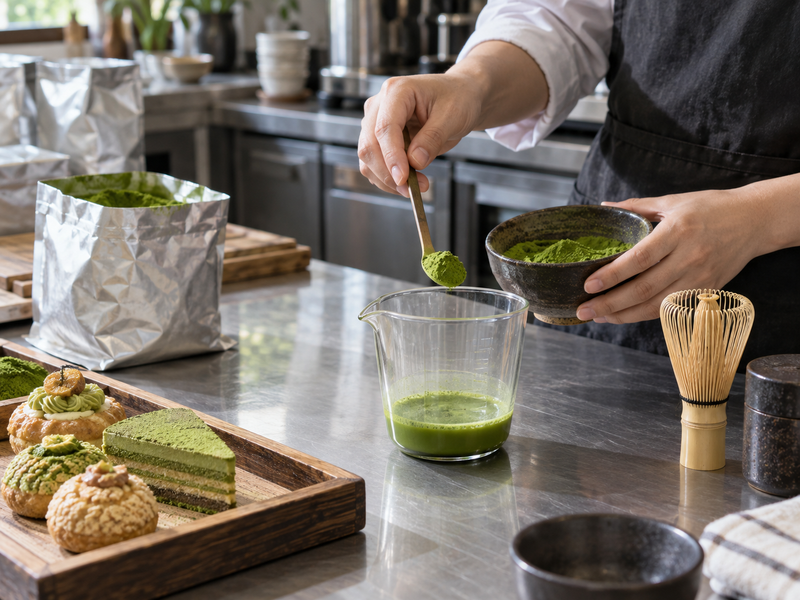
2. Does every dish need the same matcha?
Compare one-product simplicity with application fit
One approved powder can simplify restaurant stock management, but each intended application still needs a trial. Straight tea exposes flavor directly, while a sweetened dessert or milk drink changes the tasting context. Ask whether one offered SKU meets all menu targets. If it does, document the accepted recipes so staff know what was tested. If it does not, consider separate products with clear storage and identification. Avoid assuming the most expensive grade will give the best result in every dish. Ceremonial grade does not supply a universal regulated specification, and supplier ranges use grade names differently. Your tasting and production observations should decide suitability.
A pastry team may prefer a powder with a clear flavor after baking, while bar staff may prefer another profile in an unsweetened drink. These are examples of decisions to test, not claims about a particular supplier’s product. Count the added operational work of another SKU before approving it. Separate containers, stock records and training may be manageable for a large group but unnecessary for a small menu. Ask the supplier to quote each selected product and packing format individually.
| Menu use | Trial question | Purchasing implication |
|---|---|---|
| Straight tea | Does the unsweetened finish suit the menu? | Sensory approval |
| Latte | Does flavor work in the chosen milk? | Recipe-specific selection |
| Baked dessert | What remains after the actual process? | Finished-product trial |
| Several applications | Can one SKU meet every target? | Stock complexity decision |
3. How should chefs and bar staff test samples?
Give each trial a recipe and a written decision
Use coded samples and keep quantities consistent across comparisons. Chefs should evaluate the finished dish under its normal service conditions. Bar staff should prepare the planned cup with the same liquid ingredients, sweetness and equipment. Record sample code, recipe version and preparation date. Then describe flavor, color, texture and handling without decorative terms such as “exceptional quality.” A note about a dry finish or powder clumps gives the supplier a specific issue to address.
Repeat an uncertain preparation before rejecting a product for a staff error. If a dish will be prepared ahead, assess it through the operation’s established food-safety and service process; do not invent a holding procedure from a supplier blog. Keep tasting records separate from quality documentation. A pleasant flavor does not establish analytical compliance.
Ask how the chosen sample connects with the product quoted for the commercial order. For matcha wholesale for restaurants, the final decision should state which menu items use the approved SKU and whether packing remains under review. Return those records to procurement so a price comparison follows actual application approval.
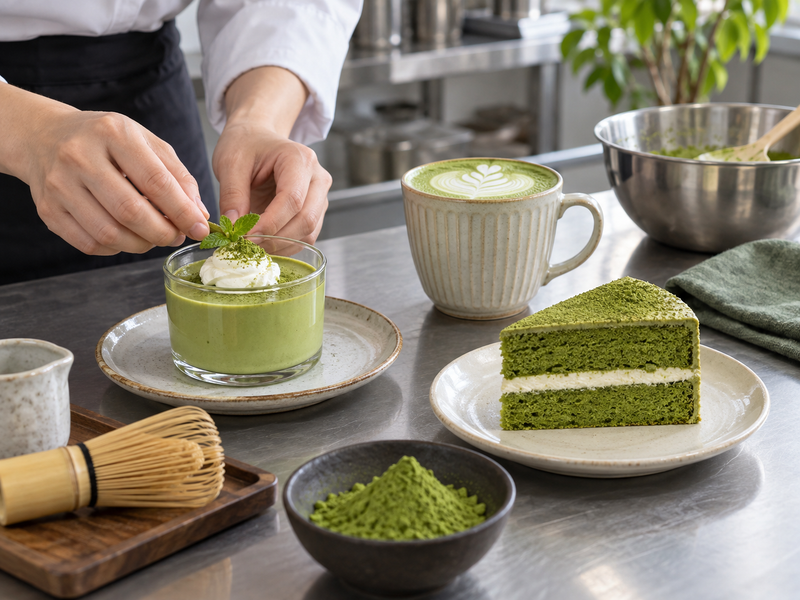
4. What belongs in a recipe cost comparison?
Cost the accepted portion and its handling
Use the powder quantity in the recipe your team approved. Divide the relevant product cost by usable quantity and apply the accepted portion, then record other ingredients through your normal menu costing process. Compare the same finished item across suppliers. A drink with a light tea flavor cannot be treated as equivalent to a stronger one merely because both contain matcha.
Include observed preparation losses where your own trial supports them. Keep delivery and any custom packaging charges visible so finance can understand the purchasing basis. Ask for quote currency, validity, unit weight, minimum quantity and delivery scope. UnD’s wholesale article describes its own grade options and commercial formats. Its sample sizes, minimums and supply terms belong to UnD and should not be presented as Matcha Village promises.
Request a current quotation for your selected products. A restaurant group should also distinguish store-level ordering from a central purchasing arrangement. One bulk price may leave internal distribution costs with the group. Record those costs separately instead of treating a factory quotation as the final cost at every kitchen.
| Cost component | Input | Source |
|---|---|---|
| Powder portion | Approved recipe quantity | Kitchen trial |
| Usable product | Net quantity and observed loss | Receiving and trial records |
| Delivery | Agreed quote scope | Supplier offer |
| Internal distribution | Store allocation arrangement | Restaurant group planning |
5. How can preparation fit a busy shift?
Test the workflow at the intended station
Prepare the chosen recipe with the tools, workspace and staffing planned for normal service. A chef can produce a polished sample during development while a bar station struggles to weigh powder between orders. Observe where packs sit, how staff measure portions and which equipment needs cleaning. Keep these operational observations distinct from product quality judgments.
If preparation creates clumps, review technique and tools before asking for another grade. Make any change through your operation’s recipe and food-safety review. This article does not provide a validated holding, sanitation or processing procedure. Write a clear preparation instruction for the approved application and have another trained team member follow it. Their questions reveal ambiguities that the recipe author may miss.
Matcha wholesale for restaurants should account for this handover because the buyer who selects a product often does not prepare every order. If your operation needs a formulated powder, request its full ingredient identity and test that product separately from plain matcha. Staff should know which SKU they use and should report a proposed substitute before changing the recipe during service.
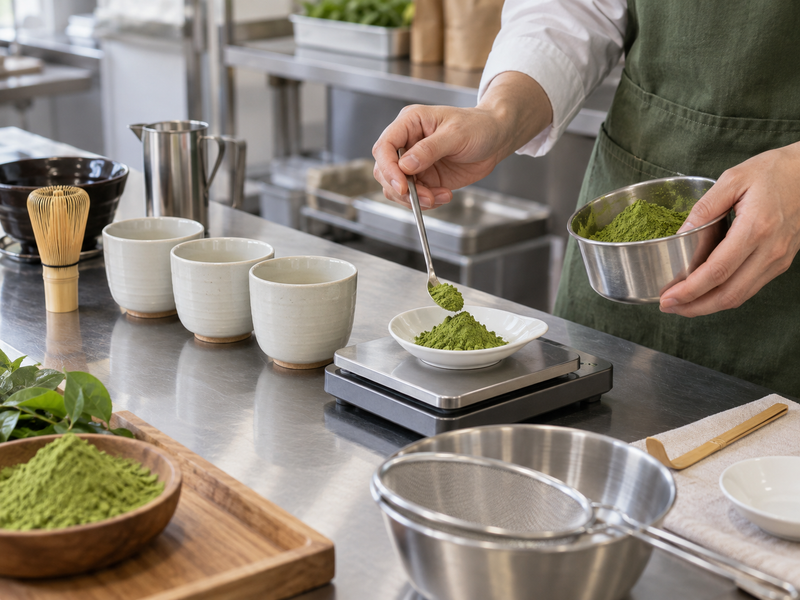
6. Which pack format suits kitchen usage?
Size the sealed unit around consumption
Estimate how much powder the menu uses over a normal purchasing interval and how often each pack will open. A restaurant selling a few desserts may need a different unit size from a beverage station using powder throughout the day. Ask the supplier for available formats and product-specific storage instructions. Avoid choosing the largest bag solely from a kilogram price.
Consider pouring, closure, shelf space and identification in the packaging trial. A daily-use tin can make service convenient if your operation maintains lot identity and follows its handling process. Repeatedly mixing new powder into an old container can obscure which product staff are using. Record transfers according to your internal requirements. Matcha Village supports bulk and packaging discussions, but the offered material and size should be confirmed in writing.
If central purchasing sends packs to several kitchens, request recognizable unit identification and retain onward allocation records. Store sealed stock and opened service containers under the guidance supplied for the actual product. Do not copy a competitor’s shelf-life duration into your specification. The pack trial should produce a documented format choice that procurement can reorder.
| Operation | Pack question | Trial check |
|---|---|---|
| Small dessert menu | How quickly will a unit be consumed? | Opening and closure |
| Busy drink station | Can staff pour cleanly? | Measuring and spill observation |
| Central kitchen | Does a unit fit production usage? | Transfer and lot identity |
| Restaurant group | Are store packs identifiable? | Allocation records |
7. What documents should restaurant buyers request?
Align records with the product and menu claim
Request the offered specification, ingredient composition, origin statement and handling information. Your quality or compliance reviewer should decide what further records the application and destination require. If organic wording will appear on menus, ask for relevant product and activity coverage rather than assuming a company certificate covers every SKU. For formulated latte powders, review all ingredients through the restaurant’s existing allergen and menu-information process. Plain matcha and a blend may need different staff communication. Laboratory reports should connect with the relevant product and sample, and their scope needs review by a qualified person where questions arise.
Matcha Village can discuss requested testing for customer and market requirements; the actual reports and proposed lot need agreement. Keep those records separate from tasting approval. The supplier selection guide provides more context on assigning purchasing and quality decisions. Give service staff approved wording about the product. They can explain flavor and preparation without adding unverified origins, health benefits or certification statements. Save the reviewed versions in a file available to the person answering guest or customer enquiries.
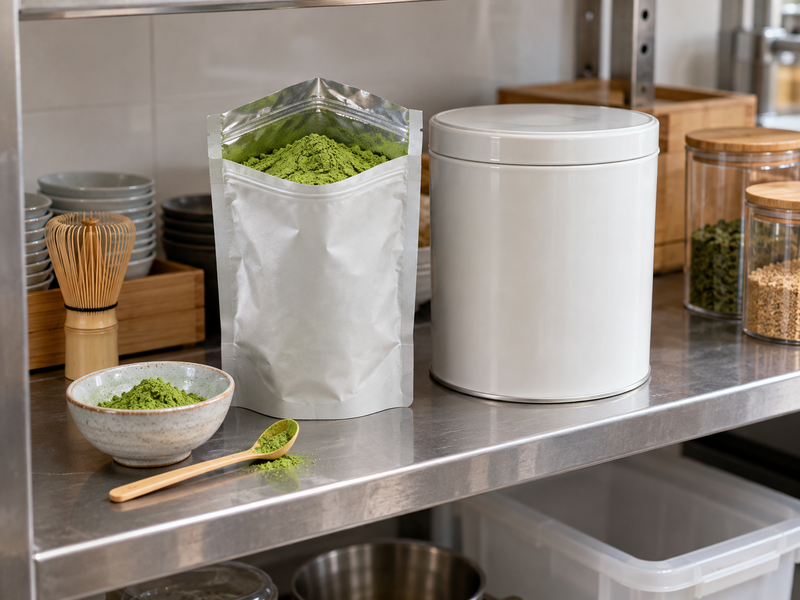
8. How should several restaurants share a specification?
Keep product and recipe versions recognizable
Create one current purchasing specification for each approved SKU and link it with the menu recipes using that product. Include product code, packing format, origin wording, required documents and the review process for changes. Give each restaurant the recipe version and receiving information it needs. A store may see a delivery under a distributor’s product code, so map that code with the group’s approved SKU.
Test the preparation at another kitchen before assuming the development restaurant’s results will repeat. Differences in liquid ingredients, tools or portioning can affect the dish even when powder supply remains consistent. Record those issues and update instructions where appropriate. Matcha wholesale for restaurants becomes easier to manage when substitutions receive a defined review rather than informal approval during a shortage.
A substitute might fit one dessert while changing an unsweetened tea service or an origin claim. Identify which uses it may cover. For broader product and supplier questions, the ceremonial supplier guide discusses how grade wording connects with application selection. Retain the group’s approval so new managers inherit the actual purchasing decision.
| Shared record | Who uses it | Version control |
|---|---|---|
| Product specification | Buyers and receiving teams | Current SKU and pack |
| Menu recipe | Kitchen and bar staff | Approved preparation |
| Guest description | Service managers | Reviewed wording |
| Substitution decision | Procurement and quality | Permitted applications |
9. What should a delivery discrepancy record contain?
Give the supplier a traceable description
Record the product code, lot reference, order number and receiving date when a delivery differs from expectations. Describe the observation precisely. A damaged carton, an unfamiliar unit size and a different flavor require different enquiries. Photograph packaging condition or identification where useful and preserve relevant records through your operation’s process. Avoid judging an entire shipment from one preparation made under different conditions.
If taste appears to have changed, compare through the agreed recipe and sample review method, then send the observations to the supplier. Your quality team should decide what further review or investigation is required. Keep affected stock status clear so staff know which units may be used and which remain pending. A supplier response should address the identified product and issue, not merely repeat a company quality statement.
For a restaurant group, note which kitchens received the relevant lot and coordinate communication through the assigned contact. Document the eventual decision and any agreed commercial remedy. These records also inform later purchasing: repeated packing damage may require another carton arrangement, while a preparation issue may require revised training rather than a different supplier.
10. How can the menu team prepare a reorder?
Update demand and requirements before confirmation
Review actual menu sales, powder usage and released stock. Give procurement the recipe quantities that remain current and flag any new dish or drink requiring a trial. A promotion, banquet program or store opening can change demand without changing the approved SKU. Ask the supplier for availability and a dated offer covering the next quantity, packing and delivery scope. Confirm whether product, documents or handling instructions have changed. Matcha Village can discuss matcha wholesale for restaurants within its Chinese matcha and application supply range.
Send the current menu brief and sample feedback if you need another product or format. Distinguish projected sales from firm orders so supply planning does not rest on an uncertain promise. Before approval, make sure the receiving team can identify the order and has a named contact for discrepancies. If a new product is selected, complete the recipe, document and packing review before adding it to normal purchasing. Retain the accepted quotation and specification with the purchase order so kitchens receive the product their menu team tested.
| Reorder input | Menu team review | Purchasing action |
|---|---|---|
| Current recipes | Confirm approved portions | Calculate requirement |
| New menu items | Identify trial needs | Request coded samples |
| Released stock | Check usable quantity | Set next order amount |
| Supplier offer | Review SKU and changes | Confirm written terms |
FAQ
Q1: Can one matcha serve every restaurant application?
Trial each dish and drink. One SKU can simplify stock if it meets the approved menu targets.
Q2: Does a higher grade always cost less per serving?
Use the accepted recipe portion and actual quotation. Grade labels alone cannot establish usable menu cost.
Q3: Should bar staff join sample testing?
Include the people preparing daily orders. They can identify portioning, pouring and equipment issues during the application trial.
Q4: What should menus say about origin?
Use reviewed product-specific wording. Matcha Village is Chinese, and ceremonial wording cannot support a Japanese-origin statement.
Q5: How should a group handle substitutions?
Review recipe fit, claims and required records, then document which applications the substitute may serve before normal use.