
A matcha supplier brief records what your business needs and who must approve it. Buyers lose time when operations, quality and finance send conflicting requests. Build one shared brief before requesting samples or offers. Supplier product pages can start the discussion, but your application and named information owners should define the purchasing request.
Contents
- 1. What should your matcha supplier brief help the team decide?
- 2. Who should own each part of the request?
- 3. How should operations describe the intended application?
- 4. What should quality place in the brief?
- 5. How should finance make the request commercially usable?
- 6. What receiving details should logistics provide?
- 7. How can the team turn the brief into a sample plan?
- 8. How should unresolved questions reach the right people?
- 9. What should suppliers receive in the inquiry package?
- 10. When is the brief ready for an order discussion?
1. What should your matcha supplier brief help the team decide?
Name the buying decision
Define the decision before filling a document with questions. A cafe group may need one powder for a permanent latte menu. A food manufacturer may need an ingredient for a scheduled development trial. A retail brand may need a bulk powder that its packing partner can handle. Those requests require different supplier answers. Record the application, intended purchasing stage and people who can approve progression.
Write the decision in one sentence. Add what would prevent that decision, such as an unresolved ingredient identity or an unapproved process trial. Keep preferences separate from conditions your team must meet. A desired pack format can change during discussion; a formulation restriction may require rejection. Specify which applies. Give each unresolved point an owner and a due date that your team can meet. The brief then becomes a working request rather than a catalogue of every possible concern. Keep prior discussion notes available, but send suppliers a clean version with a clear revision date.

2. Who should own each part of the request?
Assign information owners
Purchasing usually coordinates correspondence, yet it cannot answer every application or acceptance question. Ask operations to describe how staff will open, weigh and use powder. Ask quality to identify product records and approval conditions. Finance should confirm the buying entity and internal spending authority. Logistics should define receiving locations and shipment information. One coordinator can collect these answers without becoming the technical authority for all four functions.
Name one owner per open question. A matcha supplier should receive a contact route that remains usable when somebody is absent. Include a deputy where a delayed answer could stop a trial. State who may change the brief and who may approve an exception. If several branches contribute, let one operations owner reconcile their requests before sending them outside your business. This prevents a supplier from receiving different answers about the same SKU. During internal review, ask each owner to confirm their fields instead of asking everyone to approve a document they have only skimmed.
| Function | Owns these inputs | Approval record |
|---|---|---|
| Operations | Application and handling method | Trial instructions |
| Quality | Specification and required records | Product release decision |
| Finance | Buying entity and spend authority | Internal order approval |
| Logistics | Receiving site and shipment fields | Receiving instructions |
3. How should operations describe the intended application?
Describe the actual powder use
Write the preparation or production route with enough detail for a supplier to recommend a relevant product. For a latte, name the drink format, milk choices and mixing equipment. A bakery should specify when powder enters the recipe and whether staff disperse it before mixing. In dry blends, list the other ingredients and equipment involved. Avoid sending a single grade name as the entire application brief.
Include the method your team will use. Your matcha supplier can then flag questions about powder behavior before sending unrelated samples. State whether the proposed powder will serve one application or several. If a menu includes straight tea and milk drinks, let operations say whether one SKU must cover both. Do not assume a product promoted for one use will pass another. Add a photograph of your existing equipment if written descriptions leave room for confusion. Keep confidential formula details within an agreed disclosure process, while sharing enough information for a useful technical response.

4. What should quality place in the brief?
Separate requests from verified records
Quality should describe what evidence it needs for the proposed product and destination. Name the requested specification, ingredient information, lot identification and test records. For any certificate claim, ask which entity, factory and product scope the current document covers. A website badge cannot answer those questions. Avoid creating a large testing list merely because another buyer uses it; quality must select requirements for your own product and purchasing conditions.
List the records needed for approval. Give the supplier a document table with an owner, review status and accepted revision. Mark missing information openly. A received file may still need checking for product code, date, units or lot number. Our COA review guide can help organize that record. Keep those checks separate from receipt itself. If the supplier proposes a different format, quality should decide whether it answers the same requirement. Purchasing can chase the document without making the technical decision. Carry unresolved approval conditions into the sample plan so a successful recipe trial cannot accidentally override them.
| Record | What quality checks | Where the decision belongs |
|---|---|---|
| Specification | Item code, limits and revision | Approved material record |
| Ingredient information | Composition of proposed SKU | Formula review |
| Lot report | Lot reference, methods and units | Batch acceptance file |
| Claimed certificate | Entity, scope and current status | Supplier document review |
5. How should finance make the request commercially usable?
State the internal buying boundaries
Finance should confirm who will place the order, receive the invoice and approve spending. Use the correct entity name and billing information. Keep an estimated budget separate from an authorized purchase. If the brief describes several possible applications, finance should identify whether they share one project budget or require separate approvals. These details help purchasing request an offer that somebody within your business can act on.
Confirm the billing owner before asking for an offer. A matcha supplier may need different account details for a distributor, manufacturing site or brand office. Ask finance which purchasing currency and invoice fields its system accepts, without implying that the supplier has agreed. Record which commercial questions remain open for discussion. Do not insert guessed prices into the brief. Where the team needs a budget decision, ask for a current offer tied to a named product and quantity. Finance can then review a concrete proposal while operations and quality continue checking the application.

6. What receiving details should logistics provide?
Describe the delivery handoff
Logistics should identify the receiving site, contact, operating window and booking procedure. A supplier cannot infer whether a head office address accepts ingredient deliveries. State whether deliveries go to one warehouse, several branches or a separate packing partner. Describe receiving constraints such as carton handling, pallet access or appointment requirements. These are practical inputs for the request, even before a shipment route has been chosen.
Use the address where powder will arrive. Ask the matcha supplier which shipment information it can provide and when that information becomes available. Assign responsibility for checking receiving instructions before each new route or site. If another party handles import or distribution work, name its contact within the brief rather than leaving purchasing to forward messages indefinitely. Avoid claiming that any proposed paperwork guarantees entry or delivery. Your logistics owner should resolve destination requirements with the appropriate service provider and return the confirmed fields to the shared document.
| Receiving field | Information to record | Internal owner |
|---|---|---|
| Destination | Site name and complete address | Logistics |
| Booking | Appointment route and contact | Warehouse |
| Handling | Carton or pallet constraints | Receiving team |
| Shipment notice | Required fields and recipients | Logistics coordinator |
7. How can the team turn the brief into a sample plan?
Give each sample a purpose
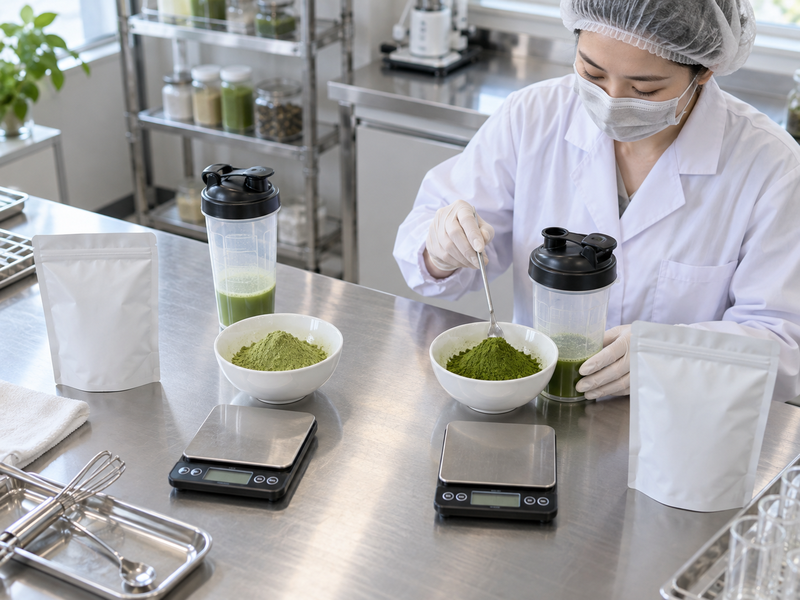
Samples should answer a question in the brief. Request enough material for the agreed application trial and retain identification linking each sample to its proposed product. State who prepares it, who observes performance and who records approval. A powder that looks suitable in a pouch still needs evaluation under your own preparation method. Keep the test instructions with the sample so another team member can repeat the intended process.
Record the question each sample must answer. For a supplier, a useful request might ask for alternatives suited to a named milk drink or a defined dry blend. Ask which differences the supplier expects between those alternatives, while treating those descriptions as claims for checking. Hold preparation conditions steady when comparing products. If your team changes equipment or dose during a trial, record the change. Keep the accepted identity in a reference sample record alongside its application and conditions. Purchasing can then request an offer for an identified product instead of ordering from a memory of the tasting.
8. How should unresolved questions reach the right people?
Keep a small issue register
A brief usually develops through several exchanges. Put unanswered questions in a shared register with the supplier response, internal owner and next action. Avoid hiding decisions across individual inboxes. A response about powder composition should reach quality. A response about case format should reach operations and logistics. Purchasing should track progress without interpreting technical answers on behalf of those owners.
Close questions with a recorded decision. A matcha supplier may answer only part of a request or ask for details your team has not supplied. Record that dependency. Use clear status words such as awaiting supplier, awaiting buyer or approved for trial. Avoid marking a question closed because somebody has replied. Link the answer to its document or correspondence date. When the answer changes a field in the brief, update that field and the revision record. This allows a deputy to continue the conversation and prevents an old attachment from becoming the basis for a new order.
| Open item | Response owner | Closure evidence |
|---|---|---|
| Application uncertainty | Operations | Accepted trial instruction |
| Missing product record | Quality | Reviewed document reference |
| Billing field | Finance | Confirmed account data |
| Delivery instruction | Logistics | Accepted receiving route |
9. What should suppliers receive in the inquiry package?
Send a readable request
Send the current brief, relevant application details and a concise response template. A supplier should be able to see what you are requesting, which information you already have and which points need an answer. Include a contact for technical questions and a coordinator for commercial correspondence. Keep draft internal arguments out of the package after the responsible owners have resolved them.
Ask for replies against the same fields. This makes responses from each matcha supplier easier for your own team to use. It also lets a supplier state that a request sits outside its range. One With Tea’s supplier article provides sourcing context for small businesses; your inquiry still needs an application and internal responsibilities. Avoid copying a public article’s list of supplier questions into your brief without deciding who will use each answer. Set a response date after checking your project schedule. Tell suppliers where to flag assumptions or alternatives rather than leaving them buried inside an offer.

10. When is the brief ready for an order discussion?
Release the approved revision
The brief is ready when named owners have accepted their fields and remaining conditions are visible. Product approval, account approval and order authorization may occur at different times. Record which stage has been reached. A completed brief does not itself authorize purchasing to accept substitutions, change formulas or release a batch. Those decisions need the owners already identified in the document.
Send the approved revision with the order request. Ask the matcha supplier to reference the product code and agreed information when replying. Store the accepted revision beside the sample result, relevant documents and offer. If a new application or receiving site appears later, reopen affected fields before extending approval. Give the coordinator responsibility for checking that shared copies match. Ask Matcha Village about bulk ingredients and application support; buyers should request current details for their proposed product. Start the next discussion with your brief, the sample question and the names of people who can approve the answers.
| Release condition | Evidence to retain | Decision owner |
|---|---|---|
| Application described | Approved brief revision | Operations |
| Quality conditions known | Review status and open items | Quality |
| Account details accepted | Billing and receiving records | Finance and logistics |
| Order discussion authorized | Internal approval reference | Purchasing authority |
FAQ
Q1: Who should coordinate a matcha supplier brief?
Purchasing can coordinate it. Operations, quality, finance and logistics should own the information and approvals within their functions.
Q2: Can a grade name replace an application description?
A grade name leaves preparation conditions unresolved. Include the intended product, equipment and handling method.
Q3: Should every requested document arrive before sampling?
Quality should define the sequence. Keep document conditions visible even if an application trial starts earlier.
Q4: How do we handle an alternative supplier product?
Record its product code and proposed differences, then return affected fields to their internal owners for review.
Q5: Does an approved brief authorize an order?
Only if your internal approval process says so. Record product approval and spending authority separately.
Schedule a short review with the four information owners. Resolve missing fields, issue a dated brief and send it with a defined sample request. Retain the accepted revision beside supplier replies so your team can use the same product, billing and receiving information during the next purchasing discussion.