
A matcha supplier corrective action record follows a powder issue from containment through cause investigation and verified closure. Replacing a delivery can leave the reason for the problem unresolved. Use lot evidence, assigned actions and agreed checks. Allera’s food-manufacturing SCAR guide separates containment, cause and verification; the record below applies that distinction to a buyer’s powder case.
Contents
- 1. When should a matcha supplier corrective action record open?
- 2. How should affected powder be contained?
- 3. What evidence should the buyer preserve?
- 4. How should the supplier request describe the problem?
- 5. How can the investigation distinguish cause from a quick fix?
- 6. What should a corrective action plan contain?
- 7. How should implementation evidence be reviewed?
- 8. What should an effectiveness check examine?
- 9. Who can close the corrective action record?
- 10. How should recurrence change the next supplier discussion?
1. When should a matcha supplier corrective action record open?
Use a defined finding
Start with the finding your team can document. It may concern a product-code mismatch, an out-of-spec result or a recurring powder-handling problem. Quality should decide how the event enters your own nonconformance process and who leads the supplier request. Do not describe an unverified observation as a confirmed supplier cause. The opening record should state what was found and what remains under investigation.
Record the finding before assigning a cause. Include the supplier, product code, lot, order reference, detection date and affected quantity where known. Identify who observed the issue and which record supports it. Our incoming inspection guide provides a separate way to organize receipt evidence. Use that evidence to create a precise request instead of sending a general complaint about poor quality. Ask the supplier to confirm its contact for the case. Keep quality, purchasing and operations responsibilities visible so each team knows which decisions it owns.

2. How should affected powder be contained?
Track the material and its current status
Follow your quality team’s handling decision for affected material and record where it is held. Identify relevant powder lots in stock, open production or other locations within your business. Ask the supplier to describe the scope it is investigating and what containment actions it has taken. Keep confirmed quantities separate from quantities still being checked.
Record who controls each affected quantity. Allera’s SCAR guide describes containment, cause investigation and action verification as separate parts of a supplier request. Your matcha supplier corrective action should retain evidence for each part. Use the case owner’s agreed times and escalation route rather than copying universal deadlines from a public article. Quality should determine product disposition under your own process. Purchasing can request supplier information without deciding that material may be used. Update the case when new locations or quantities become known, and keep the earlier record so the investigation’s scope remains traceable.
| Containment field | Information to record | Responsible owner |
|---|---|---|
| Powder in stock | Lot, quantity and location | Warehouse and quality |
| Material in use | Relevant production reference | Operations |
| Supplier scope | Confirmed investigation coverage | Supplier case contact |
| Disposition | Authorized material decision | Quality authority |
3. What evidence should the buyer preserve?
Keep original references and conditions
Retain the product identification, relevant photographs, supplier documents and records used to detect the issue. If a test result forms part of the finding, keep its lot reference, method, units and accepted specification. A number copied into an email can lose those conditions. If staff observed a preparation problem, record the actual equipment and method used.
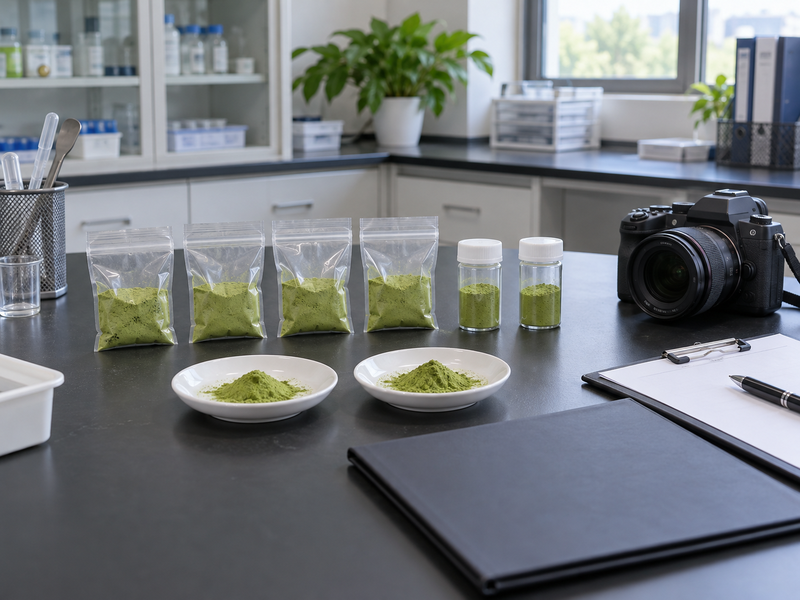
Preserve evidence with its context. A matcha supplier corrective action case should let another reviewer understand which powder and condition the finding concerns. Avoid editing photographs or summaries in a way that removes product identification or changes their meaning. Keep an accepted COA review record linked where applicable. Ask quality which retained samples or records it needs for the investigation. The supplier may request further information; record that request and the person who will answer it. Evidence collection should support the defined finding instead of expanding into unrelated documents that nobody plans to review.
4. How should the supplier request describe the problem?
Write a factual case statement
Send a concise finding statement with the product, lot and supporting references. State the buyer’s current containment status and the information requested from the supplier. Identify the authorized case owner and agreed response route. Keep requests for containment, cause investigation and action evidence distinct so the supplier can answer each one clearly.
Ask for the decision or evidence you need next. Your matcha supplier corrective action notice should describe the gap between the accepted requirement and observed condition. If that gap remains uncertain, say which question needs investigation. Avoid claims about blame or intent unless your team has evidence and a reason to address them. Set response expectations through the responsible case owner and record any agreed changes. Purchasing can coordinate correspondence while quality reviews technical answers. A clear request gives the supplier enough information to investigate and gives your team a record against which it can check the reply.
| Request component | Content to include | Response sought |
|---|---|---|
| Finding | Condition and evidence reference | Confirmed understanding |
| Identification | Product, lot and order | Investigation linkage |
| Containment | Current scope and buyer status | Supplier containment record |
| Investigation | Defined open questions | Cause and supporting evidence |
5. How can the investigation distinguish cause from a quick fix?
Ask what made the event possible
A replacement, credit or immediate adjustment may address the current delivery without explaining why the finding occurred. Ask the supplier what evidence supports its proposed cause and which process condition allowed the event. Keep a suspected cause separate from a confirmed one. The investigation may need records from both supplier and buyer, particularly when the observed condition involves preparation or handling.
Request evidence behind the cause statement. In a matcha supplier corrective action case, a reply such as staff error should lead to a question about the control involved and why it failed to prevent or detect the event. Do not assume every finding has one cause. Quality should review whether the explanation fits the actual evidence and scope. If your team also changed its process, include that information in the record. The next action should address the accepted cause while preserving the decision about material already affected. Keep unanswered questions assigned instead of accepting a short explanation merely because it sounds plausible.

6. What should a corrective action plan contain?
Connect each action with its cause
The proposed plan should identify the accepted cause, action, responsible person and completion target. Ask what evidence will show the action has been implemented and how effectiveness will be checked. A statement that staff will be more careful leaves those questions unanswered. Quality should decide whether the proposed change addresses the defined finding.
Give each action an owner and evidence requirement. Your matcha supplier corrective action plan may involve a revised instruction, equipment review, identification check or another process change supported by the investigation. Keep those as proposed actions until the responsible reviewers accept them. Record any buyer-side action with the same discipline. If an action depends on another step, describe that dependency and its owner. The case record should let purchasing see progress without treating completion of a task as proof of effectiveness. Ask the supplier to provide the agreed implementation evidence before moving the action into the verification stage.
| Action field | Question to resolve | Evidence to retain |
|---|---|---|
| Cause addressed | Which finding does this action prevent? | Accepted cause link |
| Owner | Who performs and confirms it? | Named responsibility |
| Completion | When will implementation be checked? | Agreed target and record |
| Verification | How will effectiveness be reviewed? | Accepted check method |
7. How should implementation evidence be reviewed?
Check what changed in practice
Ask for the evidence agreed in the action plan. A revised document may show that an instruction changed, while another record may be needed to show it was put into use. Quality should review the evidence against the named action rather than counting attachments. Record what was received, what was accepted and what remains missing.
Separate implementation from effectiveness. A matcha supplier corrective action can reach implemented status while its effectiveness check remains open. Keep that distinction visible in the case. If the supplier changes the action while working on it, ask for the reason and revised verification proposal. Return affected fields to their approval owners. Avoid accepting a different fix without checking whether it addresses the confirmed cause. Purchasing should retain the supplier response and quality decision together. This gives the verification owner a clear description of the actual change and prevents a later review from checking an action that was proposed but never performed.

8. What should an effectiveness check examine?
Test the accepted failure condition
Define the check around the finding and accepted cause. Quality should choose the evidence, scope and review point appropriate to the case. It may review subsequent relevant records, product results or a process check, depending on what the investigation found. Do not copy a fixed number of lots from a generic article and treat it as suitable for every powder issue.
Agree the check before declaring closure. Your matcha supplier corrective action record should identify who performs it, what result supports acceptance and what happens if the issue recurs. Preserve the original parameter or condition so a changed test cannot silently make the problem disappear. If the evidence covers only part of the affected process, record that limit. Quality should decide whether further verification is needed. The check should support a documented decision about the action, with references another reviewer can inspect. A successful replacement shipment alone may leave the cause-related action unverified; keep the agreed check visible until its owner completes it.
| Verification field | What to define | Decision owner |
|---|---|---|
| Condition checked | Original finding and cause | Quality |
| Evidence scope | Relevant records or product checks | Verification owner |
| Acceptance | Agreed result for review | Quality authority |
| Recurrence | Response if finding repeats | Case owner |
9. Who can close the corrective action record?
Assign an authorized reviewer
Your quality process should identify who can accept closure. That reviewer should see containment status, material disposition, accepted cause, implemented actions and verification evidence. Purchasing should receive the outcome that affects ordering, while operations receives any changed instructions. A commercial remedy can close its own action without settling the technical case.
Close against the agreed evidence. A matcha supplier corrective action record should show the reviewer’s decision, date and remaining conditions. If the evidence does not support closure, state the missing action and owner. Keep a decision about future supplier use within your authorized approval process rather than inferring it from a polite response. Ask the supplier to acknowledge any further responsibilities assigned at closure. Retain the complete record so later staff can see which product, finding and action the decision covered. If the scope changes during review, revise the closure conditions before somebody signs the earlier version.

10. How should recurrence change the next supplier discussion?
Link related cases without assuming the cause
If a similar finding returns, link the earlier case and compare product, process conditions and evidence. A repeated symptom may share a cause or require another investigation. Ask quality to decide what information needs checking and whether previous actions remained in use. Keep the new affected quantities and containment decisions distinct from the earlier case.
Use the previous record to ask precise questions. The matcha supplier corrective action history should show what changed, how it was checked and what the later finding adds. Review any account conditions through your authorized supplier process. Where verification needs expanding, assign the owner and accepted scope. Share relevant changes with purchasing and operations so staff work from current decisions. Retain the links between cases, evidence and supplier responses. The next discussion can then address the unresolved process question instead of repeating a complaint that loses its earlier investigation, implemented actions and closure conditions.
| Recurrence review | Record to compare | Next decision |
|---|---|---|
| Finding | Earlier and current conditions | Same or different investigation |
| Implementation | Accepted action and current use | Further evidence needed |
| Verification | Earlier check and new evidence | Revised scope |
| Account impact | Current approval conditions | Authorized supplier review |
FAQ
Q1: Does a replacement close a matcha supplier corrective action?
It can resolve a commercial or delivery action. The technical record still needs the cause and verification evidence agreed by its owner.
Q2: Who decides how affected powder is handled?
Your authorized quality team should control the material decision under its own process and record the relevant quantities and locations.
Q3: What makes a cause statement usable?
It identifies the process condition behind the finding and includes evidence that your reviewer can compare with the case.
Q4: Should every case use the same verification period?
Let the responsible quality owner define the scope and review point for the finding instead of copying a universal threshold.
Q5: What belongs in the closure record?
Retain containment, disposition, cause, implementation and verification decisions, plus the authorized reviewer, date and any continuing conditions.
Open a case with the finding and its lot evidence. Assign containment and investigation owners, agree action evidence and define the effectiveness check before reviewing closure. Keep the accepted outcome linked to purchasing and operations records so later orders and any recurring finding use the current supplier decision.