
Matcha mochi waffles are waffles formulated with matcha and a glutinous rice flour system to create a chewy center beneath a cooked exterior. A café can produce a striking sample yet struggle with sticking irons, variable chew, or a queue of orders. The practical route is to define the target bite, run controlled batter and iron trials, and price the accepted portion. Ingredient function and service records support a repeatable menu decision; a home recipe alone cannot establish one.
For: café groups, bakery developers, and ingredient buyers. Decision: whether this waffle can be made consistently during service at an acceptable cost.
Contents: 1 · 2 · 3 · 4 · 5 · 6 · 7 · 8 · 9 · 10
1. What should matcha mochi waffles taste and feel like?
Define a two-part texture target
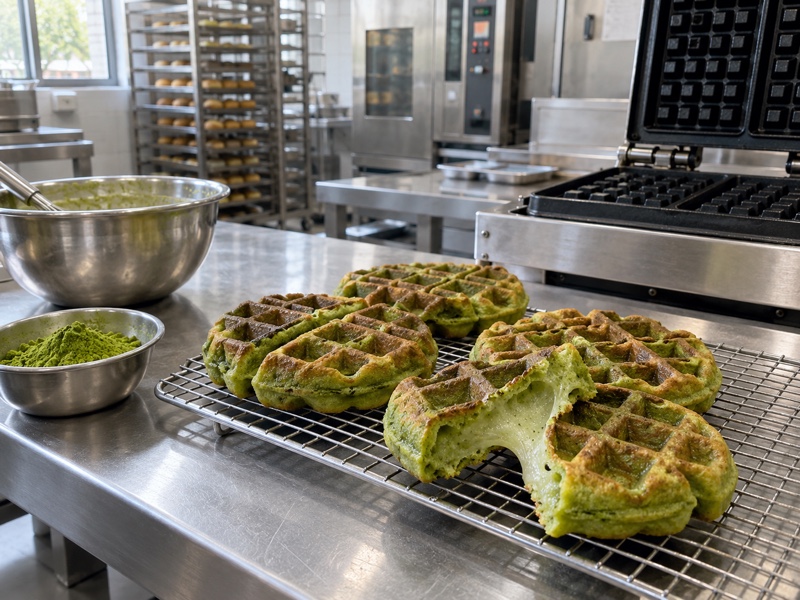
A useful brief separates the exterior from the center. The outer surface should release from the iron and carry enough structure for handling; the interior can be chewy without feeling raw or gummy. Matcha should remain noticeable after cooking and any toppings. Decide whether the menu serves one waffle as a plated dessert, a handheld portion, or a base for ice cream. Each version puts a different load on the crust. Cut one open: a photograph of the green surface cannot show whether the center meets the intended bite.
Describe the portion with a target mass, thickness, color range, and serving delay. Taste a waffle straight from the iron and again after the longest expected wait at the pickup counter. A product that becomes limp after three minutes may still work for table service but struggle with delivery. Ask tasters to score tea flavor, sweetness, chew, crust, and ease of eating separately. Do not combine those observations into one vague “good” rating. If the customer is meant to eat it with a fork, record how it cuts; if handheld, check whether it bends or breaks under toppings. That target guides flour, iron, and packaging choices.
2. Which flour system produces the desired chew?
Compare rice flour roles
Glutinous rice flour contributes the elastic, chewy character associated with mochi. Its name refers to texture and does not mean that it contains gluten, but a finished-product gluten-free claim still needs ingredient and cross-contact review. Wheat flour, rice flour, and starches can shift crust, structure, and chew when blended with it. Change the blend deliberately: replacing all flour with glutinous rice flour may make a different product from a mixed-flour waffle, and neither is automatically better for a café.
Run a controlled flour matrix with the same matcha lot, sweetness, liquid, mixing method, and iron cycle. A hypothetical first pass might compare glutinous rice flour at 50%, 70%, and 90% of total flour mass, with the balance defined on the trial sheet. Those are screening points, not validated production levels. Weigh the cooked waffle and record height, crispness, chew, and release from the iron. Recheck after a service delay. Choose the blend that meets the customer experience and can be dosed reliably; a highly elastic waffle that takes too long to release may slow a busy station.
| Flour direction | Likely tradeoff to test | Buyer decision |
|---|---|---|
| More glutinous rice flour | Stronger chew, possible sticking | Does bite justify handling? |
| Mixed flour system | More structure, different chew | Does it meet the product name? |
| Starch adjustment | Crust and tenderness shift | Is effect stable after hold? |
3. How should matcha be incorporated into batter?
Avoid green streaks and dry clumps
Matcha is a fine powder that disperses rather than dissolves. Preblending it with dry ingredients may spread it evenly if the flour system is mixed thoroughly. A separate slurry can help when powder arrives compacted, but it changes liquid accounting and adds a station step. Compare both methods with the same tea and total water. Inspect the crumb: a batter surface can look uniformly green while cooked sections reveal darker specks or bitter pockets.
Screen matcha in the finished waffle, not only in a cup of tea. Heat, sweetener, flour, and toppings change how tea flavor appears. A hypothetical matrix could compare matcha at 2%, 3%, and 4% of total flour mass, with every other ingredient and the iron cycle fixed. These are trial starting points, not a prescribed recipe. Record the exact denominator; percent of batter mass would give a different dose. If the waffle looks green but tastes weak under syrup, test a lower topping load before increasing tea. Ask suppliers for lot-linked specification, pack format, storage guidance, and relevant quality documents. Compare candidate teas at the dose needed for accepted flavor, not solely by dry-powder color.
| Matcha check | Standardize | Observe |
|---|---|---|
| Dry blend | Flour and mixing time | Streaks before liquid |
| Cooked waffle | Iron cycle and portion | Color and tea flavor |
| Delayed serving | Plate and hold time | Bitterness and color drift |
4. What hydration and mixing checks matter?
Watch batter over time
Rice flour hydration changes the flow of batter after mixing. A cup deposited immediately may spread differently from one deposited after a short rest. Record liquid mass, batter temperature, mixing speed, rest time, and deposit weight. Follow the last ladle: a batter that thickens through service can create smaller waffles even when staff use the same scoop. Check portion mass at the beginning, middle, and end of a proposed hold.
The mixing method should distribute matcha and leavener without trapping unpredictable air or leaving flour pockets. A development team can compare one short mix with a longer one while keeping all other variables fixed. If eggs, milk, or other binders are present, record their mass and temperature because they affect batter flow. Use a practical flow test, such as time for a fixed batter mass to spread in a marked ring, if the kitchen lacks a viscometer. It will not replace sensory testing but can alert staff to drift. Write a correction rule before the service trial; adding water by eye mid-shift makes the recipe impossible to evaluate fairly. A stable batter may allow prep in advance, but that conclusion needs a controlled hold test.
5. How should an operator set the waffle iron?
Define a repeatable cook cycle
Iron type, plate depth, thermostat behavior, and loading all affect the same batter. Use the equipment intended for service rather than approving a recipe from a different test iron. Record warm-up time, set point, actual plate temperature if measurable, batter mass, cook duration, and release behavior. Open at the agreed time: repeated early checks can tear a chewy waffle and alter heat recovery. Establish a visual and texture endpoint that staff can recognize alongside the timer.
Run consecutive waffles, not just one. Many irons behave differently after a cold start and during a queue. Sample early, middle, and late units for crust, center, mass, and color. Note any need for oil or spray and verify that it fits cleaning and label practice. A hotter setting may brown the exterior before the middle is fully cooked; a slower cycle may dry the crust and reduce throughput. Map where batter leaks and whether the operator must scrape matcha residue from grooves. The selected cycle should yield a safe, accepted product while leaving the iron ready for the next order.
| Iron variable | Record | Failure to watch |
|---|---|---|
| Plate temperature | Start and between orders | Inconsistent browning |
| Batter mass | Each trial portion | Underfill or overflow |
| Cook duration | Closed time and recovery | Raw center or dry crust |
6. Can batter be held through a café service?
Test a real prep window
A café may want to mix batter before the rush, but texture, leavening, and ingredient safety can change during a hold. Prepare one batch, then cook samples at defined intervals under controlled refrigeration or service conditions approved by the site. Keep the same iron and operator method. Compare the first and last: record batter flow, deposit mass, cooked height, crust, chew, and matcha flavor. A steady appearance in the bowl does not prove equal waffles.
The permitted hold time must also fit the formula’s food safety requirements, especially if it contains egg or dairy. That limit belongs to the operation’s validated plan, not to a generic recipe. Cover and label the batter, including mix time and lot, and prevent cross-contact with other station ingredients. If the batter separates, document whether gentle stirring restores performance or whether it changes air incorporation. A smaller batch made more often may deliver better quality than a long hold, even when it appears less convenient. Calculate the labor tradeoff with actual service timing and waste. Do not claim a shelf life from one successful taste test.
7. What toppings support the product without hiding it?
Keep matcha detectable
Syrup, fruit, cream, ice cream, and other toppings can balance the chew and tea flavor, but a heavy load may soak the crust or cover matcha completely. Build a plain control and compare one topping at a time. Watch the contact point: a wet sauce pooled in waffle grooves can soften the surface before the customer begins eating. Record both topping mass and placement, then taste after the expected handoff delay.
A plated dessert can tolerate a delicate structure that a takeaway sleeve cannot. Test the final assembly in its actual plate, tray, or package. If the menu offers customization, define a maximum load and check the heaviest combination. Matcha color may also look different under red fruit or chocolate sauce, so photograph the real build under normal counter light. Avoid relying on decorative powder dusting as proof of a strong matcha base; customers will judge the cooked waffle itself. From a buyer’s perspective, topping choice affects ingredient cost, allergen labeling, prep steps, and remake risk. A simpler build can be better if it preserves the intended chew and shortens the queue.
8. How should defects and allergens be checked?
Log failures by cause candidate
Sticking, torn edges, gummy centers, dry crust, green streaks, weak tea flavor, and collapse after plating all deserve separate records. Note iron position, plate temperature, batter age, portion mass, and operator. Keep a failed unit: a cut section can reveal whether the defect is undercooking, uneven batter distribution, or a formulation issue. Change one variable in the follow-up trial rather than rewriting the whole formula after one bad waffle.
Allergen review covers the full batter and toppings. Glutinous rice flour itself does not establish a gluten-free finished product if wheat flour is blended in or cross-contact occurs. Milk, egg, nuts, and soy may appear in either batter or toppings. Ask the regulatory or quality owner to review claims for the market and site. Also inspect cleaning between recipes on a shared iron. An attractive recipe that cannot be served safely to its claimed audience does not pass the brief. Record rejected portions and reasons so operations can see the real yield, not only the number of batter deposits.
| Defect | Check first | Controlled response |
|---|---|---|
| Sticking | Plate condition and cook cycle | Test one release change |
| Gummy center | Portion and heat history | Compare cut samples |
| Green streaks | Matcha dispersion | Adjust one mixing step |
9. What are the cost and sourcing decisions?
Cost an accepted serving
Matcha, rice flour, other dry ingredients, toppings, packaging, and labor all enter the selling decision. Calculate cost using weighed portions and actual purchase prices. Include rejected waffles and discarded held batter in yield. Price the finished order: a low batter cost can be misleading if a slow iron creates labor bottlenecks or if topping waste is high. Time a complete service cycle from ready iron to a clean station for the next order.
Purchasing should qualify matcha and glutinous rice flour against the trial lots. Ask for specifications, traceable batches, packaging, lead times, minimum order, and relevant food safety documents. A new flour source may hydrate differently; a new matcha lot may shift color or flavor. Set a change-control rule that triggers a short comparison bake when those inputs change. If the menu uses several sites, test the formula on each iron model or define an approved equipment list. A supplier quotation should be evaluated against usable product at the expected volume. Oversized packs can create freshness or waste problems even when unit price looks attractive.
| Cost driver | Input | Trial evidence |
|---|---|---|
| Ingredients | Mass and price per unit | Accepted serving cost |
| Labor | Ready-to-ready cycle | Queue capacity |
| Waste | Rejected waffles and batter | True yield |
10. What must a pilot prove before launch?
Run the menu under normal pressure
Write one versioned formula and preparation card, then test it during a representative service period. Have more than one operator make consecutive orders on the intended iron. Record batter age, portion mass, cook time, release, defect rate, and texture at handoff. Decide from sold portions: a bench sample should not outweigh repeated service failures. Ask staff which instruction causes confusion and revise the card before locking the process.
Quality should check the ingredient list, allergens, claims, sanitation method, and any batter-hold safety limit. Purchasing should confirm availability of the approved matcha and flour in usable packs. The final trial should include the chosen topping and takeaway format, since both can soften crust or add steps. If the product fails, identify whether batter, iron, assembly, or supply caused the problem and test one correction. A successful pilot yields accepted matcha mochi waffles across operators and throughout the prep window, with documented cost and a clear stop rule for off-spec units. Next, run a side-by-side flour blend trial using the same tea, iron, and serving delay. The linked consumer reference offers concept background; the café’s own trial establishes its commercial method.
Reference: “Matcha Mochi Waffles” — Just One Cookbook. It provides consumer recipe context; this café trial plan is independently written.
FAQ
Q1: What is the primary quality check for matcha mochi waffles?
Cut a cooked waffle and judge crust, center chew, and tea flavor at the intended serving delay.
Q2: How should a team choose matcha for matcha mochi waffles?
Compare traceable tea lots in the finished waffle at matched doses and iron settings.
Q3: Which defects should a pilot record for matcha mochi waffles?
Sticking, tears, gummy centers, dry crust, color streaks, and weak tea flavor.
Q4: How should matcha mochi waffles be stored or served?
Use a validated batter hold and serve cooked waffles within the period that preserves the target texture.
Q5: What must a supplier document for matcha mochi waffles?
Ingredient identity, lot traceability, specifications, relevant tests, pack details, and change notices.