
Matcha gummies put tea powder into a small, wet confection that may settle before it sets. A glossy first piece says little about bitterness, sweating or a weak gel after storage. Trial the actual depositing and conditioning steps, then cut pieces from early and late in the run. Check tea distribution, surface moisture and bite in the intended pouch before setting a release specification.
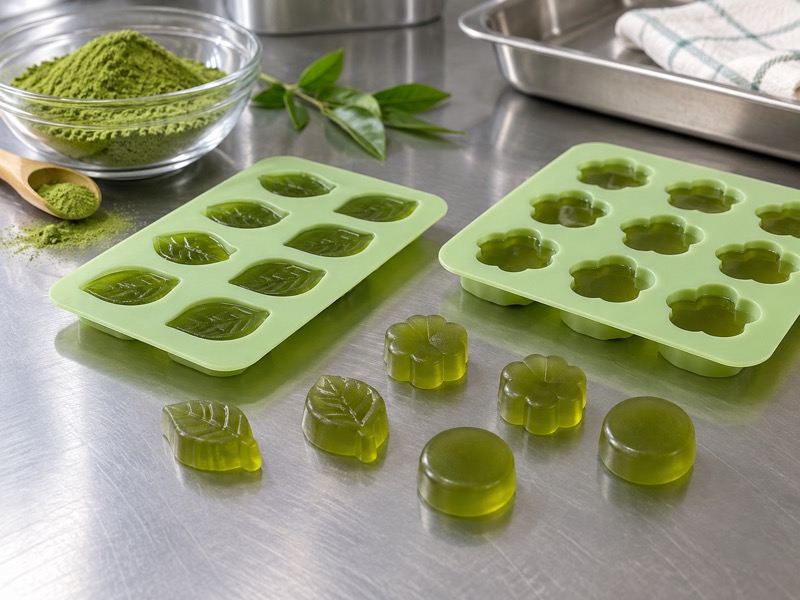
For: confectionery brands and contract manufacturers. Decision: whether matcha gummies can be made, documented and sold consistently.
1. What is matcha gummies supposed to deliver?
Set the product promise
Matcha gummies is soft gel confections containing matcha, where gel chemistry and tea particles both affect the bite. For confectionery brands and contract manufacturers, the useful question is what a customer should notice in a normal portion, not how vivid a laboratory sample looks. For matcha gummies, write a product target that includes tea flavor, the intended texture and the visible result. Name the target serving and sales route for matcha gummies before sampling. That target helps the team reject a greener sample if it also brings settled green specks, weak gel, sweating or a bitter aftertaste.
Define the promise. Start with a sample made from matcha, a chosen gelling system, sweetener, water and any flavor or acid. Ask what a normal serving of matcha gummies delivers and whether the proposed menu or pack wording overpromises. A piece must taste balanced and hold its bite after conditioning, not merely look green in a mold. A matcha gummies sample passes only when its taste, texture and use match that target. Keep a dated matcha gummies reference sample and photograph it under the same light; taste and texture still need direct checks.
A gummy is a confection unless its regulatory classification and claims are separately established. Avoid a wellness promise based only on tea color.
2. Where will buyers and customers use matcha gummies?
Map the customer journey
The same concept may be sold through a café, a manufacturer or an importer, but those channels expose different failure points. Trace the path of matcha gummies from preparation through sealed confectionery packs under validated temperature and humidity conditions to the final serving. Record each handoff, its time and temperature, and who can correct a failed matcha gummies unit. A product intended for immediate service need not be engineered around a month-long pack, while a retail claim cannot rest on a fresh bench sample.
Choose one route first. For matcha gummies, write down the proposed unit, pack or serving vessel, staff steps and expected hold. Retail pouches and bulk foodservice tubs place different demands on piece stability. If matcha gummies has more than one sales route, test the same formula through each route before extending approval. If matcha gummies moves to a second format or site, run the same checks there. A handling instruction cannot rescue settled green specks, weak gel, sweating or a bitter aftertaste if normal buyers will encounter it.
A pectin fruit gummy and a gelatin gummy differ in bite and labeling. Decide the desired consumer and vegan position before choosing the gel.
| Route | What to specify | Acceptance observation |
|---|---|---|
| Immediate service | Serving size and preparation time | Condition at first and last bite or sip |
| Packaged sale | Pack, storage and distribution route | Condition after the proposed hold |
| Second site or operator | Tools and written preparation card | Repeatability across people |
3. Which ingredients deserve a side-by-side trial?
Sample in the real formula
Ingredient selection starts with the complete application. Ask for identified matcha lots and compare equal doses in the proposed matcha gummies formula. For this application, a supplier grade or dry-powder color is less informative than the finished matcha gummies sample. Hold matcha, a chosen gelling system, sweetener, water and any flavor or acid steady while changing one candidate matcha. Taste coded matcha gummies samples where possible; score tea aroma, finish, texture and appearance separately. If another ingredient dominates the sample, raising the tea dose may not be the most economical answer.
Keep the comparison fair. Use a reference lot, the proposed new lot and, where useful, a lower-cost alternative. Gel type, acid and sweetener can change how the tea is perceived in a small piece. Prepare the matcha gummies comparison on one day with tea packs stored in the same conditions. Ask how the matcha specification varies by lot and whether pack sizes fit the expected matcha gummies production rate. If the application needs a particular origin, organic status or other claim, request the relevant documents for the exact item before putting that language in a product description.
Acid and fruit flavor can hide tea or make its bitterness sharper. Taste the piece after conditioning, not only the warm syrup.
| Candidate | Hold constant | Judge in the product |
|---|---|---|
| Reference tea lot | Dose and full formula | Flavor and texture benchmark |
| Alternative tea lot | Same dose and process | Difference that affects the buyer |
| Changed companion ingredient | Tea lot and dose | Whether the formula, not tea, drives the result |
4. What should the first formula record contain?
Keep a mass balance
Build the first formula as a mass balance, with the weight of every ingredient and the finished yield recorded. The record makes a matcha gummies trial repeatable and isolates a real tea change from a yield change. Set a target portion before calculating matcha grams per serving. In the first matcha gummies trial, vary tea dose and one companion factor while keeping the production method fixed. Treat the first matcha gummies dose and yield ranges as trial notes until a pilot confirms them.
Write down the denominator. A percentage of dry mix, liquid base or finished serving means three different things. Record deposited piece weight and finished moisture alongside tea dosage. Weigh the matcha in pilot trials of matcha gummies; translate that dose to staff tools only after repeatability is shown. Keep the lot, operator, date and tasting result next to each matcha gummies formula version. Do not approve matcha gummies from a single attractive batch; another operator must reproduce it.
Keep water, solids, acid and gel level fixed during initial tea trials. Otherwise a setting failure cannot be assigned to the matcha lot.
| Trial variable | Record | Reason |
|---|---|---|
| Matcha dose | Grams per finished portion | Flavor, color and cost |
| Base composition | matcha, a chosen gelling system, sweetener, water and any flavor or acid | Texture and flavor interaction |
| Process yield | Start mass and accepted output | Real ingredient cost |
5. How should the production method be controlled?
Reproduce the process
The proposed process is dispersing matcha, cooking or setting the gel and drying or conditioning pieces as needed. Break it into steps that an ordinary operator can follow: order of addition, mixing energy, time, temperature and what the material should look or feel like before moving on. Tea powder can form localized pockets when it is added too late or to a mixture that cannot wet it evenly. Compare a bench sample with one made on the real equipment. Scale changes shear, residence time and losses; a method that works in a glass may not work in a tank.
Measure the handoff. Photograph or record the mix at the point where the next operation begins, then inspect the finished portion. The chosen equipment must distribute powder before the mass thickens or sets. Note residue left in tools or pipework and the cleaning step needed before the next product. If the line uses heat, cold or a long hold, sample after that stage rather than assuming the freshly mixed color and flavor will remain. Change one matcha gummies process setting at a time, then compare it with an untouched control.
Disperse powder before the gel becomes too viscous. Inspect cross-sections to see whether tea settled while pieces were setting.
6. Which defects should the team look for?
Run a defect check
List likely matcha gummies defects before the pilot so each sample is judged against the same rule. The main risks here are settled green specks, weak gel, sweating or a bitter aftertaste. Compare equal matcha gummies portions at the same observation time so a defect score means something. Inspect the first, middle and final units from a run. Before rejecting a tea lot for settled green specks, weak gel, sweating or a bitter aftertaste, repeat a fixed control formula with the same equipment.
Trace the failure. When a sample disappoints, change one factor and keep an untouched control. Inspect a cut piece for settled tea and test the surface after storage. Write separate pass rules for matcha gummies appearance, tea flavor and texture, with a retained sample where useful. A “looks fine” note is too vague for a second shift or another factory. If the team cannot agree on a pass rule, the product target needs work before supplier selection or a larger production trial.
A piece can pass demolding and still sweat in a sealed pouch. Test texture and surface over the actual storage cycle.
| Observed issue | First comparison | Possible next test |
|---|---|---|
| Settled green specks | Control lot at fixed formula | Change one process variable |
| Uneven portions | First versus last unit | Check mix and hold sequence |
| Flavor drift | Fresh versus held sample | Check pack and storage |
7. How should the product be held and packed?
Test the actual pack
The appropriate holding route is sealed confectionery packs under validated temperature and humidity conditions. Test it with the actual container, closure and handling pattern. A day-one matcha gummies sample establishes neither shelf life nor microbiological safety. Assign those decisions to the food-safety and quality team using the complete finished formulation. Record the quality attributes that matter to the customer, such as color, aroma, texture and uniformity, at more than one point through the proposed period.
Test the real pack. Consider how a partly used ingredient bag, service vessel or retail unit is opened and closed. Water activity and shelf life need product-specific measurements. If the route includes delivery, test vibration, temperature changes and the time a unit waits before use. Label directions should reflect a validated product, not compensate for a defect that normal users cannot reasonably fix. Keep food-safety limits separate from sensory preferences; passing one does not prove the other.
Water activity and microbiological safety require measurement and a qualified shelf-life plan. Appearance alone is not evidence of stability.
8. What should the supplier file contain?
Link the records
A supplier file should let another buyer reorder the same ingredient and investigate a complaint. At minimum, keep the item code, lot identity, specification, packing format, storage guidance, lead time and agreed sample standard. Request safety, contaminant, allergen and certification records suited to the finished matcha gummies and its sales market. Check the scope and date of each document. A general brochure does not prove the purchased tea lot supports a matcha gummies package statement.
Connect the records. Link the approved formula and finished product code to ingredient specifications, including matcha, a chosen gelling system, sweetener, water and any flavor or acid. Packaging and claim records should cover the finished confection, not only the dry powder. If a supplier changes a material or pack, retest the relevant function before using it in production. Do not copy a competitor’s claim or a recipe page’s storage advice onto this product. A short, current document pack is more useful to procurement and quality teams than a folder of undated marketing PDFs.
Specify tea identity, particle behavior and finished-piece claims. A supplier’s certificate does not validate a nutritional label.
9. How should the real unit cost be calculated?
Price the usable output
Cost matcha gummies from the accepted portion, including its actual matcha dose, rather than from a powder price alone. Multiply the actual tea dose by its purchased cost, then add the other ingredients, packaging, labor, utilities where material, and the expected loss. Compare saleable matcha gummies output with the planned batch yield. A cheaper powder may need a higher dose, and a more expensive pack may save waste if a site uses tea slowly. Keep these tradeoffs visible rather than choosing from a single quoted line item.
Count what is sellable. Use production records to measure the proportion rejected for settled green specks, weak gel, sweating or a bitter aftertaste. Mold loss, conditioning yield and rejected pieces affect the unit cost. Estimate cost at pilot scale, then update it with real line or shift data. Include a realistic reorder quantity and delivery lead time so the apparent margin is not built on an impossible small purchase. If a formulation change affects flavor or claims, include the testing and label work in the decision instead of treating it as free.
Cost the accepted piece weight and drying yield; material stuck in a cooker or mold is part of the batch cost.
10. What pilot is enough to approve a launch?
Approve a limited run
A useful pilot answers a defined decision: can matcha gummies be made repeatedly, sold honestly and delivered in acceptable condition? Make a short protocol with the intended formula, equipment, pack or service vessel, operator instructions and pre-agreed pass rules. Sample at the beginning, middle and end of the run. Invite production, quality and buying staff to record their observations separately before discussing them; this reduces the pull of the first confident opinion.
Release against evidence. Compare the pilot with the retained target sample and investigate any miss. Test the depositor, demolder and final pouch together. For matcha gummies, capture yield, cycle time, waste and normal customer-use observations beside the tasting sheet. The next step is a limited, measured run with the actual sales route, followed by a decision to approve, adjust or stop.
Pilot on the intended depositor and pouch line, then inspect pieces from beginning, middle and end of the run.
| Pilot checkpoint | Evidence to capture | Release question |
|---|---|---|
| First unit | Formula, lot and sensory record | Does it meet the target? |
| Middle and last units | Variation, timing and losses | Can the process repeat? |
| Customer-use sample | Pack or service hold observation | Does the promise survive use? |
The immediate next action is a controlled matcha gummies trial with one accepted formula and a written pass rule. For a broader view of tea selection, see the matcha flavors guide.
Reference: Gut-Loving Matcha Gummies is a topic reference; no wording, recipe or photograph from it was reproduced.
FAQ
Q1: What is matcha gummies? Soft gel confections containing matcha, where gel chemistry and tea particles both affect the bite. The exact ingredients and serving format should be stated on the final product.
Q2: How should a buyer choose matcha for matcha gummies? Compare identified tea lots at equal mass in the complete proposed formula, then approve the one that repeats under the intended process.
Q3: What can go wrong with matcha gummies? Watch for settled green specks, weak gel, sweating or a bitter aftertaste. Check a fixed control before changing tea lots or the whole formula.
Q4: How should matcha gummies be held? Build a validated handling plan for sealed confectionery packs under validated temperature and humidity conditions. A home recipe’s timing is not a commercial shelf-life test.
Q5: What should happen before a launch? Run a limited trial with the real equipment and route, then approve only a version that meets written flavor, texture, safety and cost criteria.