
Matcha granola bars are cereal-and-seed snacks flavored with powdered green tea. Their challenge is more involved than making the mix green: the binder must hold oats and inclusions together, the tea must remain noticeable after baking or setting, and the bar must reach the customer without crumbling. What To Cook Today’s soft and chewy matcha sesame coconut granola bars show one home-style direction. A brand or café needs to validate its own texture, pack and sale period under real handling conditions.
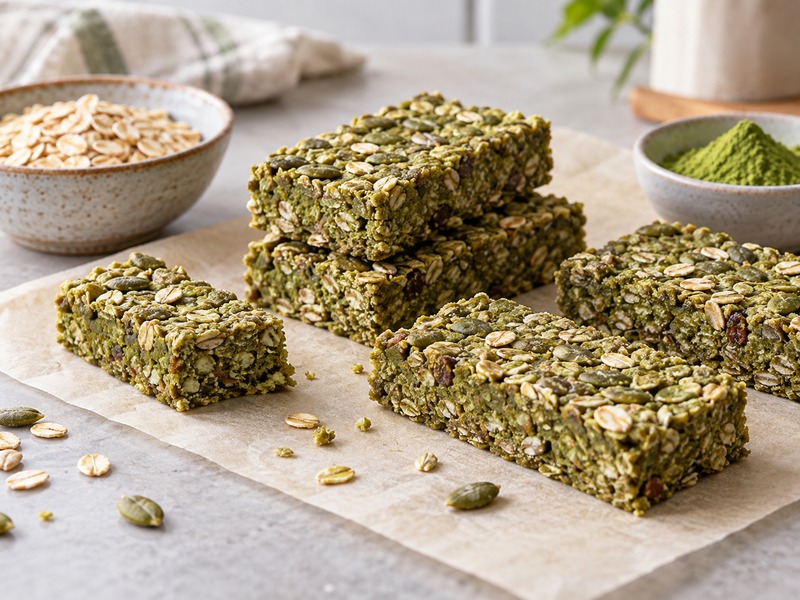
For: snack developers, bakeries, café buyers and private-label teams. Decision: which formula produces an identifiable tea flavor and a bar that holds together through packing and sale.
1. What kind of matcha granola bar is being sold?
Choose chew before ingredients
A soft, chewy bar and a crisp baked bar need different binders, moisture levels and packaging. A refrigerated café bar differs from an ambient retail snack. Set the target weight, dimensions, texture, serving temperature and distribution route before comparing recipes. Decide whether the bar is a tea-forward snack or a cereal bar with a quiet green note. This choice affects matcha dose, sweetness and the ingredients that can sit beside it.
Describe the bite. Ask tasters to note first-bite resistance, chew, stickiness, loose crumbs and tea aftertaste. A bar can feel perfect when freshly cut but become hard after a week or soft in a humid pack. Keep a reference bar for near-term comparisons and photographs of the cut face. If the product is marketed for portability, include a one-handed eating test; a bar that requires a plate is missing its use case.
| Target style | Advantage | First failure to test |
|---|---|---|
| Soft and chewy | Easy café snack | Sticking and staling |
| Crisp baked | Strong bite | Crumbling |
| Chilled coated | Dessert-like | Condensation and melt |
2. Which matcha survives the cereal matrix?
Taste a finished bar
Oats, seeds, coconut and sweet binder can mask delicate tea. Request identified matcha samples and use the same measured dose in the same bar formula. Taste after the normal baking or setting route and after a planned hold. Compare tea clarity, bitterness, color and any gritty sensation. A bright green dry powder does not guarantee a green bar because the matrix is tan and can brown with heat. Choose tea on the product’s finished performance.
Keep supplier evidence. Record lot identity, specification, packaging, storage guidance and any documents required by purchasing. A larger pack may be economical but exposes the powder to more air during repeated openings; compare with production cadence. Retain an approved powder sample and a bar standard. If a new lot changes color or taste, run a confirmation bake before switching a production run.
3. How should matcha enter the mix?
Distribute it through dry ingredients
Matcha can clump if it is dropped into a sticky syrup. A dry preblend with oats, flour or another powder fraction can help, provided the mixer reaches the full batch. A different route is to disperse tea into a compatible binder, but that must be tested for lumps and moisture effects. Write down addition order, mixing time and tool. Scrape vessel corners during pilot production and sample early and late bar portions for color and flavor.
Avoid an uneven finish. Dusting matcha only on top can create a striking photograph yet leave one bitter bite followed by a plain cereal bar. If a surface dusting is part of the concept, assess how much remains after wrapping and transport. A tea-containing base gives more even flavor but may look less vivid. The choice should be made from eating and handling tests, not imagery alone.
| Addition route | Possible benefit | Watch point |
|---|---|---|
| Dry preblend | Even distribution | Powder at mixer edges |
| Binder dispersion | Stronger color | Clumps and water balance |
| Surface finish | Clear visual cue | Dust loss and bitter first bite |
4. What binder keeps the bar intact?
Balance hold and chew
Syrup, honey, nut butter, fiber ingredients and fat each affect how a bar binds and eats. A binder that holds a warm slab may become brittle after cooling. Another may remain sticky enough to pull at the wrapper. Start with a small matrix that changes binder amount while keeping oat blend, matcha and bar thickness steady. Cut at the same temperature and time after forming. Weigh broken pieces and inspect the cut edge. The target is enough cohesion to survive sale without turning the bar into a hard candy.
Test ingredient interactions. Matcha adds dry solids, so increasing tea may change the binder requirement. Sesame and coconut also influence oil and texture. If a supplier substitution changes oat size or nut grind, the approved binder level may no longer work. Record ingredient size, not only weight. A bar made with coarse rolled oats will not pack like one made with fine fragments.
5. Which inclusions help rather than hide the tea?
Choose for flavor and handling
Sesame, coconut, puffed grains, nuts and dried fruit can provide contrast. They can also dominate a mild matcha. Taste a plain tea base, then add one inclusion at a time. Record whether the inclusion improves the tea finish or mainly increases sweetness. Large fruit pieces may create weak points where the bar cracks. Oily nuts can alter shelf texture. If seeds are used, assess their roast level and possible bitter notes alongside matcha.
Keep the allergen picture clear. A bar may contain sesame, peanuts, tree nuts, milk or soy depending on the binder and coating. Apply the producer’s allergen program and review labels for the intended market. Do not choose an ingredient merely because it sounds “healthy.” The finished sensory and handling result should justify it. If a nutrition claim is planned, that needs a separate calculated and reviewed basis.
| Inclusion | Potential gain | Risk to challenge |
|---|---|---|
| Sesame | Nutty contrast | Allergen and roast bitterness |
| Coconut | Sweet aroma | Tea masking |
| Dried fruit | Acid and color | Weak cut points |
| Puffed grain | Light bite | Crush in transport |
6. How should the slab be formed and cut?
Control thickness and compression
The bar’s shape affects both eating and yield. A loosely pressed slab can crumble; excessive compression can make a dense, hard bite. Use a marked frame or consistent depositor and record slab thickness at several points. Keep the forming temperature and rest time the same in comparative trials. Cut with the intended equipment, then weigh full bars, edge trim and crumbs. If the product will be hand-cut in a café, determine whether staff can reproduce the size without slowing service.
Look at the wrapper fit. A slightly oversized bar can tear the pack or smear a coating. A narrow bar may rattle and break. Use actual package dimensions during the pilot. Test cut face appearance after a normal handling period. A clean edge at the production table may become ragged once the bar is moved, packed and boxed.
7. What happens during baking or setting?
Track color and flavor together
A baked bar can develop toasted notes that support sesame but mute matcha. A no-bake bar may protect tea aroma yet require more binder control. Compare the chosen route at several process endpoints. Record product temperature where appropriate, time, weight change and appearance. Taste after cooling; a warm sample is not representative. If a pale green target is important, compare protected interior color with the surface after processing.
Avoid solving every color loss with more powder. A higher matcha dose can bring bitterness and cost. First assess bake intensity, base ingredient browning and tea lot. A coating or layered design may preserve a green visual, but it adds handling, allergen and melt considerations. Choose it because it improves the whole product, not because it rescues a poor base bar.
| Process route | Likely tradeoff | Trial measurement |
|---|---|---|
| Baked | Toasted flavor | Tea after cooling |
| No-bake | More tea aroma | Binder stability |
| Coated | Strong display | Pack smear and melt |
8. Which shelf defects matter most?
Hold bars in their real pack
Pack samples in the proposed film or pouch and store under planned conditions. Inspect at scheduled intervals for hardening, softening, rancid notes, color drift, wrapper sticking and crumb accumulation. Include transport handling before opening a sample. A bar that keeps its shape in a tray may shed oats after vibration. Water activity and microbiological requirements depend on formula and market; have the relevant safety and shelf-life work done before choosing a date code.
Taste the end of sale. Compare held bars with a fresh reference, blind if possible. Record whether matcha remains identifiable or has become a faint grassy note beneath stale cereal. Look for difference between center and edge pieces from the production slab. If a coating is used, inspect bloom and cracking as well as the bar itself. A good launch photo cannot substitute for this held-product test.
9. How should the bar be costed and sourced?
Use saleable yield
Price matcha, oats, binder, inclusions, film, labor and process loss per bar. Count trim and broken units rather than assuming every kilogram of mix becomes a sellable pack. Compare tea samples at the dose needed for flavor after holding; a weaker inexpensive matcha may cost more in the formula. Check lead time, minimum order and lot-change practices for tea and key binders. A specialty ingredient with unreliable supply can stop production even when its cost share is small.
Avoid unsupported positioning. Matcha does not by itself make the bar a functional or low-sugar product. Any nutrition, origin or certification claim needs evidence and label review. Plain copy that accurately describes tea flavor, texture and ingredients is easier to maintain. If the bar contains a visible nut or seed allergen, the pack design should leave room for clear required labeling.
| Buying question | Evidence to request | Product consequence |
|---|---|---|
| Can tea lots be traced? | Lot record and specification | Consistent tea flavor |
| Will oat size change? | Particle-size or cut description | Binder and breakage |
| Is film available on time? | Pack lead time | Launch schedule |
| How much is lost? | Pilot yield record | True unit cost |
Build one cost sheet with an accepted bar weight and the actual pilot yield. Then run a sensitivity check: what happens if matcha needs a slightly higher dose, or if more bars break during wrapping? A product that is profitable only at a perfect laboratory yield is not ready for a production quote. Share the accepted sensory target with purchasing so substitutions can be tested before a bulk order is placed.
10. What pilot makes the launch decision credible?
Produce and ship the real unit
Run a pilot at a scale that exposes mixing, forming, cutting and wrapping limits. Sample bars from the first, middle and last part of the slab or run. Weigh them and check dimension, texture, tea distribution and crumbs. Pack and handle them as intended, then taste at release and after the proposed hold. Let people eat them as they would in normal use, without a plate, and note whether the bar remains intact.
Approve measurable checks. Specify tea lot and dose, binder range, forming thickness, cut weight, wrapper, acceptable crumbs and sensory standard. Define what prompts a new trial, such as a different oat size, syrup or matcha lot. A small packed shipment through the actual sales route is the useful next step. It will reveal whether the bar is a repeatable snack rather than a good-looking tray bake.
Reference: Soft and Chewy Matcha Sesame Coconut Granola Bars is a consumer format reference. The product checks above are independent development guidance.
FAQ
Q1: Are matcha granola bars necessarily baked? No. Baked and no-bake routes have different flavor, texture and shelf tradeoffs.
Q2: Why does the bar crumble after packing? Review binder, compression, thickness, cut size and transport before changing tea dose.
Q3: How is matcha dose compared across trials? Record grams per kilogram of finished mix and taste the complete bar after normal holding.
Q4: Does a green bar support a health claim? No. Claims need product-specific evidence and review under the rules of the sale market.
Q5: Can the home recipe’s storage time be used commercially? No. The final formula, process and package need a commercial safety and shelf-life program.