
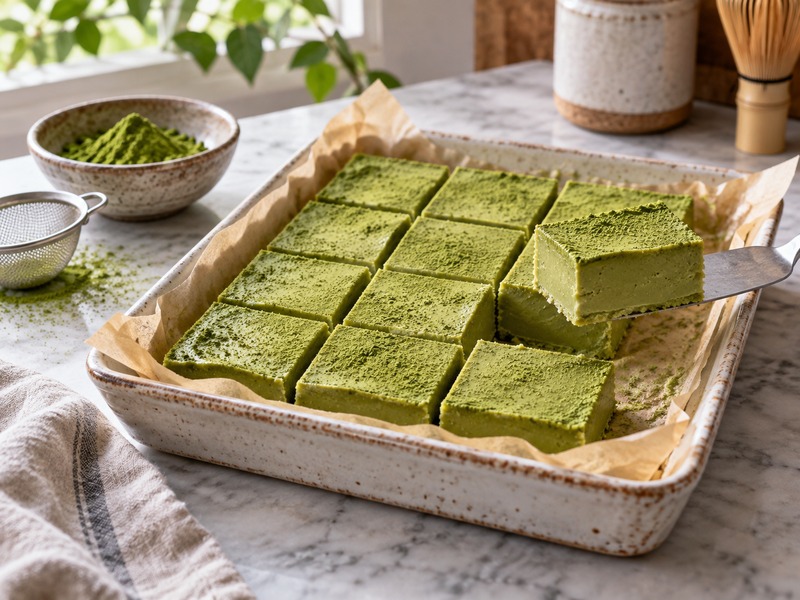
Matcha fudge looks simple: a pale green square with a creamy bite. In production, the challenge is keeping the tea visible against white chocolate and condensed milk while setting a texture that cuts cleanly. For a home baker, a reliable pan is the goal. For a café or confectionery counter, every pan must also survive portioning, packaging, and a busy display. These ten checks cover the recipe and the operating decisions behind it.
1. Which style of matcha fudge are you making?
Choose a formula before changing ingredients
“Fudge” can describe cooked sugar candy or a softer no-boil confection built from white chocolate and condensed milk. Those systems set differently. The ranked 5-Ingredient Matcha Fudge recipe uses matcha, condensed milk, white chocolate, vanilla, and salt. It heats the milk with sifted matcha, melts in chocolate, then chills the pan. That is an accessible starting point, but it is one recipe with a particular ratio, not a universal standard for all fudge.
Write down which texture you want: firm enough to gift in a box, soft enough for a dessert plate, or stable enough for a warm retail case. Test one formula before swapping chocolate, condensed milk, or sweetener. Changes to fat, water, and sugar alter the set. A batch that tastes good by the spoon can become sticky after cutting. For a professional trial, define a target square size and storage condition first, then evaluate the finished product against that target.
| Style | Main structure | Best first test |
|---|---|---|
| White-chocolate fudge | Chocolate and condensed milk | Set and cut quality |
| Cooked sugar fudge | Sugar crystallization | Grain and temperature |
| Vegan-style confection | Plant fat and sweetener | Stability and label |
| Frozen dessert bite | Chilled fat matrix | Melt after serving |
2. How much matcha should you use?
Balance tea against a sweet base
Matcha has to compete with white chocolate and condensed milk, both of which bring strong sweetness and dairy notes. The ranked recipe starts with two tablespoons of powder for an eight-inch pan. That is its author’s tested balance, not a fixed dose for every powder. Matcha varies by lot in bitterness, color, aroma, and particle feel. Start with the recipe quantity, then make a second small trial with a measured adjustment. Record grams, since a tablespoon can hold different amounts depending on packing.
Taste at three points: when the mixture is warm, after it sets, and after a day in storage. Cold fat can mute tea aroma. More powder may improve flavor but can also thicken the mixture and produce a dry, dusty finish. If the first pan tastes sugary, changing the white chocolate may help more than adding a large scoop of bitter powder. Ask a supplier for a small sample and compare it in the actual fudge base. Matcha Village can be included in that sample set, but the finished square decides the purchase.
3. Why does white chocolate quality matter?
Check the label and melting behavior
White chocolate provides fat, sweetness, and a setting structure. Products sold as chips, bars, or coatings may have different fat compositions and melting behavior. The ranked recipe specifically notes that chocolate quality changed the result. For a café, select one SKU, weigh it, and test its melt in the full formula. If a substitute is required, run another batch instead of assuming the same weight produces the same texture. The difference may show up only after chilling and cutting.
Avoid overheating. Gentle heat and steady stirring help incorporate the chocolate without scorching milk solids or causing an oily-looking mixture. A thermometer and a heavy-bottomed pan can make the process more repeatable, but visual checks still matter: the mixture should be smooth, with no unmelted chips or dry matcha pockets. If it separates, note the heat, sequence, and product used before changing several ingredients at once. A beautiful green color cannot compensate for a greasy finish.
| Ingredient choice | Watch for | Trial note |
|---|---|---|
| White chocolate bar | Smooth melt | Record brand and cocoa butter content |
| Baking chips | Shape retention | Check for unmelted pieces |
| Coating product | Different fat system | Test cut and mouthfeel |
| Condensed milk | Wrong product type | Use sweetened condensed milk as specified |
4. How do you avoid matcha clumps?
Sift, then disperse it in a small phase
Dry matcha readily forms lumps when it touches liquid unevenly. The ranked recipe advises sifting it into the condensed milk. That is a useful first step. For larger batches, sift the measured powder through a fine sieve, whisk it into a small amount of the warm milk phase until smooth, then return that paste to the pan. Do not dump a full bag into melted chocolate and hope stirring will break every green dot. A few visible specks may be acceptable, but dry pockets taste harsh.
Check the sieve after each batch; a wet sieve blocks quickly. Keep powder sealed between uses, away from humidity and heat. In a professional kitchen, weigh powder into covered containers before service or production rather than leaving an open tin by the stove. If the mixture remains grainy after thorough dispersion, compare powder fineness and chocolate behavior separately. Matcha clumps and sugar graininess are different problems and need different fixes.
5. What makes the fudge set cleanly?
Control pan depth, cooling, and cutting
The reference recipe uses an eight-inch square pan and chills the mixture for at least three hours after cooling. A thicker layer in a smaller pan may take longer to set and may feel softer at the center. Line the pan with parchment that extends above the edges so the slab can be lifted without bending. Spread to even depth and tap the pan gently to remove voids. Cover only after the surface is no longer warm enough to trap heavy condensation.
Cut a test strip before dividing the whole pan. If the knife drags, chill longer and wipe the blade between cuts. If the slab cracks, it may be too cold or too firm for the intended square size. Record the temperature at cutting, the number of pieces, and the weight per piece. For sale, customers expect the portion to look and feel consistent. A pan that produces sixteen neat squares may be more profitable than one that technically yields twenty but leaves five ragged pieces.
| Set problem | Likely variable | Next controlled test |
|---|---|---|
| Soft center | Depth or chill time | Same formula, longer chill |
| Oily surface | Heat or chocolate | Lower heat, same ingredients |
| Grainy bite | Powder or sugar | Sift and compare SKU |
| Cracked edges | Cutting temperature | Brief temper before slicing |
6. How should you evaluate flavor after storage?
Retaste the piece a customer receives
Freshly made fudge may taste brighter than a wrapped piece after several days. Tea aroma can fade, white chocolate sweetness can become more prominent, and a powder-dusted top can absorb moisture or stain the wrapper. Evaluate a piece straight from the pan, one after a day in its intended package, and another near the proposed end of shelf life. Record color, aroma, surface appearance, and mouthfeel. Do not set a shelf-life claim from a single attractive first-day batch.
The reference recipe gives home storage guidance, but a commercial shelf-life decision needs the actual formula, package, storage temperature, and local food rules. Keep batch records, use clean utensils, and follow your kitchen’s food-safety plan. Dairy-containing fudge should not be treated like a shelf-stable dry cookie merely because it contains a lot of sugar. If selling through another retailer, agree on storage and display conditions before shipping; the product must survive that route, not only your own fridge.
7. Which allergens and labels need attention?
Audit every purchased component
The five-ingredient reference includes sweetened condensed milk and white chocolate, so milk is an obvious issue. Some chocolate and flavor products may also introduce soy or other declared allergens; a particular matcha powder or processing facility may have its own advisory information. Read each current package and maintain a formulation record. FDA allergen-label guidance explains why the full ingredient list matters. Do not make a gluten-free or nut-free claim solely because your recipe card contains no flour or nuts; handling and supplier statements also matter.
For a bakery case, train staff to identify the specific product and point customers to a reliable ingredient record. If using a vegan alternative, the recipe needs a full retest and accurate naming; replacing dairy condensed milk and white chocolate changes structure as well as allergens. A green confection can be visually similar while having a completely different ingredient profile. Make the label describe what is actually in the square.
8. How do you price a batch for a café or gift box?
Count usable pieces, not theoretical squares
Cost the full pan: matcha, chocolate, condensed milk, vanilla, salt, parchment, packaging, labor, and rejected pieces. Matcha price per kilogram is only one part of the equation. A powder that needs a higher dose for clear flavor can cost more per square than a seemingly expensive powder that performs at a lower dose. Reweigh the pan after trimming, then divide by actual saleable portions. A box of four needs consistent weights and a wrapper that does not pick up green dust.
Run a small sensory test alongside the cost sheet. Ask tasters whether they would buy one square, a four-pack, or a dessert pairing. The same formula may work as a tiny coffee accompaniment but feel too sweet as a large bar. Portion size is a flavor decision as well as a margin decision. If a café plans seasonal gifting, include cold-chain handling and possible warm-weather delivery loss before promising a wide shipping area.
| Cost item | Unit to record | Common omission |
|---|---|---|
| Matcha | Grams per pan | Trial waste |
| Chocolate | Grams per pan | Product substitution |
| Dairy base | Can or grams | Pan residue |
| Packaging | Per saleable piece | Inserts and labels |
| Labor | Minutes per pan | Cooling and cleanup |
9. What changes if you make it in larger batches?
Scale by weight and process, not by memory
Multiplying ingredients is straightforward; transferring heat and mixing evenly is harder. A deeper pot may have hot spots, and a larger pan takes longer to cool. Weigh ingredients, specify the order of addition, and note the target appearance at each stage. Make a double batch before a tenfold batch. Compare the small and large versions after the same storage period. If the larger slab is softer in the middle, change pan geometry or cooling practice rather than adding powder without evidence.
Sift matcha in manageable amounts and keep the milk phase moving while incorporating it. Train another employee to follow the recipe card, then compare the result with the developer’s batch. A commercial formula is ready when another person can reproduce it. If packaging is done after chilling, allow enough time in the schedule for cutting, weighing, and labeling. Rushing the cut often creates more waste than a small improvement in cooking speed saves.
| Scale check | Small trial | Larger trial |
|---|---|---|
| Pan depth | Measure centimeters | Match target depth |
| Mixing | Hand whisk time | No dry tea pockets |
| Cooling | Center set time | Verify center separately |
| Yield | Saleable squares | Count rejects |
10. What is a sensible first test batch?
Use one reliable formula as a baseline
For a first pan, follow a complete tested recipe such as Cooking Therapy’s five-ingredient version rather than combining measurements from several online recipes. Buy the specified ingredient types, sift the tea, use the stated pan size, and follow the cooling and chilling steps. Record the actual powder weight, chocolate SKU, finished slab depth, and yield. That baseline tells you what to adjust. A second pan can then change only one variable, such as matcha dose or chocolate brand.
Taste the fudge cold and after a short period at serving temperature. Decide whether it needs stronger tea, less perceived sweetness, or a firmer cut. For a café launch, repeat the preferred version with production staff, package it as sold, and monitor its appearance through the proposed display period. A matcha fudge worth repeating is one that still tastes of tea when the customer opens the box, not merely one that looked bright green in the mixing bowl.
FAQ
Is matcha fudge the same as traditional cooked fudge?
Not always. Many matcha recipes use white chocolate and condensed milk for a chilled set. Traditional cooked sugar fudge relies on a different structure and method.
Can I use culinary matcha?
Yes, if it tastes good in the finished sweet base. Compare samples at a measured dose; grade names alone do not predict flavor in fudge.
Why are there dark green spots in my fudge?
They are often undispersed matcha. Sift the powder and whisk it into a small amount of warm liquid before mixing the full pan.
Can I replace condensed milk with another milk?
That changes sugar, solids, and water, so the same recipe may not set. Use a tested alternative formula rather than making a direct one-for-one swap.
How long can a café sell it?
Set a shelf-life policy for the actual formula, package, and storage conditions under local food-safety requirements. A home recipe’s storage note is only a starting reference.