
Matcha cereal should earn its place in a bowl. The pieces need to taste of tea, stay pleasant in milk, and arrive crisp after storage. A bright green photo says little about those qualities. Home bakers can make a small tray and eat it fresh; cafés and packaged-food teams need a repeatable cut, an ingredient record, and a realistic shelf-life test. These ten questions turn an appealing idea into a breakfast that works beyond the first bite.
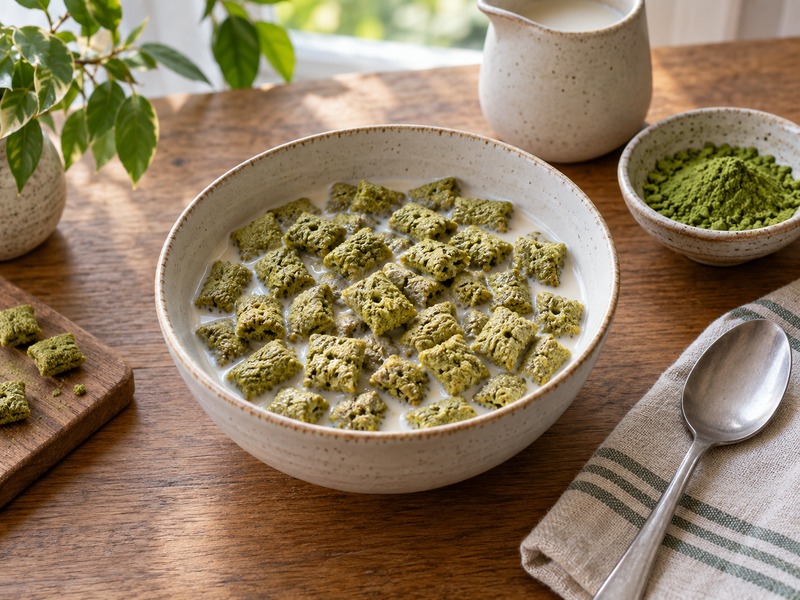
1. What kind of matcha cereal do you want to make?
Define the eating occasion first
Matcha cereal can mean tiny baked cookies eaten with milk, granola clusters with tea powder, or a manufactured extruded cereal. Those formats have different moisture, texture, equipment, and labeling needs. The ranked Homemade Matcha Cereal Recipe from Veggiekins makes small baked shapes from almond butter, maple syrup, vanilla, oat flour, matcha, and salt. It is a practical home-style starting point, but it is not a ready-made packaged cereal specification.
For a café, decide whether the product goes into a breakfast bowl, a yogurt topping, or a snack bag. Milk service rewards pieces that retain some crunch after a few minutes. A yogurt topping can be smaller and more delicate, while a grab-and-go bag needs good breakage resistance. Write the use case on the test sheet before changing the formula. Otherwise, a developer can spend weeks improving crunch for a product that guests actually eat with a spoonful of thick yogurt.
| Format | Typical use | First technical question |
|---|---|---|
| Baked small shapes | Bowl with milk | How fast do they soften? |
| Matcha granola | Yogurt or snack | Do clusters hold together? |
| Coated cereal | Sweet snack | Does coating stay dry? |
| Extruded cereal | Packaged breakfast | Can production repeat texture? |
2. Which matcha powder works in a baked piece?
Taste after baking, not only in water
Powder selected for a whisked drink may not be the best value in a baked cereal. Flour, nut butter, sweetener, heat, and milk all change tea perception. Test two or three powders at the same weight in one recipe. Compare the dough, the freshly cooled piece, and the piece after a short soak in milk. Record bitterness, aroma, and color without letting green color alone decide the winner. Some powders make a vivid dough but a muted finished cereal.
The Veggiekins recipe lists two tablespoons of matcha for its small batch. Use that as a recipe-specific starting point, then weigh the amount for repeatability. More powder can intensify the tea but also dry the dough or leave a dusty aftertaste. If the breakfast tastes too sweet, a lower-sugar binder may be a better change than adding enough matcha to make it bitter. Request current-lot samples and document their identity and storage. Matcha Village is one possible sample source; run the comparison in the finished cereal.
3. How do you build a crisp piece?
Control thickness and drying
The reference recipe rolls dough to about one-eighth inch and bakes small shapes at 325°F for roughly eight to ten minutes, then cools them fully. Those settings belong to that dough and oven. For your trial, keep piece thickness and spacing consistent. Thick centers stay soft while edges can overbake, so mixed shapes in one tray make evaluation harder. A small square cut from a slab is easier to reproduce than a detailed star, even if the star is more photogenic.
Cooling is part of the process. Pieces that seem crisp on the tray can soften when sealed warm because trapped moisture condenses in the container. Spread them in a single layer until fully cool, then pack a small sample. Test another after a day. If crunch disappears, review bake completion, thickness, and packaging separately. Increasing bake time without checking package moisture may make the piece bitter while leaving the real problem untouched.
| Texture issue | Possible cause | Controlled test |
|---|---|---|
| Soft center | Pieces too thick | Roll to a measured depth |
| Burnt edge | Uneven size | Cut one shape per tray |
| Soft after packing | Packed warm | Cool fully before sealing |
| Breakage | Piece too thin | Slightly thicker trial |
4. What happens when you add milk?
Run a timed bowl test
A dry cereal tasting is incomplete. Pour a measured amount of cold milk over a measured serving and taste at one, three, and five minutes. Note how quickly pieces soften, whether matcha clouds the milk, and whether the flavor remains pleasant as the bowl warms. Repeat with the milk actually offered in the café. Almond, oat, and dairy milk have different sweetness and viscosity, which can change the result even when the cereal is identical.
For a packaged product, also test how a customer might pour a generous bowl and eat slowly. Pieces that turn to paste within a minute may work better as a yogurt topper than as cereal. Conversely, a very hard piece may stay crisp but feel unpleasant to chew. The best target is set by the intended guest and serving style. Record the test conditions, not just a note saying “good in milk.” A timed photo and a short sensory score are enough to guide the next trial.
5. How should sweetness be set?
Count the whole breakfast, not only the dry piece
Maple syrup, nut butter, milk, fruit, and toppings all affect perceived sweetness. The reference home recipe uses maple syrup and almond butter. If a café serves the cereal with sweetened plant milk and fruit, the finished bowl may taste much sweeter than a plain dry sample. Test the complete menu build before revising the cereal. For a packaged product, make the ingredient list and nutrition label reflect the final formula; do not call the cereal “unsweetened” if the binder contains sweetener.
Balance sweetness against tea. A little sweetness can soften matcha bitterness, but too much turns the cereal into a green cookie that happens to be served at breakfast. Ask tasters to rate both the first bite and the end of a bowl. If they enjoy the first spoonful but stop halfway, reduce portion size or sweetness. A small amount of salt and vanilla can round flavor, but they should not cover a powder that tastes stale or harsh.
| Bowl component | Adds sweetness? | Trial decision |
|---|---|---|
| Cereal binder | Often yes | Measure syrup per serving |
| Dairy milk | Naturally some | Compare same portion |
| Sweetened plant milk | Often yes | Read its current label |
| Fruit topping | Depends on fruit | Taste complete bowl |
| Flavored yogurt | Often yes | Avoid stacking sweet bases |
6. What should a home baker learn from the reference recipe?
Use it intact for the first run
The ranked Veggiekins recipe provides six ingredients and a clear sequence: combine the wet ingredients, add flour and sifted matcha, roll and cut small shapes, bake, and cool. Its author describes a gluten-free, vegan version using specified ingredients. Follow the complete method once before making major substitutions. A different nut butter, flour, or liquid sweetener may alter how the dough rolls and bakes. If you change three things at once, a failed tray is hard to diagnose.
Measure the dough’s workable range. It should be cohesive enough to roll without sticking heavily and dry enough that small pieces hold their shape. Cover unused dough while cutting so it does not dry out. A knife-cut square can save time if tiny cutters make the process tedious. Record the time per tray. The recipe may be a fun weekend breakfast at home, but a café needs to know whether production labor is sensible at menu volume.
7. How do allergens and claims affect the recipe?
Review ingredients and preparation together
The reference formula uses almond butter, so tree nuts are central to its allergen profile. Oat flour may need specific verification for a gluten-free claim, and substitutions can add milk, soy, or wheat. Read the actual packages and supplier information for the version being made. FDA advice on food-allergen labels reinforces the need to check complete ingredient information. A recipe page’s dietary description applies to its own chosen products and method, not automatically to a commercial copy or a substituted batch.
For service, maintain a recipe card with brand/SKU, weights, and approved substitutions. Staff should know whether the bowl includes nuts, milk, or other allergens from cereal and toppings. Do not add a “nut-free” icon after replacing almond butter without reviewing shared equipment and supplier statements. A home baker with an allergy should use ingredients appropriate for their own needs and follow the relevant package guidance. Clear claims protect trust as much as they protect the menu.
8. How long will homemade cereal stay good?
Test storage in the container you will use
The Veggiekins recipe advises an airtight container in the refrigerator for up to a week. That is guidance for that specific home recipe. A café changing ingredients, shapes, or packaging needs its own storage test and food-safety policy. Put a portion in the intended container, note the production date, and inspect it daily for texture, aroma, and moisture. Keep another portion under the actual service conditions. “Airtight” does not guarantee crispness if the cereal entered the container while warm.
Packaging also affects breakage. A large bag may protect aroma but crush small stars under its own weight; a rigid cup may preserve shape but cost more. A cereal served with milk needs a separate dry compartment if held for delivery. If the product is sold in a sealed retail pack, shelf life and labeling may require more formal validation than a café’s daily batch. Set a conservative date from measured performance and applicable local rules, then revisit it when the formula or package changes.
| Storage test | Day zero | Later check |
|---|---|---|
| Crispness | Fully cooled piece | Snap after packing |
| Aroma | Tea note | Stale or muted note |
| Color | Natural green | Browning or dullness |
| Breakage | Whole pieces | Crumbs after handling |
| Moisture | Dry package | Condensation or softness |
9. How do you cost a café bowl or packaged serving?
Include labor and saleable yield
Ingredient cost starts with powder, flour, nut butter, sweetener, vanilla, and salt. A served bowl also needs milk, fruit or topping, packaging, labor, and waste. Tiny hand-cut pieces can be expensive to make even when each ingredient is inexpensive. Weigh the dry batch after baking, then divide by the actual serving weight. Count broken or overbaked pieces separately. If the cereal is sold in a bag, include the bag, label, sealing time, and expected breakage in transport.
The matcha dose should be costed by grams per saleable serving. A higher-priced powder may be worthwhile if a smaller quantity delivers clear tea flavor after milk. Ask customers whether they would reorder the bowl at the proposed price; a visually novel cereal is not enough. Test whether the product is more attractive as an occasional special, a topping on an existing yogurt bowl, or a packaged add-on. Those formats have different labor and waste patterns.
| Cost line | Record | Operational question |
|---|---|---|
| Matcha | Grams per batch | Flavor per dollar |
| Base dough | Total weighed cost | Stable ingredient supply |
| Labor | Minutes per tray | Cut method efficiency |
| Yield | Saleable grams | Breakage and burns |
| Serving | Grams plus milk | Guest value |
10. What is the smartest first product test?
Make one small batch and serve it two ways
Use a complete recipe as a baseline, with its specified ingredients and baking method. Record the actual matcha weight, piece thickness, bake time, cooled yield, and storage container. Taste a dry portion, then serve equal portions in milk and on yogurt. Ask a few people which use feels natural and whether they can identify the matcha without being told. The answer can guide whether the product should be a bowl, a topping, or a snack.
For a café, repeat the preferred version with a second employee and the planned service equipment. Run a timed milk test and a day-two storage test. If those pass, cost a real serving and write a clear menu description. If they fail, adjust one variable and test again. A good matcha cereal is one that remains appetizing after the first photograph: crisp enough, distinctly tea-flavored, accurately labeled, and practical to make at the volume the kitchen needs.
FAQ
Can I eat matcha cereal without milk?
Yes. A baked version can work as a dry snack or yogurt topping. Test the texture and portion for each use rather than assuming a milk-bowl serving size fits all three.
Does matcha cereal contain caffeine?
Matcha contains caffeine, so a cereal made with matcha will generally contain some. The amount per serving depends on the powder and recipe dose; calculate it from the actual formula if a precise claim is needed.
Is every matcha cereal gluten-free?
No. A particular home recipe may use gluten-free ingredients, but other cereals can contain wheat or oats without appropriate verification. Read the final product’s label.
Why did my cereal become soft in the container?
It may have been packed before fully cooling, baked too thick, or exposed to moisture. Change one factor at a time and test the packed product after a day.
Can a café use a home recipe unchanged?
It can be a starting trial. Commercial service still needs repeatable weights, allergen records, storage rules, portion costing, and testing in the actual serving format.