
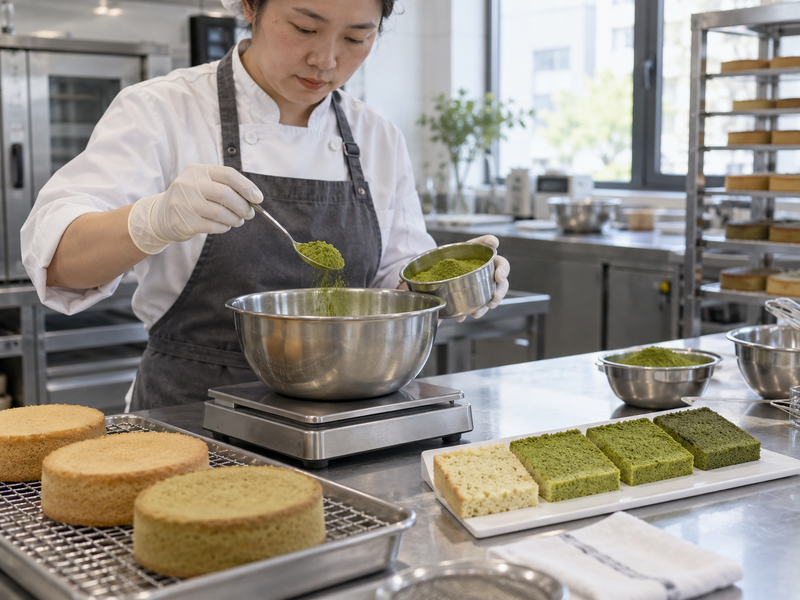
Matcha for bakeries is a production ingredient that has to survive a formula, a process, and a sales day. A powder that looks vivid in a sampling bowl may bake dull in a cookie, taste weak behind butter, or clump in a large mixer. Buying by grade name alone leaves the pastry team to solve those failures after the purchase order is signed. This guide gives bakery buyers and developers a practical testing route: define the finished item, compare teas at controlled doses, measure color and flavor after processing, and price the result per sellable unit. Matcha Village supplies different application grades; a bakery should approve the powder that works in its own recipe and equipment.
1. What does matcha for bakeries need to do?
The job changes by product. A shortbread needs enough tea aroma after baking without a dry, bitter finish. A sponge cake needs a green that still reads as matcha under the bakery’s oven profile. A cream filling needs smooth dispersion and a flavor that holds during display. Write one target for each product instead of asking a supplier for a single “bakery grade” to cover everything. The same powder can serve several items, but that should be demonstrated in production.
Identify the sellable unit, serving temperature, expected shelf or display time, and the visual reference customers will see. A matcha cookie viewed through a clear pack has a different color requirement from an iced cake served under warm lights. Ingredient buyers should sit with bakers at the start of the trial. A quote can show cost per kilogram, while the baker knows whether the powder actually gives the target flavor at a workable dose. The decision needs both views.
| Product | Primary tea question | Trial endpoint |
|---|---|---|
| Cookie | Does aroma survive baking? | Finished cookie after normal pack hold |
| Sponge cake | Does crumb retain a pleasing green? | Cut slice after cooling |
| Cold cream | Will powder disperse smoothly? | Finished filling at service temperature |
2. How should a bakery screen matcha samples?
Request product codes, specifications, lot information, and samples large enough for several small bakes. Begin with a plain-water tasting to detect obvious stale or harsh notes. Then move quickly to the intended formula. Butter, sugar, flour, eggs, and heat can mask or alter the tea. Use an identical base batch divided into equal portions, and change only the matcha sample. Blind tasting helps prevent a higher price or a brighter dry powder from biasing the decision.
Score dry color, mixed batter color, finished color, aroma, tea intensity, bitterness, and mouthfeel. Photograph items under consistent lighting after the same cooling time. Keep a reference sample from the chosen lot. Terms such as culinary and premium vary among suppliers; they are useful for narrowing a catalog, not for approving a finished pastry. If a candidate works only with extra sugar or coloring, include those changes in the cost and label review rather than treating the tea price as the full answer.
3. How can a baker set the right matcha dose?
Use weighed increments based on finished recipe mass, not spoonfuls. Start from a base formula that already runs well, prepare a small dose ladder, and compare completed products. Record grams of matcha per batch and per sellable unit. A tea powder can seem underpowered in raw batter yet become noticeable after cooling; another can taste pleasant hot and harsh the next day. Evaluate at the temperature and age the customer will encounter. Stop increasing the dose when added tea no longer improves the product.
Keep color and flavor as separate scores. A dose that reaches the desired green may exceed the acceptable bitterness. If that happens, test another matcha rather than forcing the formula. The cost per unit follows the accepted dose: a higher-priced powder used sparingly can compete with a cheaper one that needs more grams. For products with a matcha filling and matcha sponge, decide which component should carry the main tea note. Doubling both without a plan often makes the dessert taste flatly bitter.
| Dose trial | Keep fixed | Record |
|---|---|---|
| Low tea | Base formula and bake profile | Flavor visibility |
| Target tea | Portion size and cooling time | Color and balance |
| High tea | Packaging and tasting time | Bitterness and texture |
4. What does baking do to matcha color and flavor?
Heat, time, formula acidity, and ingredient interactions can change the finished green and tea aroma. The result depends on the product; avoid a universal claim that one grade always “holds color” in every oven. Test under the actual bake profile, then cut and photograph the product after cooling. Surface color and crumb color can differ because the exposed surface sees more heat. A green raw dough is only an intermediate observation.
Change one process variable at a time when a trial disappoints. Check whether the issue is oven temperature, bake duration, pan size, or tea selection. A cake browned at the edge may need a process adjustment even when the matcha itself is suitable. Taste flavor after the normal retail hold, not only warm from the oven. A bakery selling wrapped slices should test them inside the real pack because moisture migration and light exposure may affect customer perception. Keep the approved process sheet with the tea sample.
5. How should matcha cookies be developed?
Cookies provide a compact trial for both flavor and color. Use the bakery’s standard dough as a control and compare candidates at fixed portions, thickness, and oven position. Weigh the powder and blend it evenly with dry ingredients before adding fat or liquid, unless the production method shows a better route. Inspect for dark tea specks and uneven green after baking. A coarse powder or poor distribution can create bitter spots even when the average dose is correct.
Evaluate texture as well as taste. Replacing part of the flour with matcha changes the dry-ingredient balance; a large addition can affect spread and bite. Track cookie diameter, breakage, and yield. Taste at the age when the package will be sold. A matcha cookie that performs on day one may lose its tea aroma before the intended sales window. The buyer should not approve a tea sample from a fresh tray alone; the packed product and its expected rotation determine the commercial result.
| Cookie check | Why it matters | Evidence |
|---|---|---|
| Spread | Portion and appearance consistency | Diameter after bake |
| Specks | Mixing uniformity | Cut and surface photos |
| Day-of-sale taste | Actual customer experience | Blind sample from final pack |
6. What should cake teams check in a matcha sponge?
Judge the cooled crumb, not the batter. Matcha can look lively before baking while the cut cake appears olive or uneven. Standardize mixing, pan size, fill weight, and bake profile. Compare slices from the center and edge; large production pans can behave differently from small test cakes. Measure rise, tenderness, and moisture alongside tea flavor. If the cake loses volume when matcha increases, the team may need a formula adjustment rather than a stronger tea.
Pair the sponge with its intended filling or frosting for the final sensory decision. White cream can make a modest tea note seem stronger; chocolate or dense fruit can bury it. Test a complete slice at serving temperature. Photograph the slice after the planned display period. The color promise on the menu should match what customers see after the cake has cooled, been filled, and sat in the case. A supplier’s dry-powder photograph cannot answer that question.
7. How does matcha behave in fillings and cold desserts?
In cream, mousse, glaze, or chilled custard, the problem is usually dispersion and balance rather than oven color. Sift matcha and blend it with a small portion of the base before adding it to the full batch. Test for dry pockets, visible specks, and a gritty finish. The formula’s fat and sugar can soften bitterness, but they can also mask a delicate tea. Choose the powder after tasting the final component on the intended cake or pastry.
Cold service changes aroma perception. A filling tasted straight from the mixer may seem more expressive than one served chilled. Check the product at its actual service temperature and after the normal display period. Follow the bakery’s validated food-safety controls for dairy, eggs, and finished desserts; matcha does not grant a special shelf life. A product that uses the same matcha in a baked shell and a cold cream may need two different doses. Write both into the batch sheet.
8. What should a production-scale trial include?
Small bowls can hide problems that appear in a full mixer. Run the selected matcha on the intended line, with normal batch size, mixing time, scraper pattern, and dosing method. Record whether powder collects at the bowl wall or adds dust during tipping. Check the first, middle, and last trays for color and flavor differences. If a preblend improves distribution, specify its ingredients, quantity, and order of addition. A vague instruction to “mix well” will not reproduce the pilot.
Ask operators to make the batch without the developer standing beside them. Note preparation time, spills, rework, and how much powder stays in the pack. Keep a retain sample from the approved production lot. If a new supplier grade looks similar but behaves differently in the mixer, the line trial should catch it before a full launch. The packaging format also matters: a large bulk bag may save unit cost but be awkward for a bakery that opens one bag a week.
| Scale-up point | Observation | Action if weak |
|---|---|---|
| Powder dosing | Dust and residual loss | Change pack or transfer method |
| Mix distribution | Color across batch | Adjust preblend and scrape |
| Oven run | First-to-last tray consistency | Review loading and profile |
9. How should a bakery cost the approved matcha?
Calculate tea cost from the accepted dose per sellable pastry. Add any formula changes required by that grade, production loss, rejects, pack cost, and labor. A low price per kilogram has little value if color failure causes a high reject rate. Keep waste from training separate from steady-state waste, then update the model after several normal runs. Procurement should compare grades using the same approved product standard and serving size.
For multi-site bakeries, account for central production, frozen distribution, or store finishing. Each route has different handling and quality periods. A tea that suits same-day central baking may not retain the brand’s target appearance after freeze-thaw; test that route if it is part of the business. Avoid assigning a generic “baking grade” price to every product. A matcha sponge for a premium whole cake and a cookie for a value multipack can justify different inputs while sharing a supplier.
| Cost input | Measure | Failure hidden by kg price |
|---|---|---|
| Tea dose | Grams per sellable item | Weak flavor needs more powder |
| Line loss | Powder and batter discarded | Difficult dosing |
| Rejects | Unsellable pieces per batch | Uneven color or texture |
10. What belongs in a bakery supplier brief?
Describe the finished item, target tea flavor, color reference, bake or cold process, forecast volume, pack size, destination market, and any needed quality documents. Send a sample of the plain base formula if commercial confidentiality permits, or at least the key conditions that affect matcha performance. Request several grade options and enough material for a production-style trial. Ask for lot coding, lead time, minimum order quantity, and change notification. Keep the accepted reference sample for future deliveries.
Matcha Village offers matcha grades and application support through its website. Give the supplier measured feedback: the crumb darkened after cooling, cookies needed too much powder, or cream showed specks. That is more useful than asking for “the best matcha.” Matcha for bakeries should be approved on a finished, sellable product made with the bakery’s normal equipment. The purchase specification can then reflect the result customers actually taste.
Frequently asked questions
Q1: Is culinary grade always the right bakery matcha? Grade names vary; test the exact powder in the finished recipe and compare cost at the accepted dose.
Q2: Why did a green batter bake dull? Review tea choice, formula, oven profile, and the cooled product before changing one variable.
Q3: Can one matcha serve cookies and cream? Possibly, but approve each application separately because heat and cold fat change the result.
Q4: Should a bakery judge color from a powder photo? No. Use a controlled photo of the finished item after its normal hold.
Q5: What sample size should be requested? Enough for repeated bench batches and a production-style trial under normal equipment.
Keep the chosen matcha for bakeries sample beside the approved recipe and finished-product reference. That gives bakers, quality staff, and buyers a shared target for the next order.