
A matcha flight can help guests notice differences they would miss in a full latte, but only if the samples are prepared consistently. A tray of three attractive cups is not automatically a tasting. Decide what comparison the flight teaches, keep portions controlled, and give guests a simple route through the cups. This matcha flight guide focuses on a café service that staff can deliver during normal hours. Our matcha caffeine specification guide is relevant when calculating the total tea dose offered in one set.
Contents
- 1. What should the guest learn from a flight?
- 2. Which samples belong together?
- 3. How much should each sample contain?
- 4. In what order should guests taste?
- 5. How can preparation stay comparable?
- 6. What belongs on the tray?
- 7. What should staff say at handoff?
- 8. Can the bar serve flights at peak time?
- 9. How do you price a tasting set?
- 10. How do you learn from guest response?
1. What should the guest learn from a flight?
Choose one comparison
A strong flight answers a focused question. It might compare three matcha products prepared the same way, one matcha served in water and milk, or a progression from unsweetened tea to a flavored drink. Do not mix all those ideas on one tray and expect a guest to infer the lesson. Write the purpose in one sentence for the menu and staff. That sentence should help the buyer decide which ingredients and portions belong in the set.
The tasting should also offer a useful result for the business. A guest may discover a preferred drink, understand why a premium straight matcha costs more, or choose a retail pack with confidence. These are service outcomes, not promises that every flight will sell another product. Test the set with someone unfamiliar with the menu. If they cannot tell what they are comparing without a long lecture, narrow the concept and simplify the notes.
2. Which samples belong together?
Make the differences interpretable
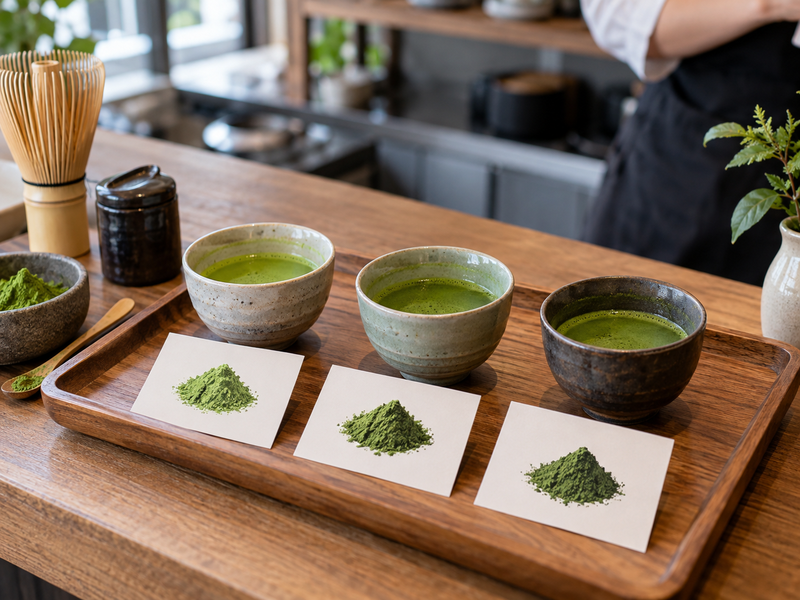
For a product comparison, hold water amount, powder dose, cup, and preparation method constant. The matcha itself is the variable. For a format comparison, use one approved matcha while changing water, milk, or sweetness in a planned sequence. Mixing different powders with different milk and different sugar levels produces interesting drinks but weak comparison. Keep the set to a number staff can prepare and guests can finish comfortably; three samples are often manageable, but test your own menu.
Consider the guest’s prior experience. An unflavored straight tea can be challenging for someone who came for a sweet latte, yet it may provide useful context if the portion is small and the explanation is friendly. Avoid describing one cup as objectively “best.” Invite guests to note their preference and what they noticed. The café flight example shows one consumer-facing approach; your set should be defined by your own products and service capacity.
| Flight type | Variable to change | What stays fixed |
|---|---|---|
| Product comparison | Matcha product | Dose, water and method |
| Preparation comparison | Water or milk format | Matcha product and dose |
| Menu sampler | Finished drink | Clearly stated purpose |
3. How much should each sample contain?
Set portions from the whole tray
Design the total consumption before setting each cup. Three “small” cups can add up to more matcha, milk, sugar, or caffeine than a guest expects. Weigh the tea portion for every sample and calculate the total matcha dose across the tray. If you provide caffeine information, use product-specific supplier data and the actual mass used, with the uncertainty appropriate to the source. Do not copy a generic caffeine figure into a menu description or imply a health effect.
Choose cups that make the sample easy to taste without making the tray awkward to carry. A tiny cup may cool too quickly or exaggerate foam, while a large cup encourages overpouring. Measure the saleable liquid volume and mark a fill line during training. Include a water option if it helps guests reset between samples. The flight is a guided taste, not a way to serve three full drinks at one price.
4. In what order should guests taste?
Put the quieter flavor first
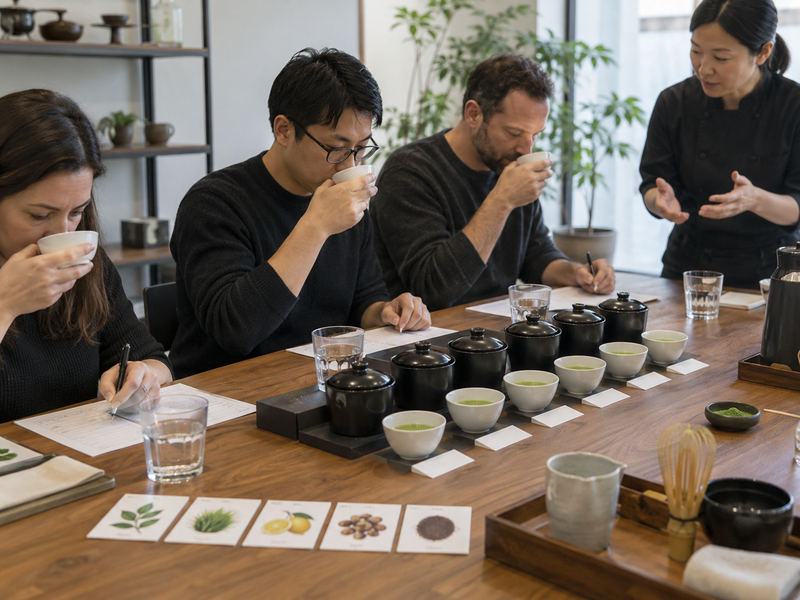
For a flight that progresses from straight matcha to a sweet latte, start with the least flavored cup and move toward the richest. A highly sweet or flavored sample first can make a delicate tea seem flat. If comparing matcha products prepared identically, use a consistent order and consider a blind code so guests are not led by price or name. Tell guests whether to taste immediately or wait for a temperature that reveals the intended flavor.
Test the order with staff and with a few first-time guests. Ask what they could still taste in the final cup and whether the comparison made sense. A printed card can show cup numbers and a short note, but avoid scripted tasting language that tells guests they must detect “umami” or “orchid.” Give them room to describe their own observations. If a palate cleanser is offered, it should be simple and appropriate to the setting, with its cost and handling included in the plan.
| Position | Role in a sample flight | Staff cue |
|---|---|---|
| First | Least flavored or reference cup | Taste before additions |
| Middle | Clear point of comparison | Notice texture or balance |
| Last | Richest or most flavored | Compare preference |
5. How can preparation stay comparable?
Make one controlled batch plan
Prepare each sample with a weighed powder dose and measured water or milk. Use the same mixing tool and procedure for cups intended to be compared directly. If a batch is prepared ahead, document its handling and quality window under the site’s food-safety rules. A set assembled from a fresh first cup and a tired last cup will teach guests more about time than matcha. Test the interval between preparation and handoff with a complete tray.
Label samples so staff do not swap them during a rush. Use a tray map and cup numbers, not just a memory of slightly different shades of green. If the flight compares powders, prevent cross-use of scoops and identify the correct container at the station. A second employee should be able to reproduce the set from the card without consulting the developer. Preparation control is what turns a flight from a one-off event into a menu item.
6. What belongs on the tray?
Give each object a role
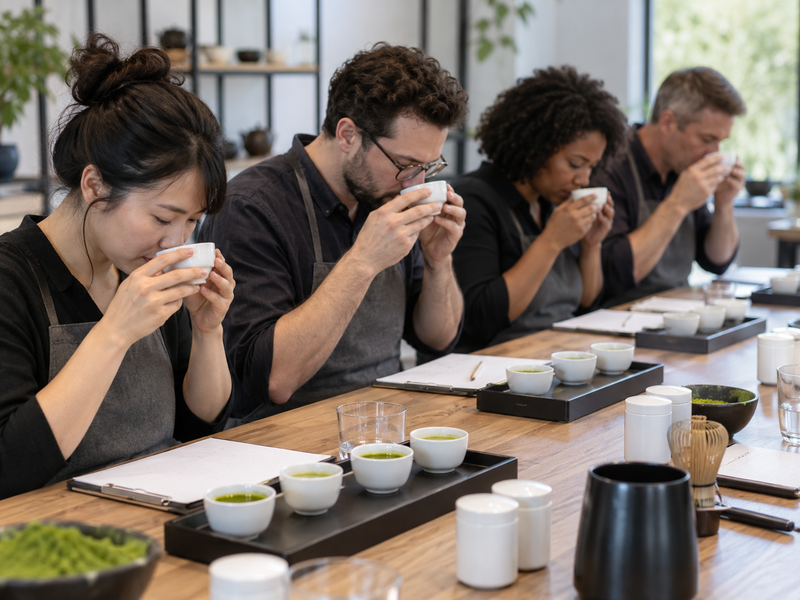
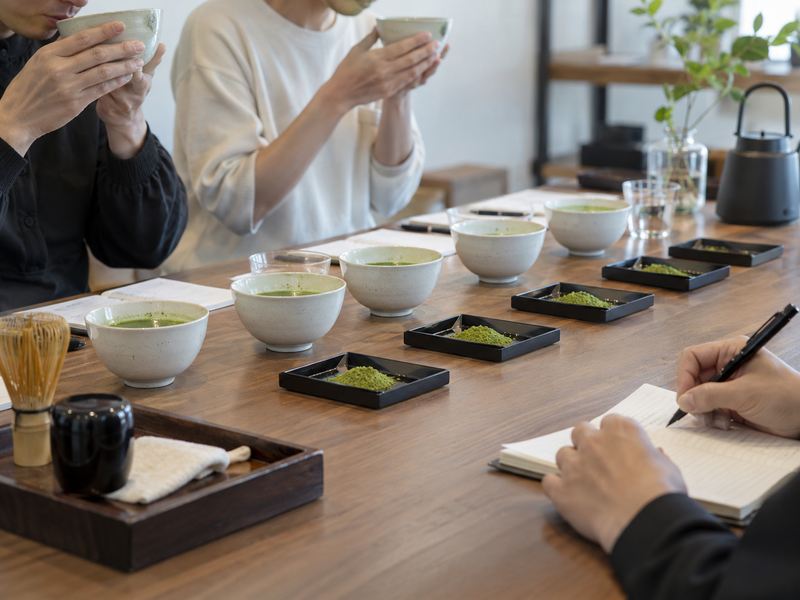
The tray needs stable cups, an order key, and enough room for a guest to lift each cup without spilling the others. A small tasting card can name ingredients, serving order, and a prompt such as “Which one would you order again?” Add water if it supports the tasting. Avoid crowding the tray with props that look good in a photograph but make it difficult to carry or clean. Test the tray at the table size and seating arrangement where it will be used.
Check temperature and condensation. Hot cups need a safe carrying method; iced cups can wet paper cards. If the flight includes dairy or other allergens, the card and staff explanation should reflect the actual ingredients and the site’s handling process. Use the same tray layout every time so a missing component is obvious before handoff. A tray that is easy to reset after use is more likely to survive a busy day.
| Tray item | Purpose | Test |
|---|---|---|
| Numbered cups | Preserve tasting order | Stable while carried |
| Short card | Explain comparison | Readable without a lecture |
| Optional water | Reset palate | Fits without crowding |
7. What should staff say at handoff?
Offer a short invitation
The handoff script should take less time than the drinks did to make. For example, staff can explain what changes across the cups, point to the tasting order, and invite the guest to choose a favorite. The guest can then read the card or ask for more detail. A long speech in the pickup area blocks the next order and can make tasting feel like a test. Train staff to answer common questions about sweetness, milk, and caffeine from the approved recipe rather than speculation.
If retail matcha is part of the goal, mention the matching product only after the guest has tasted it or asks. The flight should remain a useful experience even when no pack is bought. Listen to the words guests use; they may describe a cup as “softer” or “more tea-like” rather than using formal tasting terms. Those descriptions can improve menu copy. The staff role is to frame the comparison and make guests comfortable, not to declare the correct answer.
8. Can the bar serve flights at peak time?
Time the whole ticket
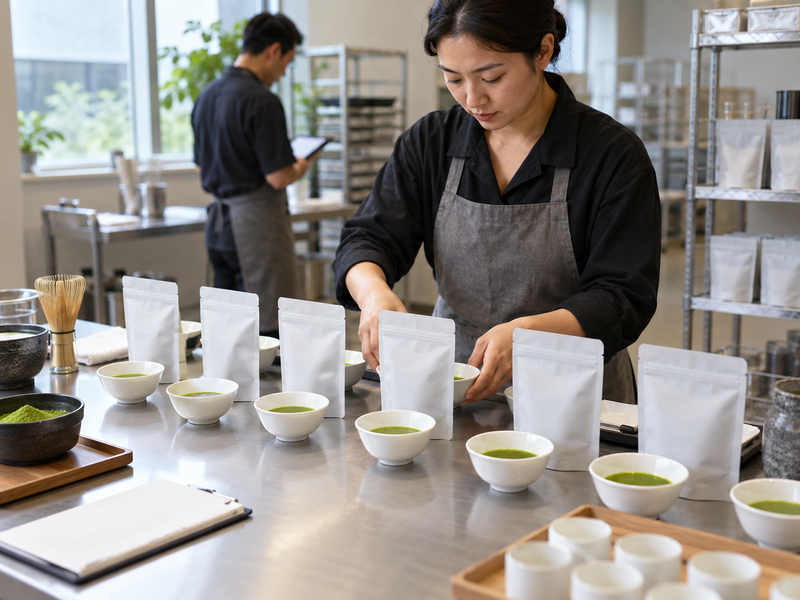
A flight may contain three small portions but require more preparation actions than one large drink. Rehearse the full ticket during a mock rush and time weighing, mixing, labeling, tray assembly, handoff, and cleanup. Watch whether the bar has space for several cups while other orders continue. If flights slow the line, restrict them to quieter hours or redesign the samples. A menu item that works only when the developer is present is not ready for routine service.
Forecast the ingredient draw as well as labor. A sudden group order could use many individual cups, trays, and measured portions. Set a practical maximum number of simultaneous flights or a reservation process if needed. If components are prepped ahead, review quality and food-safety controls with the site lead. Record actual service times after launch so the schedule can be adjusted using evidence rather than guesswork.
| Service step | Measure | Bottleneck to watch |
|---|---|---|
| Preparation | Minutes per set | Shared whisking station |
| Assembly | Cups and labels per tray | Counter space |
| Reset | Washing and restock time | Tray shortage |
9. How do you price a tasting set?
Count every serving and touchpoint
Add the tea, milk, sweetener, cups, card, tray cleaning, and expected waste. Include the labor needed to prepare and explain the set. Divide by saleable sets, not theoretical portions from a bulk batch. A flight may justify a higher price than the sum of tiny drinks because it includes guided comparison, but the price must also fit what guests recognize as valuable. Test the offer with a clear menu description rather than hiding the portion size.
If a retail-pack purchase credit is offered, model it as a deliberate promotion and track whether it leads to purchases. Do not build the base economics on the assumption that every guest buys a tin. Review waste from unfinished samples and damaged cards or cups. A narrower, more useful flight can outperform a generous but confusing one. The cost sheet should let management see the effect of changing a powder, portion, or service window.
10. How do you learn from guest response?
Ask one question and record the answer
The simplest feedback is which cup the guest preferred and why. Provide a small card or invite a brief conversation after they finish; do not interrupt the tasting repeatedly. Record responses by flight version and date. A change in ingredient lot or preparation method can otherwise make preference data misleading. Compare preference with actual follow-on orders and retail purchases, but do not assume a stated favorite will become a regular sale.
Review operational feedback at the same time. Staff may report that one sample cools too fast, a label falls off, or a tray is hard to carry. Revise one part of the experience, test it, and update the card. If a cup consistently loses the comparison and has no educational role, replace it. A flight should teach guests something and help the café make better menu decisions, not become a permanent display of every powder in stock.
| Feedback | Possible interpretation | Next test |
|---|---|---|
| Guests miss difference | Samples too similar | Strengthen one variable |
| One cup left unfinished | Flavor or sequence issue | Taste in another order |
| Staff report long tickets | Workflow too complex | Simplify preparation |
FAQ
Q1. How many samples should a matcha flight have? Use the smallest number that makes the intended comparison clear. Three is a manageable starting trial for many cafés, but check your own service capacity.
Q2. Should samples be sweetened? That depends on the comparison. Keep sweetness constant when comparing powders, or make sweetness the clearly explained variable.
Q3. Does a flight contain more caffeine than a regular cup? It can. Calculate from the actual tea mass across all samples and product-specific information; do not infer it from cup size alone.
Q4. Can flights be made ahead? Only if the complete product remains acceptable and the site has an appropriate handling procedure. Test the planned hold and handoff time.
Q5. Should staff tell guests which cup is best? Invite preference instead. A short explanation of the comparison is more useful than telling guests what they ought to taste.
Make comparison the product
A successful matcha flight makes differences understandable through controlled portions, a sensible order, and a light staff introduction. Build the set for the café’s actual bar and guests, measure its cost and timing, and revise it from the words people use after tasting.