
A matcha einspanner sells on contrast. The customer sees green tea beneath a white cream cap and expects the two to taste good together. In a busy café, the cream may sink, the tea may taste faint, or the drink may become too sweet by the time the layers are stirred. A reliable version starts with two separate specifications: one for the matcha base and one for the cream. This guide covers those specifications, assembly, cold handling, and cost. The Creamy, Layered Matcha Einspanner in Ahrefs’ current top results shows the visual idea. A commercial team should test its own recipe in its own cup, with its own staff and service window.
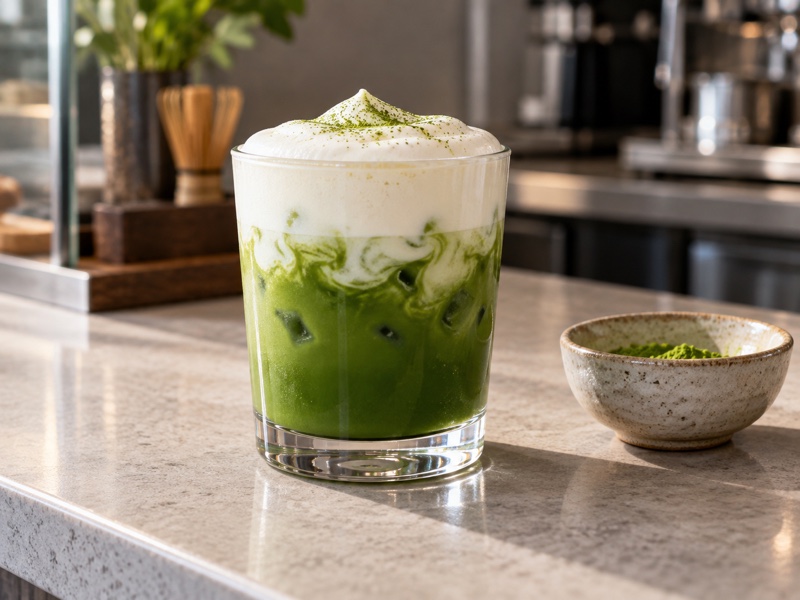
1. What is a matcha einspanner on a café menu?
In current café usage, the name usually refers to a matcha drink with a generous layer of lightly sweetened cream. It borrows the cream-topped presentation associated with an einspanner coffee, but the matcha version is a newer menu format. Customers may drink through the cream or stir it into the tea. Both routes need to taste balanced. Explain the format in one short menu line, especially if your audience has never heard the name. “Iced matcha with soft sweet cream” tells a new guest more than an unexplained foreign term.
Decide whether milk sits between the tea and cream. A plain matcha base gives a stronger tea contrast; a latte base gives a softer, richer drink. Test one format first. A café that offers both should name them clearly because their nutrition, cost, and taste differ. The cream is not a substitute for a sound matcha base. If the green layer tastes flat alone, the drink may become a generic sweet cream beverage once stirred. Define the drink by its final mixed taste as well as its first photograph.
| Menu choice | Likely experience | Development question |
|---|---|---|
| Matcha + cream | Strong tea contrast | Is the finish too sharp? |
| Matcha latte + cream | Softer, richer cup | Does tea remain clear? |
| Lightly sweetened cream | More tea-forward | Will guests find it balanced? |
| Sweet cream + syrup base | Dessert-like | Is sugar overpowering? |
2. How thick should the cream layer be?
Cream should sit on top long enough for the drink to reach a guest, then blend pleasantly when stirred. Very loose cream vanishes into the ice. Stiff cream creates a mound that is hard to drink through and may leave a heavy finish. For a small pilot, whip measured cold cream to a soft, flowing texture and pour or spoon it over the approved base. Write down the whipping tool, time, and temperature. “Whip until thick” is too vague for different staff or stores.
Test the cream in the actual cup. Its fat level, added sugar, salt, and any stabilizer all affect how it behaves. A dairy-free topping needs its own trial; plant cream products vary widely and may not whip or float the same way. Taste the cream by itself, then with the tea. A sweet topping can seem perfect alone yet bury matcha once the cup is stirred. Keep a sample at the longest expected service interval and photograph the layer. If it collapses during a normal pickup wait, revise texture or workflow before launch.
3. Which matcha base stands up to cream?
The tea base needs enough character to remain identifiable after mixing with cream. Begin by evaluating candidate powders in water or milk, then test them in the completed drink. A delicate powder may smell pleasant in a bowl and disappear beneath a rich topping. A stronger powder can be useful if it stays smooth at the intended dose. Make a small dose ladder at one cup size, for example 2 g, 3 g, and 4 g of matcha. These are trial points rather than a prescribed formula. Taste the green layer alone and after stirring in the cream.
Use a weighed concentrate, prepared with enough water to disperse powder fully. A lumpy base makes the final sip gritty. Record liquid volumes because they affect cup fill and layer height. If the drink includes milk, specify the actual milk product and amount. A plant-based substitution can alter sweetness and foam. Purchase decisions should follow the approved mixed drink: compare matcha powders by the dose needed for that outcome, not by the color of dry powder or a grade name on a sales sheet.
| Base trial | Powder dose | Check after stirring |
|---|---|---|
| A | 2 g | Does the cream erase the tea? |
| B | 3 g | Is bitterness controlled? |
| C | 4 g | Is the added cost worthwhile? |
4. Where should the sweetness come from?
Sweetness can sit in the green layer, the cream, or both. If both are heavily sweetened, a layered drink can become cloying when stirred. Set a total sweetness target, then decide where it serves the best purpose. A small amount in the tea may soften its bitterness. Sugar in the cream affects taste and whipping. Test three complete cups rather than tasting components in isolation. Have tasters stir each cup in the way a customer would; that is the flavor most people will finish.
A measured syrup is convenient for service, but its pump volume needs checking. Granulated sugar in the cream must disperse fully or it can feel gritty. If you use flavored syrups, make sure vanilla or another flavor supports the tea instead of turning the drink into a different product. State all ingredients in the recipe file, including any pre-sweetened dairy or plant base. A menu described as “lightly sweet” should be compared with the shop’s actual drinks. Words on the board cannot rescue a cup that tastes like a milkshake.
5. What assembly order makes a stable layer?
Layering depends on temperature, density, cup shape, and pour speed. Prepare the matcha base consistently, add the specified ice, then add milk if the recipe calls for it. Place the soft cream gently on top, using a spoon or controlled pour. Some recipes put cream in the glass before pouring matcha over it. That can look attractive, but choose one method and test it with staff. The “best” method is the one that gives both a repeatable visual and a good drink after mixing.
Photograph the first cup and the fifth cup made in a sequence. If later cups have a thinner cap, the cream may have warmed or lost structure. Decide whether the topping will be made to order or held briefly in a chilled container. Give staff a maximum holding rule based on a tested quality and food safety plan. The finished cup should be served with a stirrer or straw if the customer is meant to mix it. A beautiful boundary between layers is less useful if a guest cannot comfortably drink it.
| Assembly step | Measure | Visible failure |
|---|---|---|
| Ice | Mass or scoop standard | Variable fill |
| Tea base | Liquid and powder weight | Weak or gritty layer |
| Cream | Weight and texture | Sinks or forms stiff clumps |
| Handoff | Time from assembly | Collapsed cap |
6. Is hot matcha einspanner practical?
A hot version is possible, but warmth changes cream behavior quickly. The topping may melt and merge with the tea before it reaches the table. Test a hot cup as a separate product with its own vessel and service time. Do not assume that removing ice from the cold recipe creates an equivalent drink. Hotter tea exposes flavor differently, and the final milk-fat balance may feel heavier. Some guests may prefer the immediate blending; others order the drink for a distinct cream cap and expect it to remain visible.
If a café offers both temperatures, train staff on the different assembly and explain the visual difference on the menu. Take photographs of each actual version rather than using the iced image for both. For takeout, the hot lid may smear the cream and produce a poor first impression. A lid test is as relevant as a taste test. If the topping cannot survive your normal hot service route, keep the offer iced or present the cream separately. A limited, well-executed format is easier to sell than an unreliable variant.
7. How should cream be handled during a rush?
Cream handling needs a written cold-control procedure set by the food safety team for your operation. Keep the ingredient and finished topping under the required conditions, use clean equipment, and avoid topping up an old container with a new batch. Record when a batch was prepared and when it should be discarded under the approved plan. Flavor quality also changes: cream can lose air, separate, or absorb odors. A rushed barista should not have to judge these points from memory while a queue builds.
Design a small prep batch based on actual demand. If orders are slow, a large batch creates waste and quality drift. If orders are fast, making each cap from scratch may delay service. Trial both approaches with the intended equipment. A simple refrigerated dispenser or premeasured portion might help, but only if it produces the texture you approved. Check allergen cross-contact when the same station handles plant and dairy toppings. Staff should have a clear remake rule for a cap that has separated or warmed.
| Rush-period risk | Control to document |
|---|---|
| Warm topping | Approved temperature and time limits |
| Cream loses air | Small batch size and texture check |
| Inconsistent portion | Weighed topping or calibrated tool |
| Cross-contact | Separate tools and cleaning method |
8. What should the menu disclose?
The drink generally contains matcha, dairy or a dairy alternative, sweetener, and a cream topping. State the ingredients clearly enough for guests to choose. A dairy-free version requires every component, including the topping, to meet that claim. If the green base and topping both carry sugar, do not imply the cup is a low-sugar matcha simply because the tea itself is unsweetened. Nutrition information should be calculated from the approved recipe and serving weights if your market requires or your brand provides it.
Matcha contributes caffeine; the amount depends on the powder and dose. Avoid a precise value without product-specific support. A café may also choose to describe the topping as “soft cream” rather than “foam” if the texture is richer than standard cold foam. The name and photo should prepare the customer for a dessert-like beverage. Clear expectations reduce remakes. In staff training, practice explaining how to drink it: sip through the cream for contrast or stir for a uniform cup. That explanation can be short and conversational.
9. What does a matcha einspanner cost per serving?
The cream is often the most easily overlooked cost line. Calculate its actual portion weight and the yield from a prepared batch. Then add matcha at the approved dose, milk, syrup, ice, cup, lid, and any garnish. Garnish powder is still ingredient cost and can stain a takeaway lid, so test whether it earns its place. Count discarded cream at the end of a shift. A recipe that looks profitable on a theoretical ingredient sheet may be weak after waste and slow preparation are included.
For a chain, measure preparation time during a busy period. If the topping adds a minute per drink, the menu price must support that work or the prep process must change. Compare two powder offers in the full cup; a lower dose of a stronger tea may offset some cream cost. Matcha Village’s bulk powder options can be tested with your topping and cup size. Give suppliers the application details and request a lot-linked sample so a repeat order can match the approved profile.
| Cost item | Unit to record | Hidden variable |
|---|---|---|
| Matcha | Grams in base and garnish | Dose drift |
| Cream | Finished grams per cap | Batch waste |
| Milk and syrup | Measured volume or mass | Substitutions |
| Service | Cup and labor time | Rush-period delay |
10. How can a café decide the drink is ready to launch?
Run a pilot with the real staff, equipment, and packaging. Ask each barista to make three cups from the written procedure. Compare cap height, tea strength, fill level, and time to handoff. Taste cups immediately and after the longest normal pickup wait. Test one takeaway lid and one dine-in glass if both are offered. A fragile visual may be acceptable for table service and poor for delivery; those are separate decisions. Record customer feedback about sweetness and cream-to-tea balance instead of changing the drink in response to a single photo.
Approve the final matcha lot, cream product, recipe, allergen copy, and service image together. Keep one control photograph under neutral light. A matcha einspanner earns a premium position when the layers look inviting and the mixed cup still tastes of tea. If staff can make that result without improvising, the drink is ready for the menu. If the cap collapses or the tea vanishes, return to the two component specs and change one variable at a time.
FAQs
Q1. Is a matcha einspanner a coffee drink? The matcha version uses tea as its base. The name refers to the cream-topped style associated with einspanner coffee.
Q2. Can the topping be dairy-free? It can, but plant-based cream needs its own whipping, flavor, holding, and ingredient-label tests.
Q3. Should customers stir the layers? They can sip through the cream or stir. The finished mixed cup should taste balanced either way.
Q4. Can cream be made in advance? Only under a tested quality and food safety procedure for the exact topping and service conditions.
Q5. Which powder works best? Choose through tasting in the complete drink at a measured dose, then check lot documents and repeat supply.