
Matcha cost per serving depends on the powder’s cost, the measured dose and how much purchased powder reaches a saleable drink. A calculation based on the number of theoretical cups in a bag can miss overscooping, remakes and material left in preparation equipment. A cafe manager needs a recipe cost for planning and a consumption check for operating control.
Keep those two calculations connected but distinct. The method below uses named variables and one clearly labeled arithmetic example. None of the example values is a market price, supplier quote, recommended recipe or forecast of cafe performance.
Contents: 1. What does a serving mean in the cafe’s calculation? | 2. Which powder cost should enter the recipe? | 3. How is theoretical matcha cost per serving calculated? | 4. How do you establish the dose that staff actually use? | 5. How should preparation losses be recorded? | 6. How should a prepared matcha base be costed? | 7. What belongs in the complete drink cost? | 8. How can a buyer compare two powders fairly? | 9. How do inventory records reveal a costing problem? | 10. When should the cafe update its serving cost?
1. What does a serving mean in the cafe’s calculation?
Define the unit sold
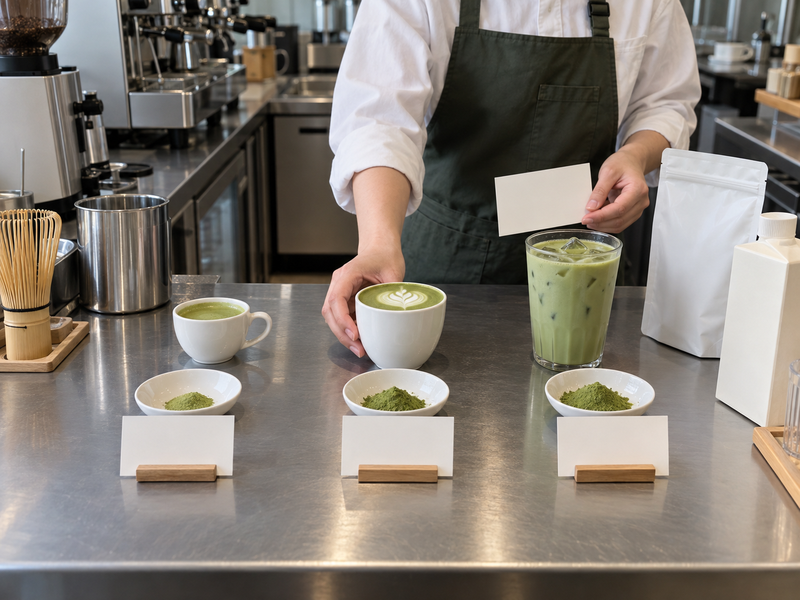
Choose one menu item, size and preparation version. An iced latte, a larger latte and a concentrated straight drink should not share one unlabeled cost per serving. Record modifications that change matcha use separately, including an extra powder option or a recipe with a different base.
| Serving field | Record | Reason |
|---|---|---|
| Menu code | Item and size | Connects cost with sales |
| Recipe version | Current approved method | Explains later changes |
| Powder dose | Measured grams | Drives ingredient use |
| Saleable output | Completed accepted drink | Defines the denominator |
Use the same serving definition across purchasing, operations and finance. A preparation batch may produce several drinks, while a till record counts individual sales. The relationship between those units needs to be explicit before anyone divides a bag price by a drink count.
Keep training drinks, samples and staff drinks visible. They consume powder even when they do not enter paid sales. Record them separately so the team can decide whether to include them in a commercial cost measure or report them as another use.
2. Which powder cost should enter the recipe?
Use a consistent purchasing basis
Decide whether the recipe uses the product invoice price or a defined delivered ingredient cost that includes allocated purchasing charges. Ask finance to choose the method and use it consistently. Preserve the underlying invoice, net weight and any allocation so a reviewer can reproduce the amount per kilogram.
If several lots with different costs are in stock, follow the business’s chosen inventory-costing policy. Do not select whichever recent price makes the menu appear more profitable. Keep the planning cost and the actual period cost separate where that distinction helps purchasing explain a change.
Yuri Matcha’s serving-cost guide discusses consumer bowl costs. Its retail price tiers and taste scores do not establish a cafe’s wholesale ingredient cost. Use your own quotation or invoice for the powder you approve. Aiya’s wholesale account information describes supplier-specific customer arrangements, which is another reason to confirm the actual commercial basis instead of borrowing a public retail figure.
3. How is theoretical matcha cost per serving calculated?
Show the units in the formula
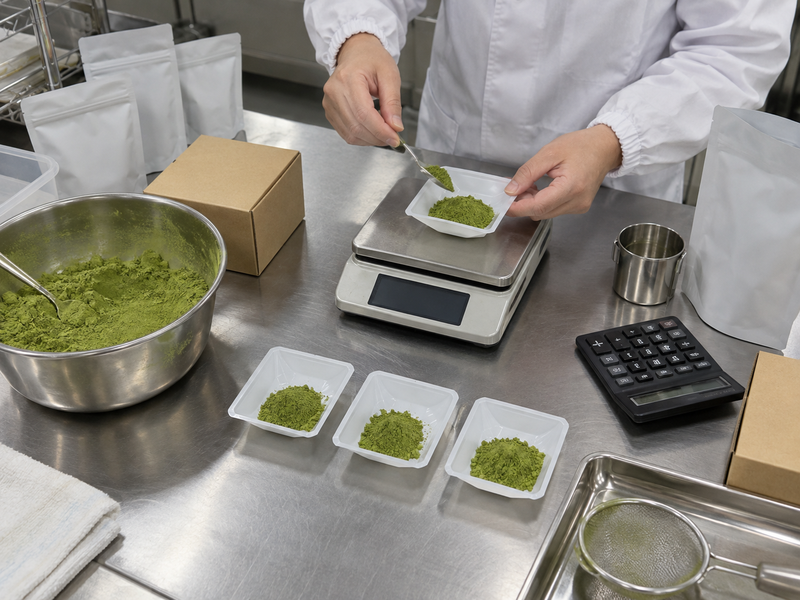
Let P be the powder cost per net kilogram and d be the approved grams per serving. The theoretical powder cost is P multiplied by d, divided by 1,000. The theoretical servings per kilogram are 1,000 divided by d. Both calculations assume every gram is used in an accepted serving at that exact dose.
The following values are illustrative assumptions for arithmetic only: powder costs 60 currency units per kilogram, and trial doses are 2, 3 and 4 grams. These are not price or recipe recommendations.
| Assumed dose | Calculation | Theoretical powder cost |
|---|---|---|
| 2 g | 60 x 2 / 1,000 | 0.12 currency units |
| 3 g | 60 x 3 / 1,000 | 0.18 currency units |
| 4 g | 60 x 4 / 1,000 | 0.24 currency units |
Keep more precision in the working calculation than in the displayed menu-cost report. Round at the reporting stage so repeated rounding does not distort a period total. If a recipe uses a batch base, calculate its measured powder input and accepted output before assigning powder cost to each drink.
4. How do you establish the dose that staff actually use?
Weigh the working method
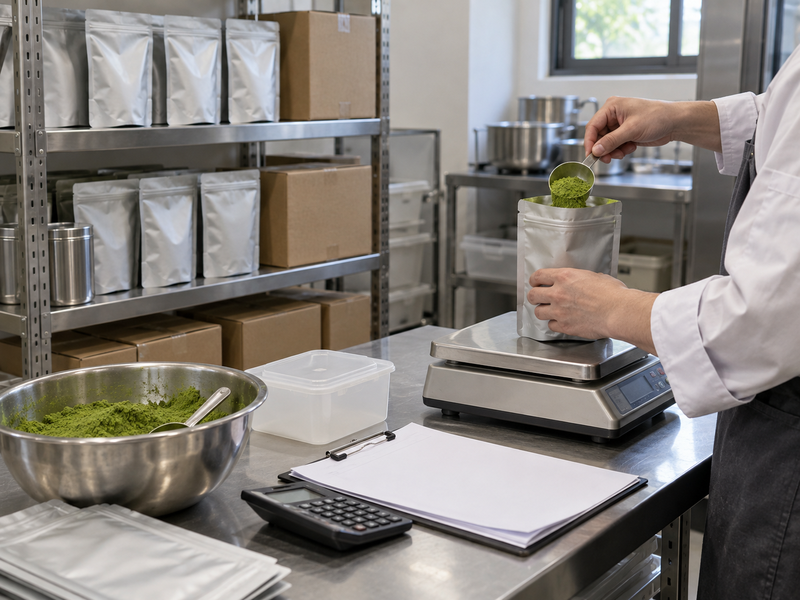
Ask trained staff to prepare the approved drink using the normal station setup, then measure the powder dose across representative preparations. Record operator, tool, method and any departure from the recipe. A scoop can deliver different mass depending on filling and leveling, so the cost calculation needs evidence from the method staff use.
Ippodo’s latte recipe specifies a measured powder amount for its preparation. Your cafe should establish its own accepted dose with the actual drink and ingredients. Use the matcha measurements guide to organize weighing questions and confirm that staff understand the units.
Review variation before changing the nominal dose. If the recipe calls for a certain amount but staff routinely add more, determine whether the problem is the tool, instruction or accepted drink profile. Reducing the written quantity without fixing the working method will only make the spreadsheet diverge further from consumption. Any intentional recipe change needs a sensory check and a new version date.
5. How should preparation losses be recorded?
Identify the loss before assigning a rate
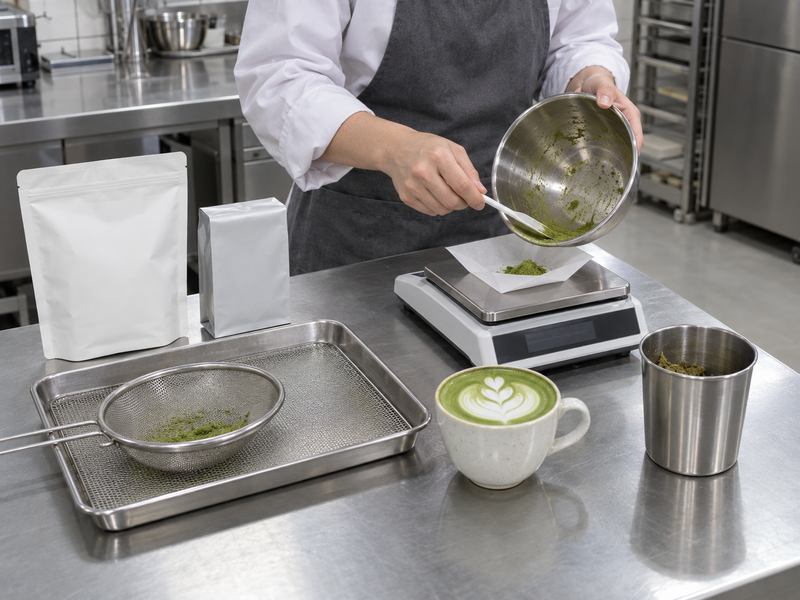
Log powder lost during dispensing, sifting, mixing, transfer, remakes and disposal. Use practical categories that staff can distinguish during service. Avoid creating a detailed form that requires guesses after the shift. Where a quantity cannot be measured reliably, record the event and plan a focused measurement exercise.
| Loss source | Practical record | Possible operating check |
|---|---|---|
| Dispensing spill | Observed mass or incident | Container and scoop method |
| Mixing residue | Controlled comparison | Vessel and transfer method |
| Remade drink | Item and reason | Preparation or order accuracy |
| Unused preparation | Quantity and time | Batch planning |
Let y represent the fraction of purchased powder that reaches accepted servings under a defined method. A planning calculation can divide the theoretical powder cost by y, provided the yield definition includes the losses being modeled. State the observation period and calculation method.
Do not add the same loss twice. If actual issued powder has already been divided by accepted drinks, that result already includes powder consumed in recorded remakes and waste during the period. An extra generic waste percentage would overstate the same consumption.
6. How should a prepared matcha base be costed?
Measure usable batch output
Record the powder and other ingredients entering the base, then measure the amount of accepted base available for drinks. Use the approved portion of base per drink to calculate theoretical servings. Keep unused base, residue and discarded portions visible rather than assuming that the mixing vessel’s nominal capacity equals output.
If the cafe prepares different base concentrations, assign each a distinct recipe version and storage label under its operating procedure. A staff member should not have to infer strength from color. Mixing a stronger and weaker base without a controlled method makes both serving consistency and ingredient costing difficult to explain.
Have the food-safety lead approve the preparation, holding and disposal practice for the actual recipe. A cost-saving batch size should not determine an unsupported holding period. Compare the labor and material implications using observed data, then let operations decide whether individual preparation or a validated batch method fits demand. Record the chosen method in the costing sheet so a later process change prompts a new yield check.
7. What belongs in the complete drink cost?
Keep powder cost visible within the total
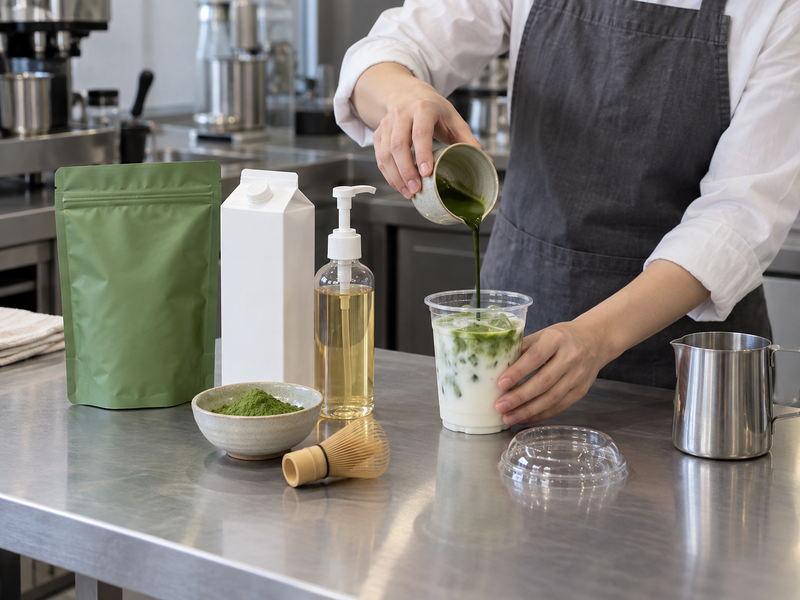
Add the measured cost of milk, sweetener, other ingredients and packaging according to the cafe’s accounting method. Keep each component separate. The powder-only figure answers an ingredient question, while the complete drink calculation supports menu and operating decisions.
| Cost component | Quantity basis | Evidence |
|---|---|---|
| Matcha | Approved dose and yield | Recipe and purchase cost |
| Milk | Actual recipe quantity | Product cost and measurement |
| Sweetener | Measured amount | Recipe and supplier record |
| Cup and lid | Units used | Packaging invoice |
Ask finance how to treat labor, payment fees, delivery commissions and overhead in the report. Different internal decisions can require different measures, so label the result precisely. A menu selling price minus selected ingredient costs is not automatically net profit.
Calculate each size and material modification using its own recipe. If customers can choose a different milk or add powder, record the incremental cost explicitly. Keep discounts and tax treatment with the relevant sales measure rather than hiding them inside the ingredient price. This lets the manager see whether a margin change came from supply, preparation or selling conditions.
8. How can a buyer compare two powders fairly?
Use each candidate’s accepted recipe
Start with a controlled application comparison. If two powders both pass at the same dose and method, their cost comparison is straightforward. If one requires a different dose, preparation step or ingredient adjustment to meet the same brief, record that accepted version before comparing serving costs.
Do not assume that a higher-priced powder will justify a higher menu price or that a cheaper powder must require more grams. Those are business and application questions to test. Use the buyer’s actual accepted results and quotations. Where evidence remains incomplete, keep the comparison conditional.
Review handling losses alongside dose. A powder that is difficult to dispense through the existing station may create extra waste, but measure that effect before assigning it a cost. If equipment or training can resolve the problem, compare that option openly. The decision should show the formula, powder code, purchase-cost basis and observed use method for each candidate, allowing purchasing and operations to approve the same comparison.
9. How do inventory records reveal a costing problem?
Reconcile issued powder with recorded use
For a defined period, calculate powder used from opening stock plus receipts and transfers in, less closing stock and transfers out. Apply the business’s counting method consistently and keep units clear. Compare this amount with recipe-based expected use from recorded drinks and other authorized consumption.
| Reconciliation line | Record source | Question raised |
|---|---|---|
| Opening and closing stock | Physical count | Were open packs measured? |
| Receipts and transfers | Inventory records | Are movements complete? |
| Expected drink use | Sales and recipe versions | Were modifications captured? |
| Other use and losses | Staff and waste logs | Can the variance be explained? |
Investigate a variance through counting, recording and preparation before assuming theft or supplier error. A changed cup size, unrecorded training session or estimated open-pack balance can explain part of the difference. Keep unresolved variance visible and improve measurement where the cause remains uncertain.
Use the reconciled period to review the planning yield. Do not automatically set the next forecast to one unusually poor or unusually quiet week. Explain the period chosen and any events that limit its usefulness.
10. When should the cafe update its serving cost?
Tie updates to specific changes
Recalculate when the purchase-cost basis, powder code, approved dose, pack, preparation method or menu format changes. Schedule periodic checks using the cafe’s normal management cycle, with extra review after a launch or significant operating change. Retain previous versions so finance can explain why the reported figure moved.
Assign purchasing responsibility for current ingredient costs, operations responsibility for the working recipe and finance responsibility for the calculation method. A costing sheet becomes unreliable when every department assumes another person updated it. Mark missing inputs and avoid publishing a precise result while a required quantity or price remains unconfirmed.
Choose one high-volume matcha drink, weigh its actual preparation and collect one defined period of powder use and accepted sales. Enter those records with the current net ingredient cost, then compare the theoretical serving cost with the observed consumption result before revising the menu budget.
FAQ
Q1: Should ice enter the powder-only calculation?
No. Powder-only cost uses powder quantity and cost. Ice can belong in a broader drink or operating calculation if the cafe’s accounting method includes it.
Q2: How should a refunded drink be counted?
Record whether it was prepared, replaced or canceled before preparation. Sales revenue and powder use may move differently, so preserve both facts in the period record.
Q3: Can a rounded serving figure be multiplied by monthly sales?
Use the unrounded working value for totals where possible. A display value rounded to a few decimal places can create avoidable differences over many servings.
Q4: What if an open pack cannot be weighed accurately?
Record the limitation and improve the counting method. An estimate may support provisional planning, but label it and avoid treating the resulting variance as a precise loss measurement.
Q5: Does lowering dose always improve margin?
It lowers theoretical powder use if everything else stays fixed. The changed drink still needs product approval, and any remakes, customer response or other recipe changes need separate evaluation.