
Matcha chia pudding is a cold, spoonable mix of hydrated chia seeds, liquid and matcha. The ingredients look simple, but production quality depends on uniform hydration and a tea flavor that survives chilling. Feel Good Foodie’s recipe shows a home version with chia, matcha and milk. A café or packaged-dessert brand needs to test mixing, portion control, cold storage and the way the pudding looks after toppings and transport. Health claims in consumer recipe copy should not be carried into a commercial label without separate evidence and review.
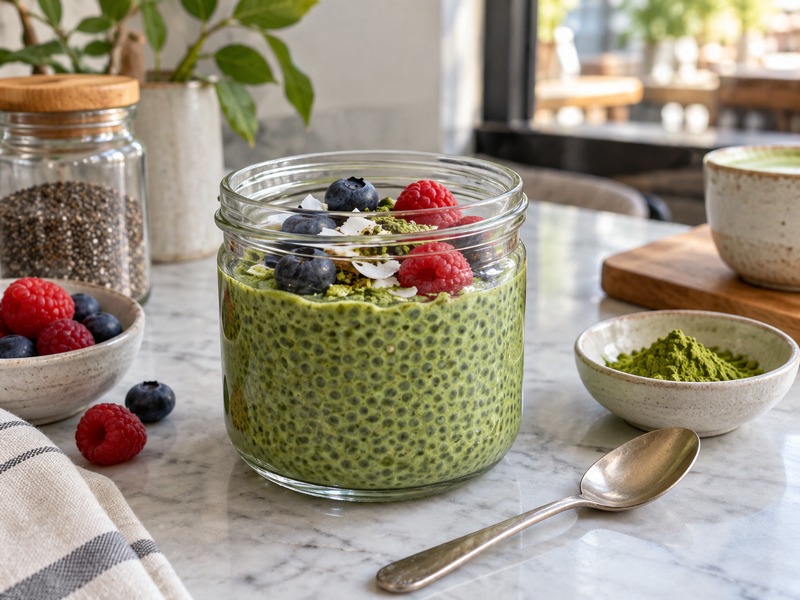
This guide is for product developers, foodservice operators and ingredient buyers. The goal is a repeatable dessert or breakfast cup, with final handling limits set by the qualified food safety team.
1. What texture should the pudding have?
Describe the spoonful, not just the ingredients
Chia seeds absorb liquid and create a gel around each seed. Depending on the ratio and resting time, the result can be pourable, spoonable or nearly set. Pick a texture for the intended sales channel. A café breakfast cup may need a soft spoonable bite; a layered retail dessert may need enough body to hold fruit above it without sinking. State whether visible seed grains are part of the desired texture and whether liquid separation is acceptable after several hours.
Taste the whole cup. Check the first spoonful near the top, one from the center and the last near the bottom. Poorly hydrated cups can have a watery surface and dense seed layer beneath. Matcha can also collect in dark streaks if it was not dispersed before hydration. Define a visual reference under normal shop light. A photograph of a freshly stirred development bowl is not a fair standard for a jar that customers open after cold distribution.
| Format | Target texture | Failure to watch |
|---|---|---|
| Café bowl | Soft spoonable set | Water pooling after service |
| Grab-and-go jar | Stable through carrying | Dense bottom, thin top |
| Layered dessert | Supports topping | Fruit sinks or bleeds |
2. Which chia seed and liquid inputs work best?
Control hydration before flavor adjustments
Seed freshness, size and storage condition can affect hydration. Milk choice also changes body and sweetness. Compare black and white chia if color matters; dark seeds can contrast sharply with a pale green base, while white seeds can give a more uniform appearance. Test dairy and plant milks separately because their solids and flavors differ. Keep the seed mass, liquid mass and resting conditions fixed in each comparison. A formula that works with one oat drink may loosen with another.
Ask for practical records. Seed suppliers should provide specifications, relevant safety testing, traceability and storage guidance required by the buying program. Milk suppliers should provide ingredient and allergen statements. If a sweetened plant drink is used, include that sugar in the recipe calculation. Portion samples into the final container before judging them; a deep jar can hydrate and settle differently from a wide bowl. Record ingredient lot and mix time so a later texture complaint can be traced to a specific change.
| Input decision | Effect on product | Trial evidence |
|---|---|---|
| Black or white chia | Visual contrast | Finished chilled cup |
| Dairy or plant milk | Body and allergens | Texture and label review |
| Sweetened or plain liquid | Flavor balance | Full-cup tasting |
3. How should matcha enter the mixture?
Disperse tea before seeds thicken the liquid
Dry matcha dropped into an already swollen chia gel can form dark lumps that are difficult to break apart without damaging texture. Disperse measured powder in a small portion of the liquid first, then combine with the rest before adding chia. Test whether a whisk or high-shear mixer is needed at the planned batch size. Keep the extra liquid in the formula. If the matcha is mixed into a separate top layer, treat that as a different product with its own stability test.
Inspect after chilling. A smooth green liquid at mixing may show sediment once seeds settle. Cut or spoon through finished cups and check for powder islands. Compare matcha candidates in the actual milk and sweetener, since a delicate powder may be hidden by vanilla while a stronger one can taste harsh in a cold dessert. Ask for lot-linked supplier documentation and an approved sensory reference. A grade label does not predict how the powder tastes when held overnight with hydrated seeds.
4. How long should the pudding rest before filling?
Use hydration checkpoints rather than a guess
Chia thickens over time. A short bench rest may make a mixture seem pourable while seeds continue to swell after the cups are sealed. That can change fill height and texture by the time the product reaches a customer. Develop a time-and-temperature procedure for the actual formula. Sample at several points and measure spoonability, visible free liquid and seed distribution. A commercial batch may hydrate differently from a small home bowl because mixing and cooling rates change with volume.
Mix again only if validated. Some kitchens stir once after an initial rest to break early seed clusters before final portioning. That can help uniformity, but it should be specified by time and method, not left to each operator. Check cups filled at the start and end of the batch for similar seed density. If the bottom of a vessel contains more seeds, the last cups may be unacceptably firm. Document the maximum time the batch can wait before filling under the product’s food safety plan.
| Hydration checkpoint | Record | Decision |
|---|---|---|
| After mixing | Even seed dispersion | Continue or rework |
| Before filling | Viscosity and clumps | Release to filler |
| After chilling | Free liquid and spoon feel | Approve formula |
| End of intended life | Texture and safety data | Set shelf-life claim |
5. How should sweetness and toppings be chosen?
Let matcha remain a flavor
Chia and milk form a neutral base, so sweetener, fruit and granola can quickly define the cup. Start with matcha and the chosen liquid, then add sweetener to the level needed for a pleasant cold spoonful. A thick fruit compote can make the first bite very sweet; a tart topping can make the matcha below seem bitter. Taste assembled cups from top to bottom. Keep a plain version as a control so the team knows whether the powder remains noticeable.
Test topping migration. Berries may release juice, crunchy toppings may soften, and a syrup can form streaks through the green pudding. Decide whether toppings are packed separately, added at point of sale or placed directly on the cup for grab-and-go. Each choice changes labor, packaging and shelf-life work. If nuts or dairy-based toppings are used, ingredient and allergen information must cover the whole product. Avoid treating a decorative topping as free; it affects both cost and customer experience.
6. What process works at a larger batch size?
Keep seed distribution even while filling
Scaling a chia pudding is not only multiplying a home recipe. Matcha can cling to mixer walls, seeds can settle during a long fill run and temperature can rise if a batch waits at the station. Trial the chosen equipment at a realistic volume. Record ingredient addition order, agitation speed, mix duration, rest period and filling method. Sample cups from the beginning, middle and end of the run. Weigh finished portions and inspect texture after they have chilled.
Control the vessel. A narrow tank can retain dense seeds at the bottom; an overly aggressive mixer can trap air and create uneven fill. Choose a method that maintains uniformity without destroying the intended texture. Define a re-mix or stop rule when the batch waits. If manual spooning is used, include that labor and variability in the cost model. A final cup that looks good from the top still needs to be checked for seed distribution through its depth.
| Process defect | Likely variable | First check |
|---|---|---|
| Dense final cups | Seeds settling in vessel | Fill sequence and agitation |
| Green powder spots | Poor matcha dispersion | Premix method |
| Air pockets | Excess mixing | Speed and fill method |
| Uneven weights | Portioning tool | Start/end weights |
7. What packaging suits the sales route?
Match the cup to the pudding’s life
A clear jar displays color and toppings but also exposes any separation or color change. A wide opening improves spoon access; a narrow one may lower packaging cost while making the bottom hard to reach. Test seal integrity, transport orientation and headspace with the complete topped product. If granola is packed separately, the lid or secondary pack must hold it without spilling into the pudding. Do not let a package photo determine the product’s life without stability work.
Follow real transport. Put finished cups through the planned refrigerated route and inspect them at receipt. Check leakage, topping migration, cup scuffs, condensation and temperature records. The quality team should validate safe handling and shelf life for the exact formula, pack and market. A chilled café cup sold immediately and a multi-day retail jar are different products. The reference home recipe does not establish a commercial shelf-life period for either one.
8. What should buyers ask suppliers?
Document the inputs that change texture and color
Request matcha specifications, lot analysis and traceability records appropriate to the market and buying program. Chia suppliers should provide seed specifications and relevant safety records. Milk, sweetener and topping suppliers must provide ingredient and allergen information. Ask about changes to seed size, milk solids and matcha blend, because these can alter a seemingly simple product. A written product name is less useful than an approved sample in the actual chilled cup.
Run incoming comparisons. Test a new matcha lot for color and taste in the pudding, not just in water. Test new chia lots for hydration under the approved procedure. Keep retained samples and fill records from successful production. If a cup becomes watery, the team can compare seed, liquid and process before blaming matcha. Supplier contracts should require advance notice of relevant formulation or processing changes so the product can be retested rather than patched at store level.
| Supplier input | Evidence | Finished-cup effect |
|---|---|---|
| Matcha | Lot and sensory records | Flavor and shade |
| Chia | Seed and safety specification | Hydration and texture |
| Milk | Composition and allergen record | Body and label |
| Container | Seal and food-contact data | Distribution performance |
9. What does an accepted cup cost?
Calculate waste after filling and topping
Use the approved grams of seeds, matcha, liquid, sweetener and toppings. Add cup, lid, spoon if supplied, cold storage and distribution. Count product left in mixing vessels and cups rejected for low fill, leakage or poor texture. A premium topping can cost more than the matcha; a fragile garnish can create extra labor. Calculate cost per saleable cup rather than per mixed kilogram. Do this at the expected batch size, because a very small pilot may overstate labor efficiency.
Match price to format. A freshly assembled café cup may justify more visible fruit and manual finishing. A distributed jar needs a package and formula that survive the route. Test demand and price in the brand’s own channels rather than assuming a health-oriented name guarantees a premium. Any nutrition or wellness claim should be reviewed independently from the cost model and supported by the finished product’s evidence.
10. What should a pilot prove before rollout?
Reproduce texture from first cup to last
Select a matcha powder and chia supplier, then run a measured pilot on the planned equipment. Record mix order, hydration time, fill weights and cup samples from across the batch. Taste plain and topped versions after the intended hold. Send packaged cups through the real distribution route. Check flavor, seed distribution, free liquid, color, seal and safe-handling data. The pilot should include a second ingredient lot if routine supply depends on it.
Write a release standard. State the accepted texture, matcha taste, cup fill, packaging, topping placement, storage plan and supplier records. Train staff with both approved and rejected examples. If a batch fails, change one variable and retest the affected stage. A limited launch can then show how the pudding performs under normal production and customer use before a larger purchase or longer shelf-life claim is considered.
Reference
Feel Good Foodie, “Matcha Chia Pudding” provides a home recipe using chia, matcha and milk. The commercial process and claim checks above are independent proposed tests; health claims in the source are not repeated as product claims.
FAQ
Q1: Why does matcha chia pudding turn watery?
Check seed lot, seed-to-liquid ratio, hydration time and the distribution route.
Q2: Can the pudding be made with plant milk?
Yes. Test each liquid’s texture and flavor and review its ingredient and allergen information.
Q3: When should fruit be added?
Choose based on topping migration, cold storage and whether the product is sold fresh or distributed.
Q4: Can matcha be stirred into set pudding?
It tends to clump; disperse the powder in liquid before chia thickens the mixture.
Q5: How is shelf life determined?
The qualified team must validate the exact formula, packaging, storage and market requirements.