
Kagoshima matcha production can give buyers another Japanese sourcing route, but a prefecture name alone cannot approve a powder. Request a traceable lot, taste it in your application and check who will supply its replacement. This buyer checklist follows the leaf through processing and turns a regional story into a purchasing decision. Eupouria’s regional guide provides background; your signed specification must govern the order. Our matcha supplier Japan guide adds origin and supplier checks to a regional shortlist.
Contents
- 1. What does Kagoshima origin tell a buyer?
- 2. Which farm and processor details should be recorded?
- 3. How should shading and harvest claims be checked?
- 4. What should tencha processing evidence show?
- 5. How can two Kagoshima samples be compared fairly?
- 6. Which milling details affect the purchase?
- 7. How should Kagoshima and other origins be tested?
- 8. What quality documents belong with a lot?
- 9. How can order continuity be tested before launch?
- 10. When is a regional claim ready for approval?
1. What does Kagoshima origin tell a buyer?
Treat place as a traceability statement
Kagoshima identifies a Japanese prefecture, not a single cultivar, harvest date or flavor. Different gardens and processors can produce markedly different powders under that name. A buyer should ask whether “Kagoshima” describes leaf cultivation, tencha processing, milling or every stage. Those are separate assertions. A sales sheet that names a region without assigning a lot and process site leaves the claim hard to verify.
Define the claim before evaluating the cup. Ask your supplier to write the exact origin wording intended for purchase documents and consumer packaging. Then request records that support each part of that wording. If the finished powder blends leaves from several districts, the offer may still fit your application, but its label must describe the blend accurately. Keep the region as one field in the specification rather than a proxy for quality. Your team can then compare taste, documentation and supply continuity on equal footing.

2. Which farm and processor details should be recorded?
Map the chain behind the sample
Start with the entity that sold the sample and work back toward the leaf. Record farm or grower group, harvest season, tencha processor, milling site and finished powder packer where those entities can be disclosed. Ask whether the same route will supply commercial orders. Some suppliers will protect farm names for commercial reasons; they should still explain how their internal lot system traces every stage and how they would investigate a complaint.
Ask for a lot map, not a scenic farm photograph. Photographs can illustrate cultivation, but they do not connect a delivered carton to a particular field or processing batch. A useful map links incoming leaves, processed tencha, milling run and outgoing packs through internal identifiers. Confirm who retains those records and for how long under your contract. Where a trader supplies the powder, clarify who controls change notification. Procurement needs to know whether your approved sample can be linked to the powder you actually receive.
| Stage | Buyer asks for | Why it matters |
|---|---|---|
| Leaf supply | Harvest season and origin declaration | Establishes the stated provenance |
| Tencha plant | Processor identity or controlled site code | Locates the transformation step |
| Mill and packer | Finished lot and packing records | Connects sample with shipment |
3. How should shading and harvest claims be checked?
Request a record that matches the lot
Shading is part of tencha cultivation, yet a claimed number of days says little without the actual garden, season and harvest conditions. Ask for a process summary associated with the offered lot. Does the supplier document shade installation and removal? Was the leaf selected for straight tea or an application where milk and sugar will dominate? The answers guide sampling; they do not replace it.
Keep harvest claims tied to sensory results. A “spring” or “young leaf” description may justify a premium, but you still need a side-by-side tasting at the intended dose. Record bitterness, sweetness, aroma and color using the same water, vessel and lighting. If you buy for a latte, repeat the trial with your normal milk and sweetener. The purchase should be based on reproducible performance rather than a romantic image of hand picking. Where a retail label states a particular harvest or cultivar, require the supplier to confirm that statement for each shipment.
4. What should tencha processing evidence show?
Follow leaf transformation
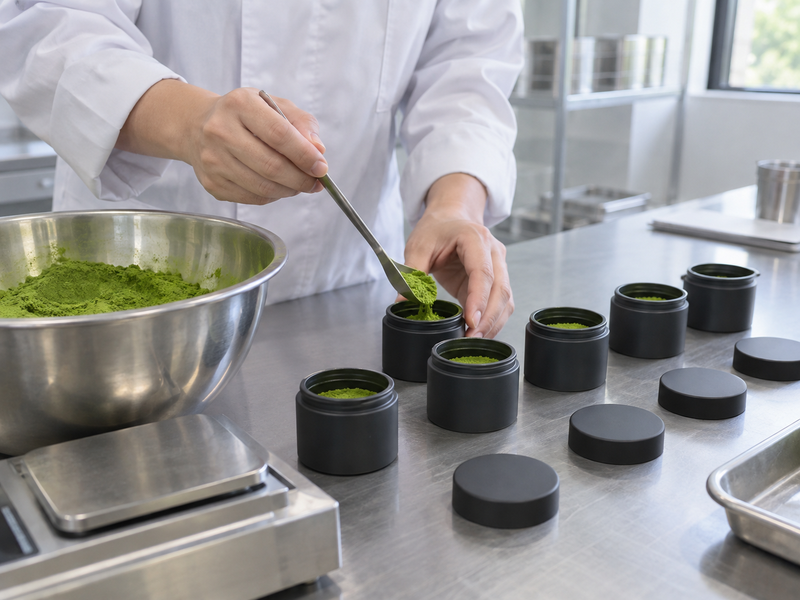
Matcha begins with processed tencha. Yamamasa Koyamaen’s production account describes steaming, drying without rolling, sorting and milling as distinct operations. Ask the Kagoshima supplier which site performed each step and how it separates incoming lots. A regionally grown leaf can leave its prefecture for later processing, so avoid assuming all stages share one address.
Request a process description that can be checked. It should show intake identification, steam and drying records, sorting controls and release of tencha for milling. You need not demand a proprietary machine setting. You do need enough detail to understand how browned leaf, excess stem or an unexpected odor would be found and handled. A supplier unable to explain where tencha was made cannot support a precise production claim. Note any transfer between companies, including who owns and releases material at that handoff.
| Evidence | Useful buyer question | Decision supported |
|---|---|---|
| Incoming leaf record | Which harvest lot entered processing? | Origin trace |
| Tencha release record | Who approved it before milling? | Material acceptance |
| Transfer record | Did material move to another site? | Claim wording |
5. How can two Kagoshima samples be compared fairly?
Use one tasting method
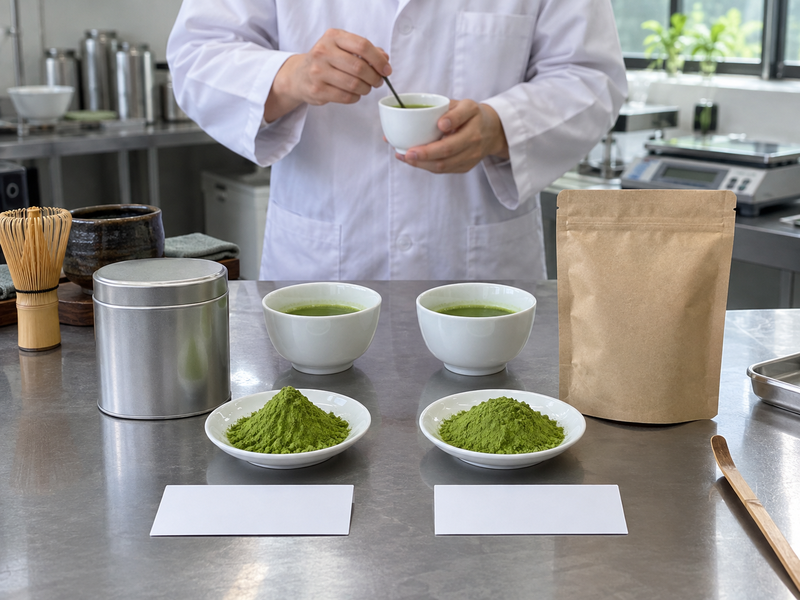
Label samples with codes so tasters are not led by brand or grade wording. Prepare equal powder weights with the same water volume and temperature. Record color under one light source and taste before adding sweetener. Then repeat the test in your actual product. A powder that tastes nuanced in water may disappear in a strongly flavored dairy base; another may perform better after blending despite a less striking dry appearance.
Write acceptance criteria before prices arrive. Choose a few attributes that affect your SKU: bitterness threshold, green color after mixing, sediment behavior or foam if it matters in service. Include a reference powder already approved by your team. Let two or more tasters record independent notes before discussing them. Reorder testing if samples arrived in different pack sizes or storage conditions. A fair comparison protects both suppliers from a biased trial and gives procurement a reasoned basis for a shortlist.

6. Which milling details affect the purchase?
Connect powder behavior with equipment
Stone milling is common in traditional descriptions, but a buyer should ask what the offered lot actually underwent. The relevant outcome depends on application: ease of dispersion, visible particles, mouthfeel and consistency across packs. Request a particle size method if fine texture is a contractual requirement. A single unsupported “mesh” claim cannot substitute for a test method and a retained reference sample.
Trial the powder on your own line. For a café, test the whisk, frother or premix method staff already use. For a packaged drink, record where powder enters the process and whether clumps survive mixing. For dry blending, observe segregation after filling and transport simulation. Ask how the mill controls foreign material and prevents mix-ups between lots. Your acceptance rule should describe finished behavior, not merely the supplier’s favorite machine. The equipment story becomes useful only when it predicts your operating result.
| Application | Milling-related observation | Trial record |
|---|---|---|
| Whisked tea | Mouthfeel and visible particles | Same preparation method |
| Milk drink | Dispersion and sediment | Standard recipe trial |
| Dry blend | Distribution after filling | Top, middle and bottom samples |
7. How should Kagoshima and other origins be tested?
Compare use cases, not reputations
Regional comparisons often begin with “Kagoshima versus Uji,” yet neither name guarantees a flavor. Set up a blind trial across lots rather than regions alone. Use the same grade intent, price basis and pack age where possible. Record whether one sample has a roasted edge, a stronger marine note or a bitter finish. Such observations belong to those lots and preparation conditions; they should not become claims about every tea from either prefecture.
Choose the powder that serves the product. A premium straight tea can reward a soft, layered aroma. A high-volume latte may need color and flavor that remain recognizable under milk. Compare expected yield per beverage and staff handling alongside unit price. If a preferred origin becomes scarce, consider an approved second lot with a documented flavor envelope. Matcha Village’s company materials describe Chinese tea, application-based product selection and bulk supply; it should be evaluated as a separate origin, with its own sample and claim wording, if included in a sourcing comparison.
8. What quality documents belong with a lot?
Match paperwork with the destination
Ask for a product specification, lot-linked test record, ingredient declaration and packaging details. Your quality team should state which analytes and limits apply in the destination market and your particular product. Confirm laboratory method, units, report date and sample identification. Do not read a general brochure as evidence that each incoming lot was tested for every possible parameter.
Check certificate scope before using its logo. Where a supplier offers organic or food-safety certification, inspect the current certificate’s holder, site, product category and expiry. Clarify whether the finished Kagoshima powder, a processor or only a farm falls within scope. Ask how records will be supplied with repeat orders and what triggers a new test. Keep import advice with your qualified local team because documentation needs vary by market and claim. Procurement can then separate a legitimate product offer from paperwork that belongs to another item.
| Document | Confirm this field | Common gap |
|---|---|---|
| Specification | Exact product code and revision | Generic grade sheet |
| Test report | Lot, method and units | Unlinked sample |
| Certificate | Holder, site and scope | Unrelated facility |
9. How can order continuity be tested before launch?
Test the replenishment story
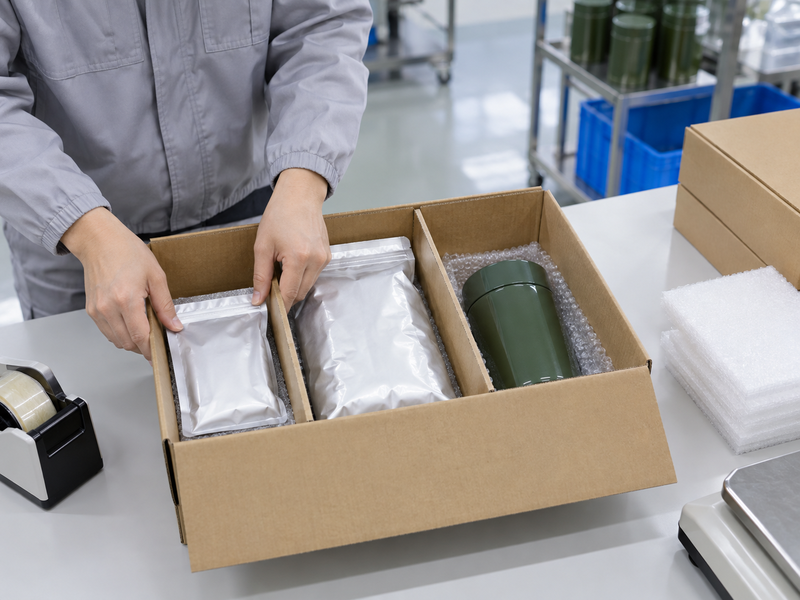
Ask what portion of forecast volume can come from the sampled lot and how a successor lot will be approved. Tencha harvest and powder milling occur on different schedules. A supplier may store tencha before grinding, which can support staged supply, but the available quantity still needs written confirmation. Record pack configuration, ordering window, shipping basis and whether a reservation requires a commitment from your side.
Plan the next sample before the first purchase order. Request a change notification rule for cultivar, leaf origin, processor, milling site or packaging. Keep a retained sample from the approved lot and agree how future lots will be compared. If your launch needs several branches stocked simultaneously, model consumption at branch level and allow a buffer for trial waste and opening inventory. Do not infer stock security from a producer’s annual capacity statement. A workable plan identifies who tells you when a lot is near depletion and what decision follows.
10. When is a regional claim ready for approval?
Close the evidence gaps
Bring procurement, quality, product development and marketing together for one approval record. The proposed label claim should match the supplier’s origin declaration. The powder specification should match the sample your team tested. Quality records must match the commercial lot, while the order terms should explain how replacements are handled. If any link is missing, write the gap and owner rather than quietly assuming it will be solved after printing packaging.
Approve a defined SKU and claim. Record the permitted product code, supplier, lot range, application and exact regional wording. State whether a change to leaf source or milling site requires a new sensory trial. Capture the price basis and replenishment contact separately from product approval so commercial negotiations do not rewrite technical standards. You may decide that a high-performing powder is worth purchasing without a regional front-label claim. That can be a sound decision when documentation supports the powder but not the proposed wording.
| Approval area | Evidence required | Owner |
|---|---|---|
| Origin wording | Traceable declaration | Marketing and quality |
| Application | Recorded product trial | Development |
| Repeat supply | Replacement and notice plan | Procurement |
FAQ
Q1. Does Kagoshima origin guarantee a sweeter matcha? No. Cultivar, leaf selection, processing, storage and preparation all influence taste. Compare named lots under one tasting method.
Q2. Must milling happen in Kagoshima? That depends on your claim. Ask where each processing stage happened and write label language that the records support.
Q3. Can a catalogue sample approve a shipment? Only if the supplier connects it to the commercial product and your team accepts its replacement-lot procedure.
Q4. Should a buyer compare Kagoshima with Uji? Yes, if both are candidates for the same application. Blind trials help prevent a reputation from deciding the result.
Q5. What should be requested first? Start with a lot-linked sample, a process and origin declaration, a current specification and a proposed replenishment plan.
For the next inquiry, send suppliers your application method and the origin wording you intend to use. Ask for a traceable sample and records for that exact product. The best regional story is one your receiving team can still verify months after launch.