
Hojicha mochi can mean tea-flavored rice dough, a roasted-tea filling, or a broader mochi-textured dessert. Those versions look and eat differently. For a bakery or food brand, the challenge is to keep the roasted-tea note clear while the rice texture remains soft through the intended selling window. This guide focuses on a filled mochi-style product and the production questions that decide whether it belongs on a menu or in a retail pack.
Contents: definition · tea placement · rice base · filling · trial · forming · holding · allergens · cost · launch
1. What should “hojicha mochi” mean on the menu?
Describe the actual tea component
Mochi describes a chewy rice-based texture, but a shop can use hojicha in the outer dough, the filling, a coating, or several parts. Name the version. “Hojicha mochi with cream filling” gives a customer more information than a broad “Japanese dessert” label. If the tea appears only as a surface dusting, the product may look brown while tasting mostly of sweet rice. A useful tasting target includes identifiable roasted tea in at least one meaningful component, a soft but not sticky-chewy texture, and a filling that does not overpower the shell. Compare the finished piece with a plain mochi control. Decide whether it is eaten chilled, at room temperature under an approved procedure, or frozen and thawed. That service temperature changes both texture and aroma. A product name should also make clear whether dairy, sesame, or other strong flavors are present; those details matter more to a buyer than an abstract promise of authenticity.
| Tea placement | Benefit | Risk |
|---|---|---|
| Rice dough | Tea in every bite | Heat may mute aroma |
| Filling | Stronger unbaked note | Can dominate shell |
| Dusting | Visual cue | Weak flavor or dry mouthfeel |
| Both dough and filling | Clear identity | Bitter or heavy result |
2. Where should hojicha powder go?
Compare placement before raising the dose
Pure hojicha powder can be folded into a rice dough or dispersed into a cream, bean, or milk filling. The two locations expose it to different heat, moisture, and sweetness. Run a placement trial. Make one batch with tea in the dough, one in the filling, and one restrained combination. Keep piece weight and total sweetness close enough for a fair comparison. Taste blind at the intended selling temperature. If tea in the dough becomes dull after heating, a small amount in the filling may restore aroma without turning the whole piece bitter. If the filling is already rich, tea in the outer layer may provide a cleaner finish. Inspect the texture for powder clumps. A sweetened latte mix is not an equal substitute for pure tea because it changes sugar, dairy, and solids. Ask the tea supplier for a current powder specification and test lot-to-lot flavor in the actual mochi formula.
3. Which rice base gives the right chew?
Specify flour and hydration
Mochi-style products commonly rely on glutinous rice flour or a prepared rice dough, but suppliers and processing methods differ. “Glutinous” describes the sticky texture; it does not by itself mean the ingredient contains wheat gluten. Still, the full recipe may include wheat or other allergens, so check the ingredient statement. Weigh the water. Tea powder adds dry solids and can alter the dough's hydration and firmness. Start from a rice base that already works, then replace a small measured portion of dry material with tea. Compare elasticity, stickiness, and bite after cooling. Record the flour brand, water mass, sweetener, cooking or steaming method, and final dough yield. A piece that is pleasantly soft when warm can firm up during chilled display. Test at the temperature customers will encounter. Avoid claiming a universal mochi recipe from one flour brand; the production system and intended channel decide the necessary texture.
| Base variable | Record | Failure signal |
|---|---|---|
| Rice flour | Brand and specification | Inconsistent chew |
| Water | Grams per batch | Tough or sticky dough |
| Tea powder | Grams and grind | Bitter pockets |
| Cooling | Time and method | Rapid firming |
4. What filling complements roasted tea?
Keep the shell and center in balance
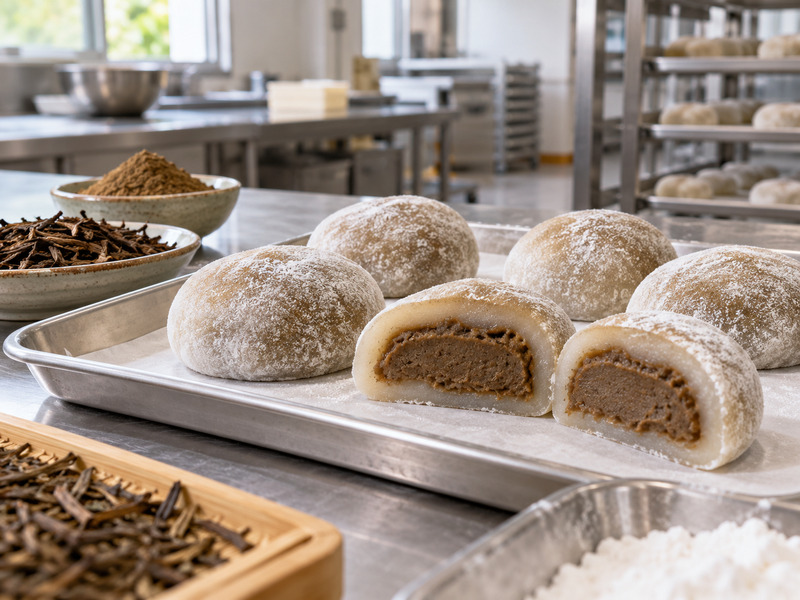
Sweet bean paste, dairy cream, custard, sesame, or a simple tea cream can work, but each changes sweetness, moisture, and allergens. Start with one restrained filling so the team can judge the hojicha. Taste a cut piece. The first bite may contain mostly outer dough, while the center bite may contain mostly filling. Both should make sense. A high-moisture filling can migrate into the shell and make it sticky; a dry paste can pull moisture away and make the bite tough. Weigh filling per piece and check variation across the batch. If cream is used, follow the operation's cold-holding and food-safety procedure. If sesame is used, treat it as a major allergen in the U.S. market and review shared equipment. A rich filling can turn a delicate roasted-tea dough into background color, so adjust one component at a time rather than adding more sugar or tea indiscriminately.
5. What small-batch trial should a bakery run?
Keep a control and change one factor
Use an existing mochi-style dough that the team can make reliably. Produce a plain control and two tea-dose versions, with all other ingredients and piece weights fixed. The tea percentages should be chosen as development settings, not copied as a universal standard from another product. Record final yield. Weigh cooked dough, trim, filling, and finished pieces. Taste freshly made samples and samples held through the planned selling interval. If a higher tea dose makes the dough dry or bitter, try a different roast or placement before masking it with sweeter filling. Photograph cut pieces to check tea distribution. Have a second operator repeat the preferred formula. A recipe that works only when one pastry chef handles a warm dough for exactly the right moment will not be easy to scale. The trial should reveal both a flavor decision and a process that ordinary staff can follow.
| Trial | What changes | What stays fixed |
|---|---|---|
| Control | No tea | Dough and filling system |
| Low tea | Tea dose | Piece weight and process |
| Higher tea | Tea dose only | Piece weight and process |
| Placement | Tea location | Approximate total tea |
6. How should pieces be formed and portioned?
Design for consistent filling and clean handling
Set a dough weight and filling weight for each piece, then test how staff portion and seal them. Cut the finished batch. An attractive exterior can conceal uneven centers or pockets of dry powder. Record the number of pieces that tear, leak, or stick to the tray. A dusting powder can help handling but may change flavor and label; use a measured amount rather than an uncontrolled cloud of starch. If pieces are made by hand, compare output and consistency across operators. If a depositor or forming machine is planned, test the actual dough viscosity and filling behavior on that equipment. Tea powder may change friction or tackiness enough to affect seals. Use food-safe surfaces and a defined cleaning procedure, especially if dairy or sesame fillings are made nearby. A good unit should be easy to pick up, bite, and package without losing its shape.
7. How should texture and shelf life be checked?
Test the entire sales path
Rice-based textures can change markedly during refrigeration, freezing, and thawing. Fillings can migrate or separate, while tea aroma may soften over time. Taste at the end of the window. Test the product in its actual pack under the planned storage condition, then evaluate chew, moisture, flavor, and appearance after opening. Do not infer shelf stability from a dry rice ingredient; a filled product may need temperature control and validated process conditions. The FDA Food Code provides retail guidance for foods requiring time or temperature control, and the business should apply an approved procedure to its formula. A packaged product needs formal shelf-life and labeling review. If frozen distribution is planned, test freeze and thaw cycles and check for cracking or wet surfaces. Keep lot and date records. A mochi piece that is beautiful ten minutes after forming but rubbery by the afternoon is not ready for a bakery case.
8. Which allergens or claims need review?
Read every component
Rice flour alone does not tell the whole story. Milk, egg, soy, sesame, wheat-containing coatings, nuts, and flavor components may appear in the filling or handling aids. The FDA identifies nine major allergens for U.S. regulated foods, including milk, wheat, soy, tree nuts, and sesame. Check the exact recipe. A dairy-free shell does not make a cream-filled piece dairy-free. “Gluten-free” requires review of all ingredients and the production environment; the word “glutinous” in glutinous rice is not sufficient evidence either way. If the product uses Japanese-style design or an origin claim, distinguish the recipe tradition from the actual ingredient origins. Any calorie or sugar statement should be calculated from the standard finished piece and verified for the market. Staff should be able to answer what the filling contains without guessing from its color.
| Claim or issue | Check |
|---|---|
| Dairy-free | Filling and shared equipment |
| Gluten-free | Full formula and process |
| Sesame-free | Ingredients and cross-contact |
| Japanese origin | Lot-specific supply records |
9. What is the cost per sellable piece?
Count trim, rejects, and pack damage
Cost rice base, tea powder, filling, dusting, packaging, cold storage, labor, and expected waste. Divide by the number of clean pieces that make it into a customer's hands. Count the rejects. A small change in tea dose can make dough harder to handle and reduce yield, even if ingredient cost rises only slightly. Compare hand forming with machine forming at realistic volume. A more expensive tea may be worthwhile if it gives clear flavor at a lower dose and preserves texture; blind tasting and yield data should decide. If pieces are sold in pairs or boxes, include inserts and protection against sticking. Short shelf life can create disposal at the end of service. A tempting premium price needs a piece that tastes distinct from a plain mochi with tea-colored dust; otherwise customers may not buy it again.
10. When is hojicha mochi ready to sell?
Require flavor and texture after storage
Approve a formula only after the tea remains recognizable, the rice texture holds through the planned sale window, and ordinary staff can portion and seal pieces consistently. Repeat the batch. Use a second tea lot or flour delivery and another operator before a large launch. Keep a retained reference piece or photograph, recipe version, ingredient list, and shelf-life evidence. For B2B tea sourcing, send Matcha Village the planned dough or filling application and desired roast profile when requesting a pure hojicha powder sample. The supplier can provide ingredient documentation; the bakery must validate its finished mochi. If the product is packaged for retail, complete the necessary process, nutrition, allergen, and stability review before printing claims. The customer should find a balanced roasted-tea dessert, not a fragile prototype that worked only on tasting day.
The final batch review should cut samples from early and late in the forming run. Dough temperature and filling flow can shift, producing different shell thickness even when piece weight is constant. Taste both after the planned storage interval. If late pieces crack or become tough, adjust batch size or forming schedule before committing to a large order.
| Final check | Pass evidence | If it fails |
|---|---|---|
| Early and late pieces | Similar shell and fill | Adjust process |
| Held texture | Soft through sale window | Revise storage |
| Tea identity | Clear in each bite | Change placement |
Final recommendation
Put hojicha where it survives processing and remains clear in every bite. Judge the mochi at the end of its intended selling window and cost the pieces that actually pass.
FAQ
Q1: Must the tea be in the rice dough?
No. It can be in the filling or both; test which placement gives clear flavor and good texture.
Q2: Does glutinous rice flour contain wheat gluten?
The name refers to sticky texture, but check the full ingredient and production information before making a gluten-free claim.
Q3: Can hojicha mochi be frozen?
Possibly. Test the complete filled piece through the planned freeze and thaw process.
Q4: Is a surface dusting enough?
It may add color, but assess whether the finished piece genuinely tastes of roasted tea.
Q5: What is the key commercial check?
Count clean sellable pieces and taste them after the real storage and display interval.
Sources: Japan MAFF, Uji tea categories; FDA, food allergens; FDA, Food Code 2022.