
A hojicha frappe has to taste like roasted tea while behaving like a cold blended drink. Too much ice makes it thin; too much powder makes it gritty; too much syrup hides the tea. The blender can also become a bottleneck during a rush. This guide gives cafés a way to develop the cup, measure its hold, and decide whether it deserves a permanent menu slot.
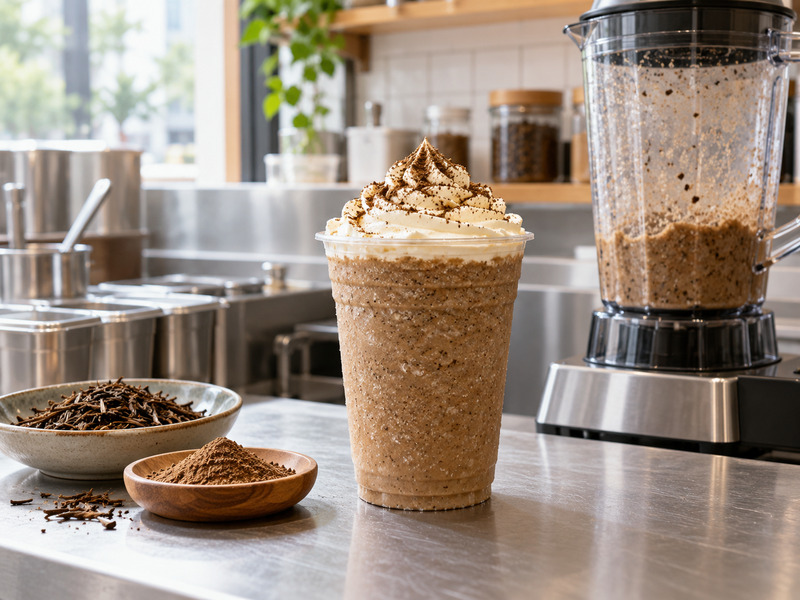
Contents: identity · tea · ice · milk · sweetness · blending · toppings · holding · cost · launch
1. What should distinguish a hojicha frappe?
Give the tea a clear role
Cold blended drinks often rely on sweetness and cream for immediate appeal. Hojicha can provide a toasted counterpoint, but the drink should not become a generic brown milkshake. Set a sensory target: roast aroma on the first sip, balanced sweetness in the middle, and no gritty tea residue at the end. Taste without garnish. Before adding whipped cream or caramel drizzle, test the blended base. If tasters cannot identify roasted tea without the menu name, strengthen or change the tea component rather than decorating the cup. Decide whether the drink is a light iced tea slush, a milk frappe, or an ice-cream dessert. Those formats differ in body, cost, and customer expectation. The menu description should name milk or dairy if present and avoid using “coffee” unless coffee actually enters the formula. A clear identity helps the drink stand apart from an iced hojicha latte already on the menu.
| Format | Main body source | Key risk |
|---|---|---|
| Tea slush | Ice and tea | Weak, watery finish |
| Milk frappe | Milk and ice | Tea buried |
| Dessert frappe | Ice cream or cream base | High sweetness and cost |
2. Which hojicha ingredient survives blending?
Test powder and concentrate in the frozen matrix
Pure hojicha powder can carry strong flavor into a milk frappe, but its particles may feel coarse when the ice melts. A brewed concentrate creates a smoother drink, though dilution can make it faint. A sweetened premix may blend quickly but fixes sugar and creamer. Compare at equal cup fill. Make candidate drinks with the same ice mass, milk, and final volume, then adjust tea strength in a controlled series. Taste immediately and after five minutes. Inspect the bottom for powder sediment after partial melt. A very dark roast may become bitter in a cold drink, where sweetness and temperature change perception. Ask the supplier for intended application and lot specifications, then test the exact product in the café's blender. A dry aroma test is not enough. The tea chosen for a hot latte may work, but it has to earn approval in the blended format separately.
3. How much ice should the recipe use?
Weigh it rather than filling a scoop
Ice makes the frappe thick, cold, and inexpensive by volume, but excessive ice weakens tea and creates an icy, coarse texture. Ice cubes vary in size and density, so “one cup of ice” is not a reliable production unit. Start with a weighed ice mass and a fixed liquid base. Watch the five-minute cup. A product that looks thick when poured can separate into watery tea and foam before a guest reaches the table. Use the shop's actual ice machine; crushed and large cubes behave differently under the same blender cycle. Record final drink weight, pourability, and any large fragments. If the shop changes ice equipment, retest. The cup should be thick enough to justify “frappe” yet easy to drink through the supplied straw. Decide whether it is sold for immediate consumption only; a delivery platform may expose a texture problem that never appears at the counter.
| Ice variable | Record | Effect to watch |
|---|---|---|
| Mass | Grams per serving | Dilution |
| Cube size | Machine or format | Blender load |
| Blend time | Seconds at setting | Fragment size |
| Five-minute hold | Separation | Customer experience |
4. What should the liquid base contain?
Balance body with tea clarity
Milk adds body, while a small amount of water may help disperse tea powder before blending. Dairy and plant-based drinks have different sweetness, fat, and foam behavior. Test the exact brands intended for service. Start simple. A measured tea slurry, milk, and ice form a clearer trial than a long list of syrups and stabilizers. If the base is too thin, check whether it needs less ice, a different milk, or a different solids balance before adding another ingredient. A thick dessert base may be appropriate for a premium item, but it changes nutrition and cost substantially. Plant alternatives can bring soy or tree-nut ingredients; dairy brings milk allergen. Review the whole formula and shared blender equipment before promising a dairy-free version. A clean, repeatable base also makes seasonal flavors easier to test without losing the roasted-tea character.
5. How sweet should the frappe be?
Measure sugar after the tea and ice are set
Cold temperature can mute sweetness and aroma. A development team may add syrup until the first sip tastes lively, then discover that the drink becomes cloying as it warms. Trial several measured sweetener doses after tea and ice are fixed. Taste through melt. Record flavor at handoff and after a realistic wait. If a premix or sweetened milk is used, include its sugar contribution before adding syrup. A topping can add more sweetness, so evaluate the complete serving after the plain base passes. If the menu offers a “less sweet” version, specify what changes and whether the texture remains acceptable. Removing syrup may alter viscosity, not just taste. A clear recipe avoids staff compensating for a weak tea lot with extra sweetener. The goal is a cold drink with recognizable roast, not a sugar level that makes the powder impossible to notice.
6. Which blender method can staff reproduce?
Standardize load order and endpoint
Blender performance depends on cup load, ice format, liquid amount, blade condition, and setting. Put liquid and a pre-dispersed tea base in first, then add ice according to the tested method. Time the cycle. Record setting, seconds, final texture, and rinse time. Make several consecutive drinks, because the second and third cup may differ as the equipment warms or staff rush. If the team uses a measured frozen base, specify how it is portioned and held. A high-speed laboratory blender can create a silky prototype that a café blender cannot match; develop with the service unit. Watch for unbroken ice at the top and tea powder stuck below the blades. Train staff on a visual endpoint, but back it with a timed setting and measured ingredients. If a double batch saves time, test whether it gives two identical cups rather than assuming the blender scales linearly.
| Process step | Specify | Failure |
|---|---|---|
| Load | Ingredient order | Powder pocket |
| Cycle | Setting and seconds | Coarse ice |
| Pour | Cup and target fill | Unequal portions |
| Rinse | Cleaning procedure | Allergen cross-contact |
7. Do toppings help or hide the drink?
Add only what survives the service window
Whipped cream, roasted tea dust, caramel, or a cookie can make a frappe look special. Each also adds cost, allergen questions, and a new failure point. Taste the base first. If the drink needs a large cream cap to seem satisfying, reconsider the base. A powder dusting may look attractive but can create a bitter dry first sip; test it with a straw and lid. A cookie garnish may become soggy during delivery and can add wheat or egg allergens. Use measured topping portions and photograph a normal cup. If two staff members produce dramatically different caps, the menu photo creates an expectation the shop cannot meet. A premium frappe can be simple: clear roasted-tea flavor, smooth texture, and a garnish that supports rather than replaces the tea. Keep a no-topping version available in development for honest comparison.
8. How long does the frappe remain acceptable?
Define a quality window
A frappe begins changing as soon as it leaves the blender. Ice melts, foam rises, and solids can separate. Test the drink in its actual cup and lid at handoff, after five minutes, and after a likely customer or delivery interval. Don't hide the clock. If texture fails quickly, the product may be best for immediate in-store service. Do not promise delivery performance from a counter photograph. Record whether the customer can stir the cup back to a pleasant texture; some separation is manageable, while a watery bottom and thick foam top are not. If a prepared tea slurry is held before blending, it needs its own storage and food-safety procedure. Follow the business's approved handling rules for milk and toppings. A quality window can be shorter than a safety window, and the menu should be designed around the period when the drink is genuinely enjoyable.
| Hold point | Evaluate | Decision |
|---|---|---|
| Handoff | Texture and tea aroma | Serve |
| Five minutes | Ice fragments and separation | Adjust formula if poor |
| Delivery interval | Cup, lid, and drink together | Limit channel if poor |
9. What is the cost per sellable cup?
Include blender time and waste
Cost tea at the dose that passed tasting, then milk, syrup, ice, toppings, cup, lid, straw, energy, and labor. Measure what stays in the blender jug after pouring; it can be substantial for a thick drink. Count the rinse. Cleaning time affects throughput and may be required between allergen-sensitive recipes. Compare the frappe's contribution with a standard hojicha latte at realistic sales volume. A higher price can make sense if the drink delivers a distinct cold dessert experience and the station can make it reliably. If it mainly shifts orders from an existing iced latte while adding work, the commercial case is weaker. Test a lower-complexity version before deciding the concept needs several toppings. A supplier quote should include landed cost and pack size; powder waste from a slow-moving specialty item can erode the margin even if its recipe cost looks good.
10. When is the frappe ready to launch?
Approve taste and throughput together
Two normal operators should make the same cup from a gram-based card with the actual blender. The drink should retain a clear hojicha note and acceptable texture through its intended service interval. Run a mixed queue. Count preparation and cleaning time while staff also make ordinary drinks. Review ingredients and allergens, then check that menu copy describes the standard cup. Retest after a tea or milk supplier change. Matcha Village can provide hojicha powder for a B2B trial; state the planned milk, ice, sweetness, and cup size when requesting samples. A powder that smells good dry may not stay distinct after blending. The permanent menu should feature the version that customers repeatedly finish and reorder, not merely the version that photographs best before it melts.
A final frappe trial should include the first drink after opening and another during a busy run, when the blender is warm and staff are moving quickly. Measure the amount left in the jug and the time needed to rinse it. Taste both cups after five minutes. If the second cup becomes coarse or watery, the recipe or equipment setting still needs work before launch.
| Final check | Pass evidence | If it fails |
|---|---|---|
| Texture | Smooth at five minutes | Change ice or cycle |
| Tea clarity | Roasted note after melt | Adjust tea |
| Station time | Blend plus rinse fits queue | Simplify format |
Final recommendation
A useful hojicha frappe tastes of roasted tea, pours consistently, and stays pleasant long enough for its intended channel. Weigh ice and taste after partial melt before setting the recipe or price.
FAQ
Q1: Can a frappe use brewed hojicha?
Yes. Use a controlled concentrate and test flavor after ice dilution.
Q2: Does powder make the drink gritty?
It can if the grind or dispersion is poor. Test the served cup after several minutes.
Q3: Can the recipe be dairy-free?
A plant-based version is possible, but ingredients and shared blender equipment need review.
Q4: Should a frappe be sold for delivery?
Only after a travel test in the real cup shows acceptable flavor and texture.
Q5: What is the key station metric?
Measure both blending time and cleaning time during a mixed-order rush.
Sources: Japan MAFF, Uji tea categories; FDA, food allergens; FDA, Food Code 2022.