
Roasted tea can make a chocolate chip cookie distinctive, yet its aroma may disappear during baking or its particles may roughen the crumb. Bakeries need a controlled dough trial rather than a photo-led recipe. This guide covers ingredient choice, dough handling, sensory review and a commercial handoff for hojicha cookies. All quantities are bench starting points and require validation on the bakery’s own line.
1. What should hojicha cookies taste and look like?
Define an observable tea note
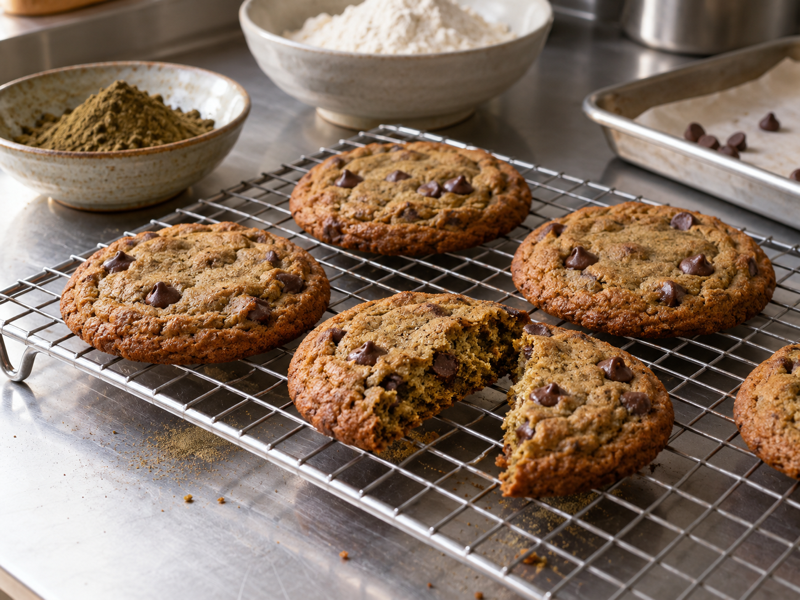
Hojicha cookies use roasted green tea powder as a flavor ingredient in a baked dough. Chocolate chips are a familiar partner; Hojicha Co.’s home recipe shows consumer interest in that pairing. A commercial cookie needs its own target. A buyer might seek a clear toasted aroma after the first bite, a moderate chocolate note and a soft center that remains acceptable through the intended selling period. Another bakery may want a crisp cookie with a subtle tea finish. Those are different briefs. Choose one before selecting powder or changing dough. A tea-tinted crumb alone does not prove the flavor is strong enough to justify naming hojicha on the label.
Define the comparison. Bake the current chocolate chip cookie as a control and prepare tea versions with identical scoop weight, chip level and oven program. Ask a small panel whether roasted tea is detectable without telling them the sample code. Record color, aroma, spread, edge texture and finish. Where the shop already sells matcha cookies, test whether this roasted product fills a separate flavor role rather than duplicating a green-tea SKU. The target should serve a real shopper decision, not only a product-development presentation.
2. Which cookie formats make sense for B2B buyers?
Match the formula to channel and pack
A café can sell a large warm cookie beside a tea latte. A bakery chain may need a pre-portioned dough piece baked on site. A retail brand may require a wrapped ambient product, which raises different packaging and shelf-life work. A dessert manufacturer could use small hojicha cookie pieces in ice cream, where water exposure changes texture. The same dough rarely suits every route. Specify portion mass, target bite, display method and whether consumers eat the cookie warm or at room temperature. A warm cookie can flatter aroma and softness; that sensory result cannot stand in for a wrapped cookie tasted days later.
Pick one primary channel. Test three practical ideas only after the base cookie works: dark chips for a strong cocoa contrast, white chips for a sweeter visual contrast or no chips for a cleaner roasted-tea profile. Record buyer feedback by channel. A café manager may value pairing and quick bake-off, while a retail buyer will ask for pack integrity and documented life. Avoid promising one dough to both until process and finished-product testing show it can meet both specifications.
| Format | Development focus | Proof needed |
|---|---|---|
| Café bake-off | Portion and service consistency | Result across staff and ovens |
| Wrapped retail | Texture and packaging fit | Product-specific life study |
| Inclusion piece | Size and moisture response | Performance in final dessert |
3. What hojicha powder works in cookie dough?
Test flavor after baking
Powder fineness affects dough texture and visual speckling. Roast profile affects flavor, but a stronger dry aroma does not always translate into a better baked cookie. Sugar, butter and chocolate can mask tea; prolonged heating can shift its aroma. Ask a supplier for plain powder, ingredient documentation, lot identification and relevant tests for the destination market. Compare candidates in an identical small dough rather than tasting dry powder alone. After baking, cool all samples for the same time before evaluation. A warm sample and a fully cooled one can give very different impressions.
Keep the procurement question specific. Request the roast and grind that meet your cookie brief, not a vaguely “premium” grade. Record appearance, aroma and taste from at least two lots if supply continuity matters. A powder that produces visible dark specks may be acceptable in a rustic cookie but less suitable for a smooth sandwich filling. If the tea arrives in a blend with sugar or dairy solids, every formula calculation and label review changes. Matcha Village can discuss powder options, but a bakery should approve performance in its actual dough and oven.
4. How should a bakery set up its initial dough trial?
Hold the base constant and vary tea
Use the bakery’s existing plain cookie dough as the control. For a small screen, replace a portion of flour with hojicha powder at perhaps 1%, 2% and 3% of total flour-plus-tea weight. These are trial levels, not validated commercial recommendations. Keep butter, sugar, egg, leavening and chips unchanged for the initial comparison. Record each batch in grams, finished dough temperature, scoop mass and baking conditions. Replacing rather than adding powder helps isolate flavor from a simple increase in dry solids, though every substitution can still alter spread and texture. If the tea version runs dry, diagnose water balance only after identifying a promising flavor level.
Use small, repeatable batches. Bake enough pieces per version to sample center and edge positions on the tray. Evaluate both warm and cooled cookies. A single cookie from one tray position can mislead, because browning changes across an oven. Once the team chooses a tea level, run a second matrix for chip type or sweetness. Changing tea, sugar and chocolate together makes it impossible to know why the result improved. Write each revision on the sample bag before tasting so the preferred product can be reproduced.
| Sample | Tea share of flour-plus-tea | Purpose |
|---|---|---|
| Control | 0% | Set texture and spread reference |
| A | 1% | Check low-dose aroma |
| B | 2% | Look for balance |
| C | 3% | Check bitterness and dryness |
5. How do mixing and baking change the result?
Document the handling sequence
Distribute hojicha powder evenly before the dough reaches the depositor or scoop. A bakery can blend it with flour or another dry ingredient, then inspect the dough for streaks. Another method may disperse it in fat; choose by tested result rather than adopting a home-kitchen tip as a production rule. Mix time, dough temperature and resting time affect spread, so record them in the trial sheet. A dough that is warmer during one run may appear to need less tea because it spreads thinner and browns harder. Keep the test conditions stable while comparing powder levels.
Measure the baked piece. Record starting mass, diameter, height, color and bake loss. Taste center and edge separately if the cookie is large. If the outer edge is much darker, a tea note may read as burnt even when the center tastes balanced. An oven profile developed for a plain dough may need adjustment after the tea level is chosen. Do not shorten baking merely to preserve roasted aroma without checking the bakery’s established food-safety process. Scale-up should use plant equipment and verified controls, not a direct multiplication of bench timing.
6. What should a tasting panel measure?
Separate tea character from baked bitterness
Ask tasters to score roasted-tea aroma, chocolate balance, sweetness, crumb texture, edge texture and aftertaste. Give each sample a neutral code. Include the plain control and rotate tasting order. Note whether a panelist can identify roasted tea without seeing the name. The buyer may want a pronounced hojicha identity; that should be a deliberate target rather than a claim made because the ingredient appears in the formula. Record complaints as words, not only a low score. “Dry,” “burnt,” “dusty” and “too sweet” point to different changes.
Taste after cooling. A cookie sold wrapped or on a display shelf needs assessment at its actual consumption state. Run a second tasting with the same lot and process on another day. Consistent results matter more than one enthusiastic panel. If chocolate dominates, reducing chips may reveal tea more cleanly than increasing powder. If the plain cookie already has a strong caramelized flavor, a lighter roast might produce more distinction. Keep price and pack in the question: a product can score well in a blind tasting and still fail if its added ingredient cost has no buyer value.
| Measure | Record | Why |
|---|---|---|
| Tea aroma | Score and descriptor | Tests named flavor |
| Diameter and height | mm per piece | Flags spread drift |
| Center and edge bite | Short texture notes | Finds uneven bake |
| Purchase preference | Choice at stated price | Connects taste with format |
7. Which failures are most common in a hojicha cookie pilot?
Change the cause, not every ingredient
A dark cookie with little tea aroma may have too much chocolate or too strong a bake. A powdery mouthfeel may point to a coarse tea particle or excess dry material. A flat cookie can reflect dough temperature, fat behavior or leavening rather than hojicha itself. If pieces from one tray differ, examine oven loading and air flow before changing the recipe. Inspect cut surfaces for tea streaks; uneven color can expose mixing issues. When bitterness appears, compare the cooled cookie with a lower-tea version and check whether the edge is overbrowned. Avoid treating all defects as a signal to add more sugar.
Keep a defect map. Log the failure, sample code, exact location and process condition. A batch that is acceptable from a test oven but fails on a plant line needs a line trial with normal loading. If wrapped cookies soften, investigate packaging and moisture movement through a formal study. This article cannot supply a safe or saleable life for any formula. A useful troubleshooting run changes one condition, makes enough pieces for comparison and records the result. That prevents a promising product from drifting through undocumented edits.
8. What allergen and labeling work is required?
Review dough, chips and shared equipment
Cookies commonly contain wheat, milk and egg; chips may add milk, soy or other declared ingredients. The U.S. FDA allergen page identifies major food allergens and links to labeling guidance. Use the exact formulation and supplier declarations for the intended market. A “vegan” variation or a different chip can change both recipe performance and label obligations. Shared bakery equipment also needs a cross-contact review. A tea powder certificate does not replace control of the full dough and packing environment.
Keep claims evidence based. Do not assume a cookie is low caffeine because hojicha is roasted; if caffeine wording matters, test and review the finished product. Do not infer organic status or origin from a generic supplier listing. Record the tea lot on production documents alongside flour, fat and chips. Retail packaging requires market-specific nutrition, ingredient and allergen review. Any proposed shelf life requires a product-specific study covering safety and quality under its intended pack and distribution conditions. A warm café cookie and a sealed supermarket pack require separate decisions.
| File item | Purpose | Responsible team |
|---|---|---|
| Approved formula | Locks ingredient amounts | R&D |
| Tea lot specification | Supports traceability | Purchasing and quality |
| Allergen matrix | Reviews full line | Quality and regulatory |
| Product-life protocol | Supports date coding | Quality |
9. How can buyers judge margin and manufacturing fit?
Cost a sellable piece
Calculate tea cost from actual grams in one dough piece and delivered price per gram. Add its effect on yield, scrap, chocolate use and packaging. A higher tea level may cost more and produce a weaker product if bitterness forces extra sweetness. For café bake-off, count labor and oven time per sellable piece. For a packed range, include film, cartons, line speed and rejects. Compare the proposed cookie with an existing SKU at its real selling price. The tea ingredient needs to earn either more demand, a price premium or a clearer menu role.
Check purchasing continuity. Ask for the agreed powder specification, pack size, minimum order, lead time and batch documentation. Approve a second tea lot before launch if a steady line depends on repeated deliveries. Test powder handling in the production area; dust, bridging or difficult dosing can alter labor and loss. Matcha Village can discuss a hojicha powder suitable for baked applications and supply samples for line testing. A commercial agreement should reference the approved specification and quality documents, not only a product name and price.
| Line | Input | Check |
|---|---|---|
| Tea | Actual grams × delivered price | Flavor value at chosen level |
| Base dough and chips | Measured batch use | Changes from control |
| Process loss | Rejected pieces / total pieces | Line stability |
| Pack and labor | Actual unit cost | Margin at selling price |
10. What should the team settle before launch?
Five buyer FAQs
A launchable cookie has a written sensory target, repeatable plant result, approved ingredient documentation and a price that works in its channel. Use a pilot with the intended oven, pack and customer instead of extending a small-batch win directly across a chain. The questions below capture decisions that often remain unresolved after the first good tasting.
Q1: Can loose hojicha leaves replace powder?
Only after a separate formulation test. Leaf particles change distribution and bite; a leaf infusion also changes dough liquid and flavor delivery.
Q2: Should hojicha go into wet or dry ingredients?
Either route can be tested. Choose the sequence that produces even dispersion and repeatable results on your equipment.
Q3: Does dark chocolate always pair best?
No. Compare dark, milk, white and no-chip controls at equal portion mass. The right choice depends on the intended tea strength and buyer preference.
Q4: How long can a cookie be sold?
No general date applies. Validate safety and quality for the final dough, process, package and distribution conditions before setting a life.
Q5: What should a supplier sample request say?
Give the supplier your cookie format, desired roast impression, annual volume estimate and destination market; request specifications and traceable samples.
Choose a tea level that survives baking and still improves the cookie a customer buys. Send Matcha Village the base dough format and target sensory profile when requesting hojicha powder for bakery trials.