
Customers sometimes use “hojicha coffee” for a tea drink that reminds them of coffee. Others mean a recipe that combines roasted tea with espresso. A café should choose one meaning and say it plainly. This guide develops the combined drink: real coffee plus hojicha. The challenge is to preserve two distinct flavors without making a muddy, over-sweet cup or an unclear caffeine promise.
Contents: definition · flavor · tea form · espresso · ratio · milk · iced cup · caffeine · economics · launch
1. What should the menu mean by hojicha coffee?
Choose a clear product definition
A drink containing only hojicha does not become coffee because it is dark or roasted. If the recipe includes espresso, the menu should state it, since guests make choices based on caffeine, taste, and ingredient preference. Name both bases. “Espresso and roasted green tea with milk” is less poetic than “roast fusion,” but it tells a customer what they will receive. Decide whether the product is a coffee-led latte with a tea accent or a hojicha-led drink with an espresso note. The answer controls dosing and cup size. Give staff a one-sentence explanation and a standard response when asked whether the drink contains coffee. If a tea-only alternative is sold, keep its name and photograph distinct. Ambiguity might create a first sale, but it also creates remakes when someone expected a caffeine-free tea or a full-strength coffee.
| Product concept | Base | Menu wording to consider |
|---|---|---|
| Tea-only roast drink | Hojicha | Roasted green tea latte |
| Coffee-led hybrid | Espresso plus hojicha | Espresso hojicha latte |
| Tea-led hybrid | Hojicha plus small coffee dose | Hojicha with espresso |
2. Do coffee and hojicha flavors naturally work together?
Test overlap and contrast
Both can carry toasted notes, but overlap is not enough. An espresso with strong roast bitterness may amplify an ashy hojicha. A brighter coffee may clash with a deep smoky tea. Set a tasting target such as “coffee aroma first, tea finish,” then compare several pairings blind. Taste without syrup. Sweetness can make almost any roast combination seem smooth for a sip, yet conceal a rough finish. Prepare the tea and espresso separately at controlled strengths, combine them, and taste hot and slightly cooled. Note whether the drink has identifiable tea character or merely becomes a weaker coffee. If hojicha is invisible, a bigger tea dose may help, but changing the espresso or roast profile may be more effective. Ask tasters to name what they perceive without seeing the recipe. A combined drink earns a menu slot only if the pairing offers something neither a standard latte nor a hojicha latte already provides.
3. Which form of hojicha should be used?
Choose powder or concentrate through the final cup
Pure hojicha powder offers body and visible tea color but can settle in a hybrid drink. A filtered leaf concentrate can create a cleaner texture, though it may be weak beside espresso. Prepare both at equal finished volumes and compare. Control the water. A powder slurry adds water; so does a brewed concentrate. If one trial is more diluted, the comparison says little about tea form. Powder needs a tested mixing step so it does not form brown clumps beneath milk foam. A concentrate needs specified leaf mass, water mass, contact time, filtered yield, and hold rule. If the operation already serves hojicha latte, sharing its tea base can simplify inventory, but test the hybrid separately. Espresso changes acidity and bitterness; a base approved in milk alone may not work when coffee enters the cup.
| Tea format | Advantage | Watch item |
|---|---|---|
| Pure powder slurry | Strong presence | Sediment and clumps |
| Leaf concentrate | Cleaner texture | Weakness after dilution |
| Sweetened tea mix | Fast service | Fixed sugar and creamer |
4. Which espresso works best?
Protect the café's coffee standard
Use the shop's normal espresso recipe as a reference, then decide whether a different bean or extraction is justified. The combined drink should not require a barista to pull an unpredictable “half shot” by eye. If a smaller coffee dose is desired, define it by beverage mass or use a controlled recipe. Taste the espresso alone. A poor shot will not be repaired by adding tea. Check the hybrid at the espresso's normal temperature and again after several minutes, when harshness can become clearer. A heavily roasted coffee can compete with hojicha's toasted aroma; a brighter coffee may lift it or feel sour against it. Only tasting can decide. If the menu says “espresso,” the operation should actually use the specified espresso process rather than a coffee-flavored syrup. The drink's reproducibility depends on the coffee program as much as the tea ingredient.
5. What ratio should the pilot start with?
Run a two-variable matrix
Choose a fixed cup size and milk, then trial two tea strengths against two espresso doses. For example, compare a 3 g and 5 g pure-tea slurry with one standard espresso portion and a measured smaller portion. These are pilot settings, not a universal formula. Keep total liquid volume equal by adjusting water, not by quietly adding more milk to one cup. Record the whole recipe. Tea grams, slurry water, espresso beverage grams, milk, syrup, and ice should all appear on the sheet. Have a panel rank whether both flavors remain clear, whether bitterness is controlled, and whether the last sip resembles the first. Repeat the preferred combination with a second operator. A ratio that depends on a highly skilled developer's handling may not survive a café queue. If none of the four cups works, do not keep adding sweetener; reconsider the tea and coffee pairing.
| Trial axis | Lower setting | Higher setting |
|---|---|---|
| Hojicha | 3 g powder | 5 g powder |
| Espresso | Measured reduced dose | Standard portion |
| Keep fixed | Cup, milk, final volume | Cup, milk, final volume |
6. Which milk and sweetness support both flavors?
Reduce variables before making a signature
Milk can soften bitterness and carry aroma, but it can also mute the tea. Test the shop's standard dairy and its most common plant alternative with the same tea-coffee base. An oat drink may reinforce toasted cereal notes; that might be pleasant or monotonous. Try it unsweetened first. Add measured syrup only if the finished cup needs it. A caramel syrup could make the drink familiar, yet at a high dose it can turn tea and coffee into background color. If the menu offers sweetness customization, specify what “less sweet” changes and whether the topping is also sweetened. Review allergens against the exact milk and syrup brands. A coffee-tea hybrid with dairy is not suitable for a guest avoiding milk unless a controlled alternative recipe and cross-contact procedure exist. The simple version should work before seasonal flavors are layered on top.
7. Does an iced version need a new recipe?
Measure dilution and sediment
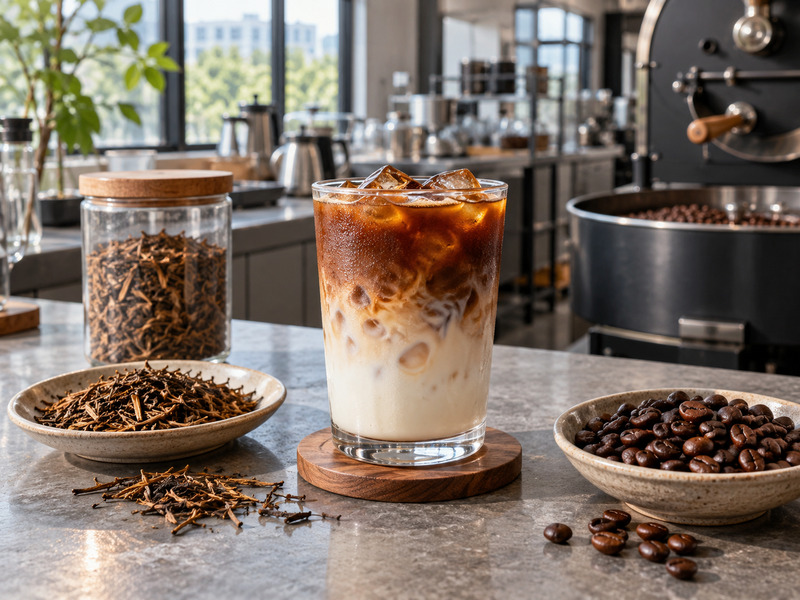
An iced hybrid can be attractive because coffee and tea form visible layers, but ice changes flavor quickly. Prepare tea slurry or concentrate, add coffee and milk in a defined sequence, and use a weighed ice charge. Taste before and after stirring; the photograph is not the final flavor. Watch the bottom. Tea powder can settle beneath ice while coffee and milk remain above it. If the last mouthful is gritty, change dispersion or tea format. Measure finished volume and serving temperature. If a cold foam is added, treat it as another ingredient with its own cost and allergen review. Test the drink in its takeaway lid and after a short carry, not only in an open glass. A chain should not assume its hot recipe can simply be poured over ice; the tea-to-coffee relationship and total liquid amount need to be rebalanced.
8. What can the café say about caffeine?
Avoid a misleading “low caffeine” shortcut
This drink contains coffee and tea, so any caffeine statement must account for both ingredients and the served recipe. Espresso caffeine varies with coffee and preparation; tea caffeine varies with material and dose. Hojicha's roasted flavor does not prove it is caffeine-free. Use plain disclosure. Tell customers the drink contains espresso and tea. If a numeric caffeine value or “less than coffee” claim matters to the business, obtain data for the actual ingredients and serving, then have the claim reviewed for the market. Do not add a coffee shot to a tea menu item while retaining a low-caffeine icon. Staff should have a clear answer when guests ask whether the drink can be made without coffee: yes, if a separate tea-only recipe exists; otherwise the drink is not the same product. The menu should reflect the version actually sold, not an inferred average from online caffeine charts.
| Statement | Evidence needed | Safer menu approach |
|---|---|---|
| Contains coffee | Recipe | State espresso clearly |
| Exact caffeine mg | Ingredient and serving data | Do not guess |
| “Less caffeine” | Defined comparator and test | Omit until substantiated |
9. How should the hybrid be costed?
Account for two premium bases
Cost tea grams and espresso dose separately, then add milk, syrup, ice, packaging, labor, and waste. A combined drink can have a high ingredient cost because neither base replaces the other completely. Price the sellable cup. If the recipe takes longer because staff must prepare a slurry and pull espresso, measure that time during a mixed-order rush. Consider whether the drink draws incremental buyers or merely shifts guests from two existing lattes. A premium price may be justified if a blind panel recognizes a distinct flavor and the service remains reliable. It is harder to justify if the drink tastes like a sweet coffee with an invisible tea ingredient. If the shop buys roasted tea powder in bulk for several items, allocate its delivered cost accurately; do not assume a lower cost per cup simply because the bag is larger. Include discarded shots and remakes in the pilot calculation.
10. When should the drink enter the permanent menu?
Require a result that survives normal service
Run a limited pilot using the actual espresso bar, milk cartons, tea lot, and staff. Track preparation time, remakes, ingredient waste, and what customers say they taste. Ask a hard question: would they order it again instead of a coffee latte or hojicha latte? A clear yes is stronger evidence than an attractive social photo. Give every store a gram-based card and a photograph of the normal finished cup. Recheck the drink if coffee beans, tea roast, or milk change. For B2B sourcing, tell Matcha Village which espresso profile and milk the tea will meet; a powder sample should be judged in the combined drink. The supplier can describe its tea, but the café owns the final flavor and caffeine wording.
A hybrid drink is especially sensitive to ingredient changes on both sides. When the espresso blend changes, taste the combined cup before adjusting hojicha; when the tea lot changes, leave espresso fixed for the first check. That sequence reveals which base caused any new bitterness or loss of aroma. Keep a plain espresso and a plain tea control beside the finished drink during a launch review.
| Final check | Pass evidence | If it fails |
|---|---|---|
| Coffee control | Standard shot passes | Fix extraction |
| Tea control | Roast within reference | Review tea lot |
| Hybrid cup | Both flavors named blind | Rebalance ratio |
Final recommendation
Sell hojicha coffee as a deliberate espresso-and-roasted-tea drink. If one flavor disappears, revise the ratio or remove the item. A clear name and an honest caffeine description help the right customer choose it.
FAQ
Q1: Does hojicha coffee always contain espresso?
The phrase is used inconsistently. This guide uses it for a drink with both espresso and hojicha; the menu should state the actual recipe.
Q2: Can the tea be brewed from leaves?
Yes. Make a controlled concentrate and test whether its flavor remains clear beside espresso.
Q3: Is hojicha coffee caffeine-free?
No. It contains coffee and tea. Do not make a caffeine-free claim.
Q4: Should the iced drink use the hot ratio?
Not automatically. Ice changes dilution, so develop the cold format separately.
Q5: What is the decisive taste test?
Ask blind tasters whether they can identify both coffee and roasted tea in the finished cup.
Sources: Japan MAFF, Uji tea categories; Japan MAFF, Kaga bocha roasting.