
Bakery chains and snack brands need more than a home recipe for hojicha chocolate brownies. They need a repeatable sensory target, a supplier specification and a process that works in the intended channel. This guide provides a controlled trial route for hojicha brownies. All stated quantities are bench starting points; commercial safety, shelf life and labeling require product-specific validation.
1. What makes hojicha brownies a distinct SKU?
Product brief
The recipe pairs brown butter and hojicha. Those toasted notes can work together, but chocolate can conceal the tea. A commercial brownie should have a detectable roast note in a full bite. The target unit is one cut brownie square. Describe where roasted aroma should appear, which texture matters and how a control without tea should compare. The linked home recipe Brown Butter Hojicha Brownies is useful as application context, not evidence that a commercial formula has been validated.
Write a brownie-specific brief. A brownie competes on chocolate intensity, chew and a clean cut. Roasted tea should be noticeable after the cocoa without making the piece dusty or bitter. Decide whether the target is a dark chocolate brownie with a faint toast note or a lighter marbled product where tea is immediately apparent. Brown butter, if used, adds another toasted flavor and can blur that decision. Prepare an ordinary chocolate control and a tea version at identical pan depth. Ask tasters what they perceive before showing the ingredient list. If they describe only chocolate, the formulation needs a clearer tea route or a different cocoa balance.
2. Which brownie format fits the buyer?
Channel decision
A café square served fresh and a wrapped retail bar have different texture targets. Decide whether a fudgy center or clean pack handling carries more value before setting the bake profile. For bakery chains and snack brands, the immediate route is a bakery-counter brownie. A long-life wrapped brownie requires a separate technical brief. Record buyer questions about portion, pack and intended eating or drinking state before ordering ingredients.
Pick the selling state. A bakery can sell a warm square that is soft at the center. A wrapped retail brownie must cut cleanly, survive handling and remain acceptable under a validated distribution plan. Those are separate products even if they begin with the same batter. State square dimensions, pack style, proposed price and whether the item is eaten chilled or at room temperature. Test the chosen version after cooling long enough for the intended cut process. Sample corner, edge and center pieces. An attractive center square does not pay for a tray with high edge waste, so yield belongs in the format decision from the outset.
| Decision | Trial choice | Evidence |
|---|---|---|
| Serving format | a bakery-counter brownie | Buyer response at stated price |
| Alternative route | a long-life wrapped brownie | Separate process validation |
| Portion | one cut brownie square | Weighed yield and consistency |
3. What tea powder works beside chocolate?
Ingredient specification
Tea powder must disperse through a dense chocolate batter. Compare supplier lots after baking, not by powder color alone. A darker roast may give stronger aroma but should not read as burnt. The proposed tea ingredient is fine hojicha powder. Judge it after contact with chocolate brownie batter, because that matrix determines perceived flavor and physical behavior. Record differences against the approved lot.
Check tea against the chosen chocolate. Dark cocoa, milk chocolate and white chocolate present different levels of masking. Obtain plain powder from identified lots and compare roasted aroma in otherwise identical batter. Fine particles can disappear visually yet still change mouthfeel, especially in a dense fudgy center. Inspect the powder for clumps before dosing and look for pockets in a cut square. Evaluate the same tea level with the selected chocolate rather than choosing powder by dry smell alone. A supplier can offer grind and roast information, but the buyer needs a finished-square sensory reference and lot comparison before approving a purchase specification.
4. How should a brownie batter trial run?
Trial design
Start from an approved brownie base and hold pan depth constant. Tea dose comparisons are misleading if chocolate or bake changes at the same time. Record grams per pan and per sellable square. Compare low, medium and high tea doses in one unchanged brownie base; hold chocolate type, pan depth and bake conditions fixed. Record the purpose of each sample before tasting, then decide which variable to change next.
Fix the pan variables. Use the current brownie batter as a control and test three weighed tea additions or substitutions in identical pans. Record total batter mass and depth; changing either alters heat exposure and makes flavor comparisons harder. Keep chocolate, butter, sugar and egg constant for the initial series. Code samples before tasting. If added powder dries the crumb, test a targeted formula adjustment after selecting a tea level rather than correcting every trial at once. Count how many squares each pan yields after trimming. A dose that tastes strong in one center piece may lose commercial value if its edges turn bitter or break during packing.
| Sample | Change | Constant |
|---|---|---|
| Control | No hojicha | chocolate brownie batter |
| A | Low tea level | Same process and portion |
| B | Medium tea level | Same process and portion |
| C | High tea level | Same process and portion |
5. What mixing and baking details matter?
Process method
Mixing order affects streaks. Brown butter can add a separate flavor variable, so test it only after the tea level is chosen. Cool under site procedures before cutting and scoring. Disperse tea evenly in a measured batter phase, deposit to a fixed pan weight, bake under approved controls and cool before cutting. Watch another operator follow the written sequence and revise unclear instructions.
Watch fat and mixing order. Tea powder can form dark pockets if sprinkled into a nearly finished dense batter. Choose a pre-dispersion method that works with the bakery’s mixer and document the charge sequence. If brown butter is part of the concept, control its degree of browning and compare it with ordinary butter; otherwise two roast variables move at once. Deposit by weight and record pan position in the oven. Let the brownie cool under the site’s approved method before cutting. A warm knife can create a sticky edge that looks like a formula defect. Measure piece mass and cut loss on a normal production tray.
6. How should center and edge pieces be scored?
Sensory evaluation
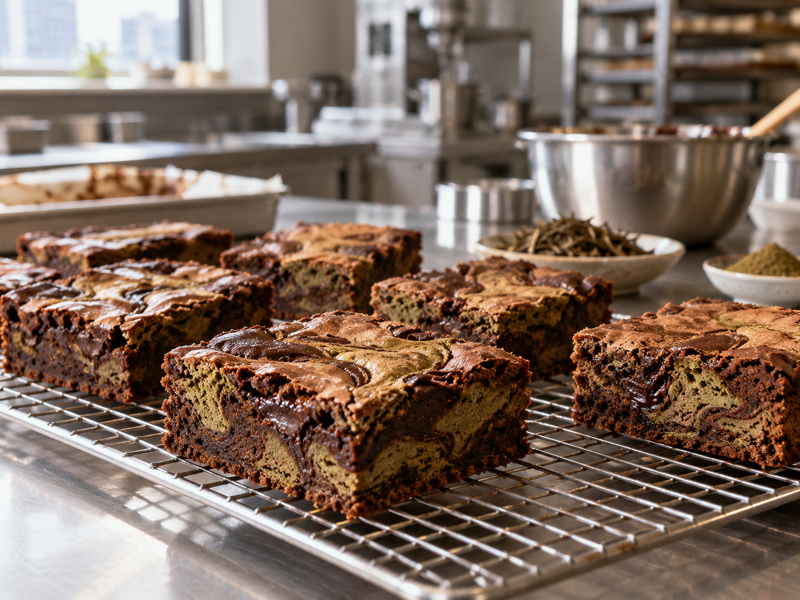
Taste center and edge squares at the intended selling temperature. Score chocolate balance, tea recognition and chew separately. A strong center may still produce too many dry edge rejects. For this item, score tea aroma, chocolate balance, fudgy texture, cut edge, surface and aftertaste. Taste at the actual serving state rather than relying on an attractive production sample.
Score more than the center bite. Taste coded center, edge and corner squares at the intended selling temperature. Ask separately about chocolate, roasted tea, sweetness, chew, dryness and aftertaste. Photograph cut faces to record marbling and powder distribution. Compare the tea trial with a plain brownie at the same proposed price. A brownie can taste appealing but still fail if the tea note appears only in a small unrepresentative part of the tray. Ask panelists which full-size square they would buy. Keep comments such as gritty, smoky or too sweet with the sample code, since each points toward a different next trial.
| Attribute | Record | Decision |
|---|---|---|
| Roasted aroma | 0–5 and description | Recognizable in finished unit |
| Texture | Defect notes | Acceptable at eating state |
| Appearance | Photo and observation | Matches approved reference |
| Price acceptance | Choice at proposed price | Supports a pilot |
7. Why does tea vanish or the cut fail?
Defect diagnosis
If tea vanishes, compare lower cocoa intensity before adding powder. Sticky cuts may need process or cooling changes. Burnt notes call for an oven-profile review. Look specifically for tea masked by cocoa, dry edges, sticky cuts, powder pockets or burnt notes. Each symptom should trigger a narrow experiment with an unchanged control.
Investigate the exact failure. Weak tea can stem from cocoa intensity, tea lot or dose; test a lower-cocoa comparison before adding more powder. Dry edges call for a review of pan geometry and bake profile. Sticky cuts may involve insufficient cooling or a very soft center. Tea pockets indicate mixing or powder handling. Do not label every dark note as roasted flavor; a scorched edge should be separated from a pleasant tea finish. Record where each defect appears and whether it survives a second tray. A supplier complaint needs lot codes and a comparison against the approved reference, not only a statement that the brownie tastes different.
8. What safety and label checks apply?
Food safety and labeling
Egg, wheat, dairy and optional nuts require label review. A home storage suggestion does not validate a commercial date code or chilled versus ambient distribution. The format requires review of eggs, wheat, milk, nuts where used, validated bake and product-specific storage study. Verify the actual market and process before approving any claim or date code.
Review the full brownie line. Eggs, wheat, milk, soy lecithin and optional nuts may all enter the batter or inclusions. Use exact supplier declarations and a shared-equipment review for the market label. The FDA allergen page lists U.S. major allergens, but it does not replace a product-specific review. A home recipe’s storage suggestion does not establish a retail date code. Validate the final bake, cooling, pack and distribution route with qualified staff. Any caffeine or origin statement about the finished brownie needs evidence. Keep tea and chocolate lot records linked to each commercial batch.
| File | Purpose | Owner |
|---|---|---|
| Formula revision | Links weights and lot codes | R&D |
| Allergen declaration | Market-specific label review | Regulatory |
| Process validation | Supports safe production | Quality |
| Product-life study | Supports final date code | Quality |
9. How should a sellable square be costed?
Unit economics
Chocolate and butter often dominate ingredient cost, but trim and breakage can dominate loss. Calculate finished-square yield and compare price acceptance with a plain brownie. The cost model must capture chocolate, butter, cut yield, edge trim, powder and packaging. Use actual sellable yield rather than theoretical batch weight.
Cost every sellable square. Chocolate and butter often outweigh tea in ingredient spend, but tea dose can affect yield. Include pan trim, broken cuts, packaging film, labor and rejected pieces. Calculate cost from actual sellable count rather than nominal batter mass divided by target piece weight. Compare a plain brownie, the tea version and a brown-butter variation only after each has a clear process. A supplier’s low price per kilogram may be offset by higher dosage or dispersion loss. Purchasing should request traceable lots, pack sizes and a delivery schedule that matches the bakery’s forecast. Margin must hold on normal trays, not only a showcase bake.
| Cost line | Input | Question |
|---|---|---|
| Hojicha | Actual use × delivered price | Does the tea level earn its cost? |
| Base and pack | Measured per sellable unit | Are format choices controlled? |
| Loss | Observed pilot rejects | Can the process reduce waste? |
| Supply | Lead time and pack size | Can replenishment match demand? |
10. What should be approved before rollout?
Five buyer FAQs
Approve the complete piece in its intended pack and selling condition. Test a second tea lot, retain a reference sample and ask for supplier specifications. The pilot should show that hojicha chocolate brownies remains consistent across operators and a second ingredient lot. Keep final decisions in a signed launch file.
Approve a repeatable square. Release documents should show the final ingredient list, tea-lot acceptance test, pan deposit, bake and cooling controls, cut specification, allergen review and pack. Run the method with line staff on two ordinary production days and compare center and edge yield. Taste another tea lot against a retained reference square before a standing order. A limited café or retail pilot should track paid uptake, complaints and returns at the actual price. If the brown-butter version is chosen, document that butter process separately so a change in butter browning cannot be misread as a tea-lot problem.
Q1: Must the recipe use brown butter?
No. Test tea with the existing base before adding that separate flavor variable.
Q2: Will extra powder always increase aroma?
No. It may add bitterness or dry solids while chocolate still masks tea.
Q3: Can a warm tasting approve a wrapped brownie?
No. Test the product in its intended pack and eating state.
Q4: How is shelf life set?
Through a study on the final formula, process, package and route.
Q5: What should the supplier sample include?
Plain powder specification, lot ID and enough material for a repeat production trial.
Ask Matcha Village for a traceable fine hojicha powder sample suitable for hojicha chocolate brownies trials. Send the planned one cut brownie square, target roast and destination market with the request so the sample conversation begins with an actual application.