
A list of popular hojicha brands may help a consumer find a first bag, but a café chain or food manufacturer needs a different comparison. The buyer must know whether a supplier can repeat the roast, document a lot, provide the right pack, and perform in the finished product. This guide gives a way to compare hojicha brands without inventing a ranking or treating price as a quality score. It is designed for procurement and R&D teams evaluating several candidates side by side. The result should be an approved item and test method, not a subjective “best brand” badge.
Contents: brief · identity · roast · grade · documents · pack · trial · supply · cost · decision
1. What are you buying the tea for?
Make the application the first filter
A loose-leaf hojicha served plain is not the same purchasing problem as fine powder for an iced latte or bakery filling. List the intended product, serving size, dose range, preparation method, desired roast, and expected volume. If the brand needs both leaf and powder, evaluate them as separate items. A supplier may excel in one form and offer the other only as an occasional line. Keep the comparison tied to the item the buyer can actually order.
Write a rejection list. Examples include smoke, ash, weak roast under milk, gritty powder, missing market documents, or a pack too large for store use. These are more useful than a vague request for “high quality.” Ask each candidate supplier for the same type of sample and information. A beautiful retail can should not win a foodservice tender if the tea fails in the customer’s cup or cannot be delivered in the needed format.
2. How can brand and product identity be separated?
Compare exact items, not company homepages
One tea brand may sell light and dark roasts, stem-based tea, leaf tea, pure powder, and sweetened mixes. Comparing a company's reputation with another company's single sample is unfair. Record item code, tea form, roast description, pack, supplier legal entity, production site if relevant, and lot. Ask whether the supplied sample represents ordinary production. A brand’s story can inform marketing, but the purchase agreement needs a specific material.
Check the name on every file. The quotation, specification, COA, sample pouch, and carton should reconcile. Spelling variants such as hojicha and houjicha can be mapped, but a mismatch in form, pack, or lot is not just spelling. A distributor may use its own label for tea produced elsewhere. That can be a valid supply model if traceability and responsibility are clear. The buyer should know who makes, packs, tests, and ships the item.
| Identity field | Why it matters |
|---|---|
| Item code | Exact reorder |
| Tea form | Leaf, powder, or mix |
| Roast | Application flavor |
| Pack | Use and storage |
| Lot | Traceability |
3. How should roast consistency be judged?
Use a controlled sensory reference
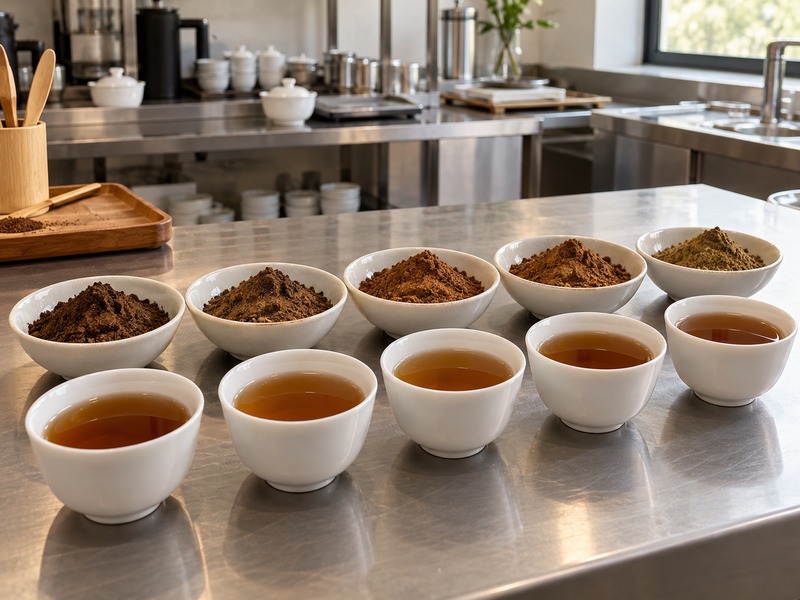
Ask for a standard sample and preparation method, then taste all candidates at the same dose and service point. For a milk drink, use the actual milk and sweetness. For a plain tea, brew with measured leaf and water. Record desirable toasted notes and reject notes such as smoke, stale oil, or sharp bitterness. Keep sample identities coded during tasting where practical. A brand with the strongest dry aroma may not give the best finished product.
Plan the next-lot test. A first sample is only the beginning. Ask how the supplier controls input tea, roasting, milling, and blending when harvests or inventory change. Keep a sealed approved reference and compare future deliveries under the same method. The buyer need not know every proprietary factory setting, but should know which changes trigger notice. A café menu can tolerate some natural variation; it still needs a defined range that customers recognize as the same drink.
4. Do grade words help compare suppliers?
Translate marketing language into specifications
Terms such as premium, ceremonial, culinary, or barista grade can mean different things between companies. For hojicha, ask what a grade denotes in that supplier’s range: leaf input, roast, grind, sensory selection, testing, or pack. A high price and elegant grade name do not prove better performance in a sweet latte. A lower-priced culinary sample may be the right ingredient for a baked item if it tastes clean and stays consistent.
Ask for measurable differences. A useful grade sheet can describe roast range, particle characteristics, application guidance, and quality checks. If the company cannot explain why one item costs more, run the same blind application trial and compare the result. Do not use a supplier’s grade term as a regulated or health claim without reviewing what it implies in the selling market. The buyer’s own approval categories can be simple: approved for plain tea, approved for milk drinks, approved for baking, or not approved.
| Supplier term | Better buyer question |
|---|---|
| Premium | Which measurable feature differs? |
| Dark roast | How is endpoint controlled? |
| Café grade | In which milk and dose? |
| Organic | Which certificate covers this item? |
5. Which documents distinguish a ready supplier?
Request files for the actual item and market
Ask for a current specification, ingredient statement, allergen information, sample COA, and certificates that apply to the proposed product and site. Destination markets may require different tests or documents. Organic, halal, kosher, or other claims need scope review for the exact item; a logo on a company slide is not enough. Confirm who handles export documents and who answers a buyer’s quality question after delivery. A supplier’s ability to respond with precise files is part of service quality.
Follow one lot. The sample, COA, packed goods, and buyer receiving record should connect. If a product is repacked by a distributor, request the crosswalk to the producer’s lot. Ask how out-of-spec material is handled. An attractive brand may still be unsuitable for a regulated food manufacturer if it cannot provide traceability. Conversely, a less famous supplier with strong records and a good application result may be a better commercial fit. Record missing documents rather than filling gaps with assumptions.
6. Which pack format fits the buyer?
Match sealed units to rate of use
Retail tins, foodservice pouches, and bulk bags have different costs and exposure after opening. A café using a little tea each week may prefer smaller sealed packs even if a large bag is cheaper per kilogram. A factory may need a bulk format that works with its weighing and hygiene systems. Ask for pack material, closure, fill weight, lot marking, pallet arrangement, and shelf-life basis. Test a commercial pack, not just a hand-filled sample.
Open it at the station. Staff should be able to identify the lot, portion dry powder, and close or transfer it under the approved procedure. A pack that spills or cannot reseal can damage the product after the first day. If private label is part of the plan, separate tea selection from artwork, label, and finished-pack validation. The same tea in a new pack may need a new stability review.
| Pack | Likely user | Main check |
|---|---|---|
| Retail tin | Consumer | Label and closure |
| Small pouch | Café | Open-use rate |
| Bulk bag | Factory | Handling and trace |
| Sachet | Chain or retail | Dose uniformity |
7. What does a fair blind trial look like?
Hold the recipe constant
Code samples and prepare them at equal tea dose with the same water, milk, sugar, equipment, and service delay. Taste plain and in the intended product. Ask panelists about roast clarity, bitterness, body, sediment, and aftertaste. Keep price and brand story out of the first sensory round. A supplier may suggest a different dose for its product; test that in a second round and calculate cost per approved serving. This preserves fairness while allowing a stronger powder to show its commercial value.
Retaste after holding. A hot cup can flatten while carried to a table; a bakery item can lose aroma after cooling; an iced drink can settle. The acceptance point should match the business. Record panel comments, not only average scores. If one candidate divides opinion because some tasters detect smoke, investigate that defect. A familiar brand should not pass on recognition alone. A small blind trial can save a large procurement mistake.
8. Can the brand supply a growing operation?
Test the forecast against real lead times
Give suppliers a sensible pilot quantity and a range for repeat demand. Ask for minimum order quantity, production lead time, pack options, available technical support, and contingency when a lot fails. A national chain needs a different replenishment plan from a single café. Check whether the supplier can reserve the approved roast or notify the buyer before changing input or processing. A strong brand may still be a poor fit if its pack sizes or lead times do not match the channel.
Watch the reorder, not just the launch. Ask what happens when volume doubles or a promotion ends. Can shipments be staged? Can the same item be supplied to several markets with appropriate documents? These questions need written answers tied to the proposed product. Do not inflate forecasts to secure a favorable quote. A supplier can plan better when the buyer shares realistic ranges and decision dates.
| Supply question | Evidence |
|---|---|
| MOQ | Quoted by pack |
| Lead time | Production and transit |
| Scale | Capacity for item |
| Change notice | Written process |
| Support | Named technical contact |
9. How should price enter the decision?
Calculate cost per sellable unit
Compare quotations on the same currency, delivery terms, pack size, testing obligations, and payment terms. Then use the dose that passed the application trial. A cheap kilogram can cost more per cup if the roast is weak. A strong powder can cost more but require less tea. Include freight, duties, packaging, waste, and staff preparation time. For bakery use, count sellable pieces after trim and rejects, not just kilograms of batter.
Avoid a false bargain. If one supplier lacks a required document, its lower price does not represent an equivalent offer. If a brand can only sell a large bag that stays open too long, add expected loss to the calculation. Keep the sensory gate separate from the commercial comparison. Procurement should choose among products that meet the minimum quality and compliance standard, then negotiate the best sustainable terms.
10. How should the final supplier be approved?
Keep the decision auditable
The approval file should include the product brief, coded trial results, approved sample, specification, lot document, pack, quote, lead time, and receiving test. Assign owners for sensory, quality, regulatory, and purchasing sign-off. If a supplier wins for one application, do not automatically approve it for every recipe. A powder can be excellent in milk and unsuitable in a plain tea. Record alternative suppliers as separate candidates rather than mixing their samples into one vague “hojicha” category.
Test the second lot. The first repeat delivery shows whether the brand can deliver the product it sold during sampling. Compare it with the retained reference and investigate any change before rollout. Matcha Village can be evaluated by the same criteria as any other supplier: exact product, application result, current files, pack, and delivery plan. A buyer’s checklist should make the decision defensible even when the favorite brand name changes.
| Final gate | Evidence |
|---|---|
| Product fit | Served application pass |
| Quality | Current item and lot file |
| Supply | Confirmed pack and timing |
| Economics | Cost per sellable unit |
| Repeatability | Next-lot comparison |
Final recommendation
Compare exact hojicha products under one application test. Let roast consistency, traceability, pack, and repeat supply determine the approved brand.
FAQ
Q1: Is the most expensive hojicha brand the best?
No. Test the exact product in the intended application and compare total cost.
Q2: Can a consumer review replace a buyer trial?
No. It may suggest candidates, but it cannot prove lot, pack, or recipe performance.
Q3: Should every brand be tested at the same dose?
Use equal dose for the first fair comparison, then test each supplier’s recommended dose in a second round.
Q4: What document matters most?
There is no single substitute for a complete current item and lot file matched to the purchased goods.
Q5: When should a supplier be retested?
At least when a new lot, roast, production route, or application changes the approved basis.