
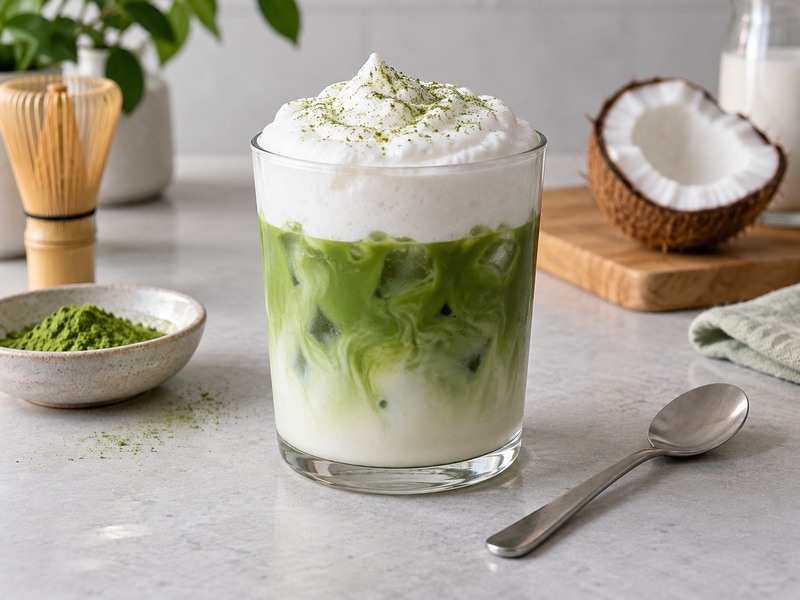
Cloud matcha usually describes a drink crowned with a soft foam or cream layer. The look can be appealing, but a foam that collapses before handoff or hides the tea will disappoint customers. A café needs to define what “cloud” means in its own menu: coconut foam, dairy cream, plant topping or another aerated component. This guide covers formulation, service, labeling and cost for operators and product teams. The goal is a cup that keeps its promised texture long enough to be enjoyed and still tastes of matcha after the layers meet.
1. What is a cloud matcha drink?
The base may be plain iced matcha, a latte or a sweetened tea drink. The cloud is the aerated layer above it. That layer can add aroma, sweetness and mouthfeel, or it can become an obstacle to drinking if too thick. Define the base and topping separately in the product brief. Decide whether the customer sips through the cloud, stirs it into the tea or uses a spoon. A drink built for a photo may give an unbalanced first sip and watery final portion. Test the entire cup under the way customers actually consume it.
Which customer occasion does it suit?
A cloud format can fit a premium afternoon special, a limited seasonal drink or a higher-priced item in a matcha-focused café. It adds preparation steps and may be less suited to high-volume delivery. Pilot against the existing iced latte at the intended price. Ask customers whether the topping improves flavor or merely appearance. If they cannot taste tea until the end, the base or foam dose needs adjustment. A clear positioning statement helps procurement choose ingredients and helps staff explain why this cup differs from a regular matcha latte.
| Product version | Customer experience | Main constraint |
|---|---|---|
| Matcha with dairy cream | Rich top layer | Milk allergen and cold holding |
| Matcha with coconut cloud | Coconut aroma and texture | Foam stability and coconut supply |
| Matcha with plant topping | Plant-based option if verified | Ingredient and equipment compatibility |
2. Which foam base should a buyer choose?
Dairy cream, coconut cream and formulated plant toppings have different fat, sugar and stabilizer systems. Their labels and handling differ too. A product that whips readily at a development kitchen may fail after transport to stores or a change in temperature. Ask suppliers for ingredient statements, storage instructions, pack size and recommended preparation. Taste the topping on its own and with matcha. Coconut can be attractive, but its flavor may dominate delicate tea. A neutral dairy cloud can support tea while adding a different allergen and cold-chain burden.
What belongs in a topping specification?
Record exact SKU, storage and working temperature, whipping or frothing method, target volume after aeration, sweetness, flavor and hold time. Include a supplier change-notification rule. If the foam contains coconut flavor rather than coconut ingredient, menu language should reflect the formulation. Test multiple lots and the actual store equipment. A thick topping may have good bench stability but pour poorly through a lid opening. The best foam base is the one that supports the intended serving method and remains available through the planned promotion.
3. Which matcha works beneath a cloud?
Foam can mute tea aroma and add sweetness. Select matcha by tasting the complete drink, including a stirred cup. A powder that performs well in a plain bowl may be too subtle under a rich coconut cap. Another may need only a modest dose to remain clear. Screen pure matcha powder in water for freshness and texture, then test in the cloud format at the planned serving size. Keep color, tea intensity, bitterness and cost in view. The right powder should not require an excessive dose simply to justify the word matcha on the menu.
How should tea samples be compared?
Code the powders and keep foam lot, base liquid, sugar, cup, ice and mixing method fixed. Taste through the foam, then after stirring. Repeat after the likely takeaway wait. Record whether the matcha stays identifiable and whether powder collects under the topping. Ask for a second tea lot before broad purchasing. Compare finished cost per cup rather than powder price per kilogram. If a more expensive tea uses fewer grams and gives a cleaner finish, it may be the better commercial choice. Keep a retained reference drink description for incoming lot checks.
| Tea test | Fresh layered cup | Stirred or held cup |
|---|---|---|
| Aroma | Tea visible near foam | Tea remains identifiable |
| Color | Green base contrasts with cloud | Mixed shade acceptable |
| Texture | No clumps under foam | No dense bottom layer |
| Cost | Dose meets target | No rescue dose needed |
4. How do you formulate a stable cloud?
Foam stability depends on ingredient composition, temperature, aeration method, working time and the liquid beneath it. Start by defining target texture: pourable soft foam, spoonable cream or a dense cap. Then test one base at several preparation conditions. Record the foam’s volume and appearance at handoff and after a normal customer wait. A cloud that stands too stiff may not mix with the tea; one that collapses immediately may leave only a sweet surface film. Keep the test tied to the actual cup rather than a beaker.
What should the bench trial record?
Record ingredient weight, temperature, tool, mixing time, batch size, foam yield and how much remains in the container at close. Apply the foam to the approved matcha base and use the intended lid. Check whether it spreads evenly or sinks. Taste a sip through the foam and another after stirring. A visually taller cap is not automatically better. If it blocks the straw or makes customers remove the lid, the format may need a different cup. Repeat at store scale before finalizing a recipe.
5. How should layers be assembled at the bar?
Write the base recipe first: matcha mass, dispersion water, milk or water volume, sweetener and ice. Then define foam dose and pour method. Decide whether the cloud is placed on a fully mixed tea base or over a layered matcha latte. Too many layers create a complex drink that staff cannot reproduce under queue pressure. A calibrated scoop or dispenser is better than an unmeasured spoonful. Train on the actual cup so headspace and lid fit are controlled. Staff should know the expected look and the acceptable time between foam preparation and service.
What should the recipe card include?
List ingredient SKUs, exact portions, tool settings, assembly order, target appearance, service instruction and discard rules for prepared topping. Add a photo made under normal bar conditions. A card should also say what to do when foam is too thin or too stiff; “add more cream” by eye can change flavor and cost. Audit several staff-made cups against the standard. If the best barista is the only person who can create the cloud, the procedure is not yet ready for a chain.
| Bar step | Measured control | Failure to watch |
|---|---|---|
| Matcha dispersion | Powder and water dose | Clumps under foam |
| Ice fill | Weight or defined volume | Rapid dilution |
| Foam preparation | Temperature and tool setting | Collapse or stiffness |
| Topping dose | Weight or calibrated scoop | Flavor and cost drift |
6. What happens during takeaway and delivery?
Movement, warmth and lid pressure can flatten or mix a foam layer. Test the sealed cup on a realistic route. Inspect leaks, lid contact, foam height, color mixing and flavor at arrival. If the topping survives only in an open glass, offer the product for immediate in-store service or redesign the pack. A lid with more headspace may help but can raise packaging cost. Customers may stir the drink anyway; the mixed cup should still taste balanced. Do not market an appearance that regular delivery cannot preserve.
Which hold time can be promised?
Use observed quality and the operation’s food safety plan to set a service window for prepared foam and finished drinks. The topping may be refrigerated before use, but that does not automatically make a completed cup suitable for long display. Test at intervals that reflect real queue and delivery times. Record separation, flavor change and whether the foam still feels pleasant. If quality fails early, prepare smaller foam batches or narrow the channel. Discard losses belong in the cost model. A short honest window is preferable to a broad claim unsupported by the cup.
7. Which labels and claims need attention?
The topping can change allergens, sugar and the truth of a plant-based claim. Dairy cream brings milk; a plant topping may contain soy, nuts or other components. Coconut’s labeling treatment differs by jurisdiction, so review the actual market and ingredient statement. A foam described as “coconut cloud” should have a formulation that supports that wording. Do not infer caffeine content from a generic matcha recipe; use the actual tea dose and a defensible method if publishing a number. The FDA allergen guidance is a U.S. starting point, not a global label approval.
How should the menu describe the drink?
State the base and cloud ingredient in plain language, such as “iced matcha with coconut foam.” If the foam is dairy, say so. Avoid a vague “healthy cloud” claim or implying the drink is unsweetened when the topping carries sugar. Store staff should know the topping’s ingredient SKU and shared-tool handling. If procurement substitutes another foam base, review the menu, allergen information and sensory target before using it. A clear description helps customers choose the drink and understand why it costs more than a standard matcha.
| Claim or description | Check before publishing |
|---|---|
| Coconut foam | Ingredient statement and actual formula |
| Dairy-free | Every ingredient and store handling |
| No added sugar | Base and topping nutrition review |
| Caffeine amount | Specific tea dose and support |
8. How does the cloud affect unit economics?
Calculate the saleable cup cost with matcha, base liquid, sweetener, foam ingredients, cup, lid, labor, washing and waste. A topping that expands greatly during whipping may appear cheap per gram, but preparation and discarded leftover foam can dominate. Record actual foam yield and the number of cups served from a batch. Time the extra bar steps during a busy period. A premium price can be justified when customers value flavor and texture, but a visually dramatic drink with an unpleasant mixed finish will not earn repeat sales.
Which cost variables should a pilot track?
Track dose drift, foam left at close, remakes, lid failures and preparation time. Compare sales against a regular iced matcha latte. A special topping may work in high-volume stores but waste stock in quieter ones. Choose pack sizes accordingly or limit availability. If a supplier offers a cheaper foam, run the same sensory and hold tests; a different formula may collapse earlier and increase remakes. Cost decisions should use the approved customer experience, not only ingredient quotes.
| Pilot metric | How to collect it | Decision |
|---|---|---|
| Foam yield | Weigh input and saleable doses | Batch size |
| Make time | Time normal peak service | Menu capacity |
| Remakes | Log cause per shift | Procedure revision |
| Waste | Count unused topping | Pack choice |
9. What should an OEM or ingredient partner supply?
State whether the partner supplies bulk matcha, a premixed matcha base, a foam powder or a complete ready-to-drink format. These require different capabilities. A matcha latte powder may simplify the base, but its sugar and milk ingredients must be reviewed alongside the foam. Ask for commercial samples, specifications, ingredient and allergen statements, pack details, lot documents and change-notification terms. For a packaged cloud drink, the manufacturer must validate the finished product’s safety and shelf life; a café recipe does not supply that evidence.
What belongs in a development brief?
Provide target market, serving method, tea flavor, foam texture, sweetness, milk options, pack, expected volume and storage route. Include a photograph of the accepted cup at handoff and a description of taste after stirring. Ask the supplier how it will reproduce foam yield with commercial equipment. Clarify who owns the formula and approves ingredient substitutions. A sample made from ingredients unavailable at production scale is not a useful purchasing basis. Require a pilot using the proposed commercial components before signing a large order.
10. When is cloud matcha ready to launch?
Approve the drink when staff can make it repeatedly, the cloud survives the intended service route, the stirred cup tastes balanced and the documentation supports the menu. Run a pilot in at least one busy and one slower store. Listen for specific comments: “foam is too sweet,” “tea is hidden” and “it arrived flat” require different fixes. Record remakes and waste as well as initial sales. A limited in-store special may pass while a delivery version fails; the menu can reflect that boundary rather than forcing one formula across every channel.
What should procurement do next?
Lock the matcha and foam SKUs, recipe card, pack and sensory reference. Request a second production lot from each key supplier and repeat the finished-cup test. Put change notification and sample approval in purchasing terms. Then monitor foam yield and customer response during rollout. A good cloud matcha earns its appearance through a topping that contributes flavor and texture without erasing the tea underneath.
Frequently asked questions
Q1: Is cloud matcha always made with coconut? No. The cloud can use dairy or another plant base; the menu should name the actual ingredient.
Q2: Can the foam be prepared ahead? Only within a tested quality window and the operator’s food safety procedure.
Q3: Why does a cloud collapse? Ingredient formula, temperature, mixing and travel can all affect it. Test those variables in the final cup.
Q4: Should customers stir cloud matcha? Decide during product design and make the instruction clear; test both sipping and mixed flavor.
Q5: Can a café recipe become a packaged product unchanged? No. Packaged production requires separate processing, stability, safety and label work.