
A China matcha factory may describe its region, equipment and annual output, but those facts do not reserve your chosen powder for a launch date. Ask how the proposed SKU is sourced, scheduled, released and handed to an exporter. This guide treats regional stories as questions to verify and capacity as a planning promise to document. It is designed for importers, food brands and beverage chains that need a dependable next order as much as a good first sample. Our matcha supply chain guide helps map the facilities and handoffs behind a quoted SKU.
Contents
- 1. Which product and factory are in the discussion?
- 2. What does a regional origin claim prove?
- 3. How should you test capacity claims?
- 4. Which raw materials support your forecast?
- 5. What happens when demand changes?
- 6. Which records release the proposed lot?
- 7. Who owns the export handoff?
- 8. How should shipment timing be confirmed?
- 9. What should a pilot shipment reveal?
- 10. How can the buyer keep supply stable?
1. Which product and factory are in the discussion?
Establish the operating boundary
Begin with the seller’s legal name and the site that will make the proposed product. Ask whether that site prepares leaf, mills powder, blends ingredients, packs final units or performs only some of these steps. A facility photograph does not show which activities happen for your SKU. If a trader or contract packer participates, identify its role and the records linking transfers. Ask for an item code and current product specification before discussing the plant’s headline scale.
Describe the intended application and destination. A café latte powder, a bakery ingredient and a straight-tea retail pack have different acceptance needs. If the seller offers multiple grades, request one or two recommendations with reasons tied to your use. Record the exact pack and order basis on every quotation. This prevents a later capacity discussion from referring to a popular commodity grade while your team has approved a different, scarce product.

2. What does a regional origin claim prove?
Separate geography from lot evidence
Regional stories can help explain a supplier’s background, but an article about Tongren or another growing area does not establish the origin of a specific finished lot. A factory can source prepared tea from different areas and still operate at one fixed address. Ask for the proposed SKU’s sourcing description, input records and any restrictions on substitutions. If your brand intends to claim a region on its packaging, have the supplier show the documents that support that claim through production and packing.
Choose a recent finished code and trace it backward to incoming material. If several sources were blended, ask how their identities and proportions appear in batch records. Where no origin claim is planned, focus on whether changes in material source are controlled and communicated. Do not borrow a third party’s claim about a province’s output or environmental conditions for your supplier. Matcha Village’s supplied material refers to tea garden resources in Hangzhou; request item-specific records before writing an origin statement for its powder.
| Claim or need | Evidence to request | Buyer use |
|---|---|---|
| Named origin | Input and batch link | Review label claim |
| Stable flavor | Sample and change procedure | Approve recipe |
| Source flexibility | Approved material range | Plan supply |
3. How should you test capacity claims?
Ask what is available in your purchase window
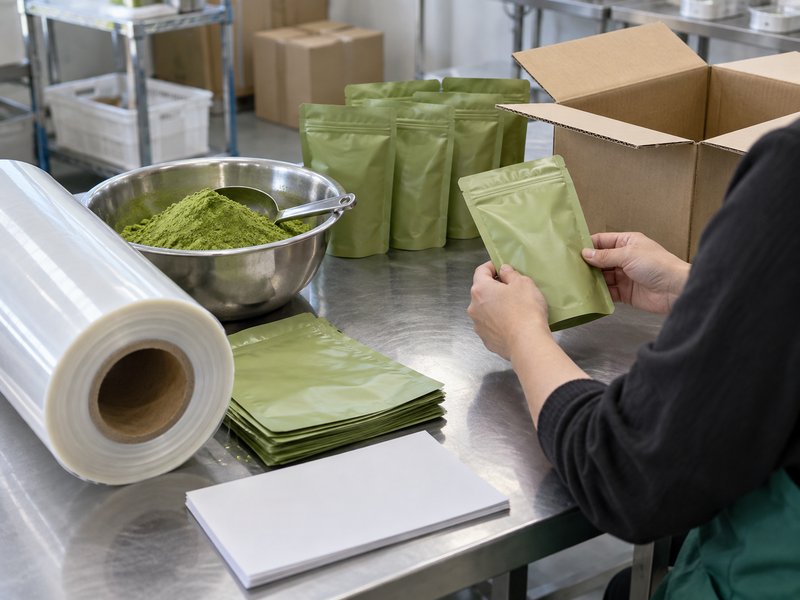
Annual tonnage, equipment counts and factory floor area are background information. Ask for the volume available for your exact product during the intended launch and replenishment windows. Capacity may be limited by prepared-leaf supply, grinding time, lab release, a special pack or label printing. Request a written planning response that identifies the bottleneck and the event that starts the lead-time clock. An “available now” answer needs a product code, quantity and lot status.
Compare the factory’s offer with your forecast range. Ask whether a larger second order would use the same material and process route, and whether a second line has been qualified. If a scale-up requires a new blend or leaf source, set a bridge trial. Matcha Village’s company material describes significant production resources, but its buyer should still confirm the chosen SKU’s current allocation and packaging slot. Big capacity cannot replace a scheduled commitment.
4. Which raw materials support your forecast?
Follow availability upstream
Ask what prepared tea or other input supports the quoted powder and how much is reserved or planned for your forecast. A factory may have sufficient milling machinery while a particular flavor profile depends on limited material. Discuss whether the supplier blends across compatible inputs to maintain a target profile. If so, ask what range is approved and what buyer notice is required when source material changes. A stable SKU definition should survive ordinary replenishment without hiding meaningful changes.
Request a supply plan for trial, launch and routine orders. Do not ask for confidential farm contracts; ask for evidence that the plant has a documented sourcing and allocation method. If raw material is carried between seasons, discuss storage, lot identity and sensory checks before use. Put any origin or harvest restriction into the product specification rather than leaving it in sales correspondence. That makes capacity and sourcing part of the same purchasing decision.
| Order phase | Material question | Planning response |
|---|---|---|
| Sample | Which lot made it? | Coded reference |
| Launch | Which input will be used? | Allocation or plan |
| Repeat | What can change? | Notice and approval route |
5. What happens when demand changes?
Test both growth and delay scenarios
Give the supplier a realistic range instead of one perfect forecast. Ask how much notice it needs to raise a monthly order, which step constrains a rapid increase and whether it can split production. Then test a slower scenario: what happens if artwork approval slips or your launch date moves? Does allocated material remain available, and who carries the inventory? These questions reveal more about supply resilience than a promise that the factory can handle “any volume.”
Discuss peak seasons, packing material lead times and quality-release timing for your SKU. Record what the factory can commit now and what remains a forecast. If you need buffer stock, state where it sits, how lots rotate and who owns aging inventory. A change in volume should not silently authorize a change in powder grade or pack. Request a revised quote and approval if that becomes necessary. A good capacity plan includes honest constraints and a route for updating them.
6. Which records release the proposed lot?
Make product evidence part of the schedule
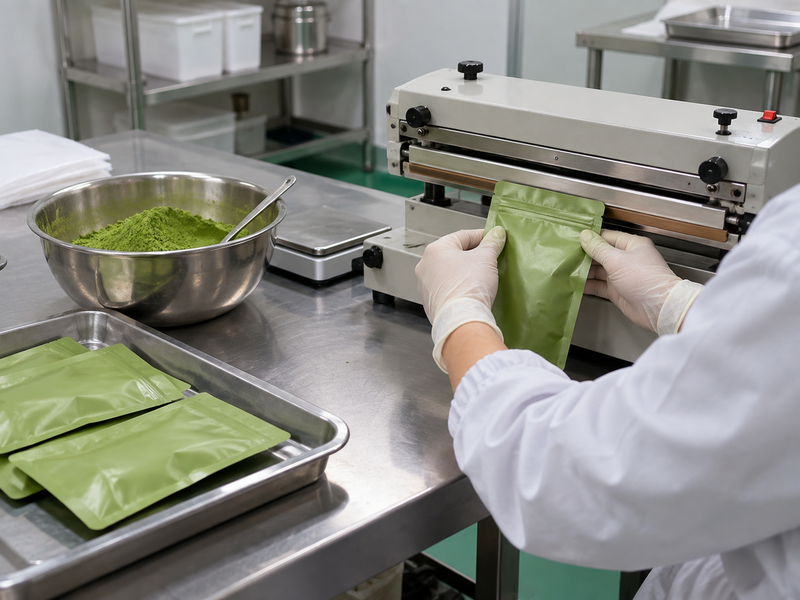
Ask for the specification, batch identity, sampling method, agreed lot tests and quality release record for the proposed powder. Check whether test results, methods, units and limits are visible. A “passed” report without a lot link may not help your importer accept the shipment. Decide which documents must arrive before dispatch and which accompany goods. If the factory changes a report after a correction, ask how all affected parties receive the current version.
For U.S. buyers, FDA’s FSVP guidance describes supplier verification obligations for covered importers. Factory records can support that review; the importer remains responsible for its own applicable program. Elsewhere, have the destination team select requirements. Do not copy a different market’s test list without considering your product. A release delay belongs on the shipment calendar, not hidden in a general statement that quality is strict.
| Record | Factory owner | Buyer check |
|---|---|---|
| Specification | Product or quality team | Current SKU revision |
| Lot report | Laboratory or quality team | Method, units, result |
| Release | Authorized reviewer | No open hold |
7. Who owns the export handoff?
Name the company and contact at each transfer
Map transfer from production to warehouse, exporter, carrier, broker and importer. Ask whether the manufacturer or another company appears as seller and exporter on documents. Confirm who prepares the commercial invoice and packing list, who checks product and lot descriptions and who answers a broker’s technical question. A missed name or code can delay clearance even when the powder is acceptable. Keep one version of shipping instructions in the order file.
Specify the named trade term and place in the contract, then ask your logistics team to review the responsibilities it creates. The supplier may arrange freight or only release packed goods at its site; either can work when the handoff is explicit. For organic shipments, add the appropriate consignment documentation as a separate task. Ask what happens if the number of cartons changes at loading and who updates affected files. Export readiness is a chain of named actions rather than a claim that a factory has shipped abroad before.

8. How should shipment timing be confirmed?
Use milestones with dependencies
Write a calendar with buyer approval, input booking, packaging procurement, production, testing, release, pickup and vessel or air booking. Ask the factory to identify the trigger for each stage. A quoted lead time may begin after payment, artwork acceptance or material allocation. Put that starting point in writing. If a test must finish before loading, leave time for result review and any correction. The buyer’s internal approvals also need named owners and due dates.
Check whether the factory plans one lot or several. Split lots may require multiple reports and carton mapping. A split shipment may affect freight and import filing. Ask for updates when a milestone moves and a revised schedule that shows the effect on delivery. Do not confuse an estimated production date with a confirmed shipment booking. Keeping these dates separate makes a delay easier to diagnose and prevents teams from promising customer launches on an unverified handoff.
| Milestone | Required input | Evidence of completion |
|---|---|---|
| Production slot | Approved SKU and order | Confirmed schedule |
| Lot release | Results and record review | Signed decision |
| Pickup | Packed goods and documents | Carrier handoff |
9. What should a pilot shipment reveal?
Verify product and paper together
Use an initial order to check the whole route. At receipt, compare the delivered lot, net weight, seals and carton count against the packing list and approved specification. Run the powder in your actual recipe and record deviations. Ask the warehouse to note how easily staff can find the lot and whether pack sizes suit operations. The pilot may expose a practical problem, such as an unreadable code, that a laboratory sample could not show.
Review schedule accuracy and communication after receipt. Did the supplier alert you when a milestone shifted? Were the final lot files available at the agreed point? If damage occurred, determine whether it came from packaging, handling or transit before assigning a cause. Keep corrective actions attached to the next order. A pilot shipment should leave a simple decision: approve recurring supply, require one correction or run a further trial. Do not call the factory “reliable” from a sample alone.
10. How can the buyer keep supply stable?
Review the SKU at each reorder
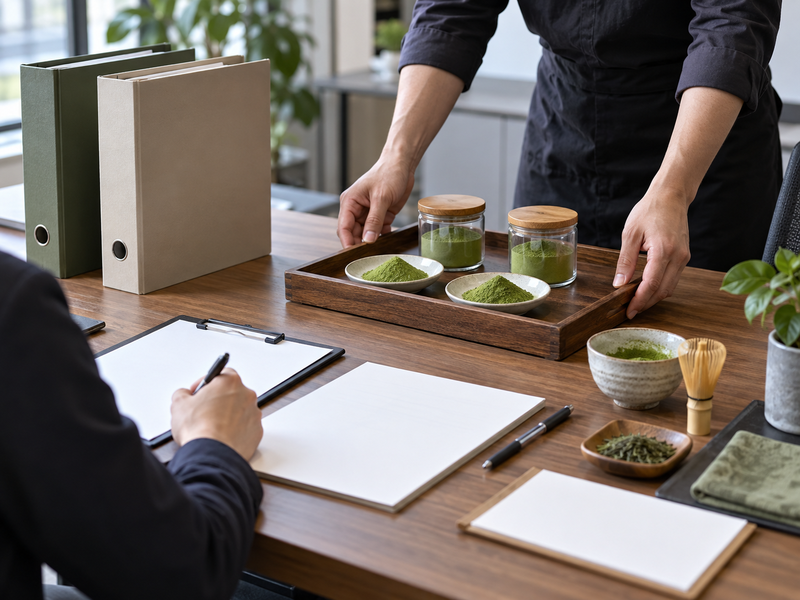
Save the approved sample, specification, pack version, lot document format, forecast and contact list. Ask about changes to leaf source, blend, line, site or packaging before copying the order. Quality can decide whether a document review or application retest is needed. Purchasing can review pricing and the next allocation window. Keep performance notes from prior deliveries, including both defects and resolved questions.
Ask the operations team whether the last pack size and delivery cadence matched real use. A stable factory relationship depends on warehouse handling and recipe results as well as timely dispatch.
When sourcing from a China matcha factory, evaluate the exact SKU’s evidence and available supply rather than a region’s reputation or a plant’s maximum output. Send Matcha Village or another candidate a clear application brief and ask it to connect one coded sample with current records and a shipment plan. That small, repeatable process gives your team a way to grow orders without losing sight of what was approved.
| Reorder input | Source | Decision |
|---|---|---|
| Next volume | Buyer forecast range | Reserve realistic allocation |
| Product changes | Supplier notice | Retest or accept |
| Delivery history | Prior receipts | Adjust buffer and dates |
FAQ
Q1. Does a factory’s annual capacity guarantee my grade? No. Confirm allocation for the named SKU and order window.
Q2. Can a factory address prove the leaf’s origin? No. Ask for material and batch records behind an origin claim.
Q3. What if a trader handles export? Identify its role, the manufacturing site and the party responsible for product release.
Q4. Should I set a single fixed forecast? Share a realistic range and identify which quantity is a committed order.
Q5. What should a pilot order test? Check recipe performance, pack identity, lot documents, schedule and receiving condition.
The next useful supplier question is specific: “Can you supply this approved product, in this pack, during these dates, with these lot records?” Ask for a written answer and test it on a pilot shipment. That is a sturdier basis for repeat buying than a regional profile or equipment count.