
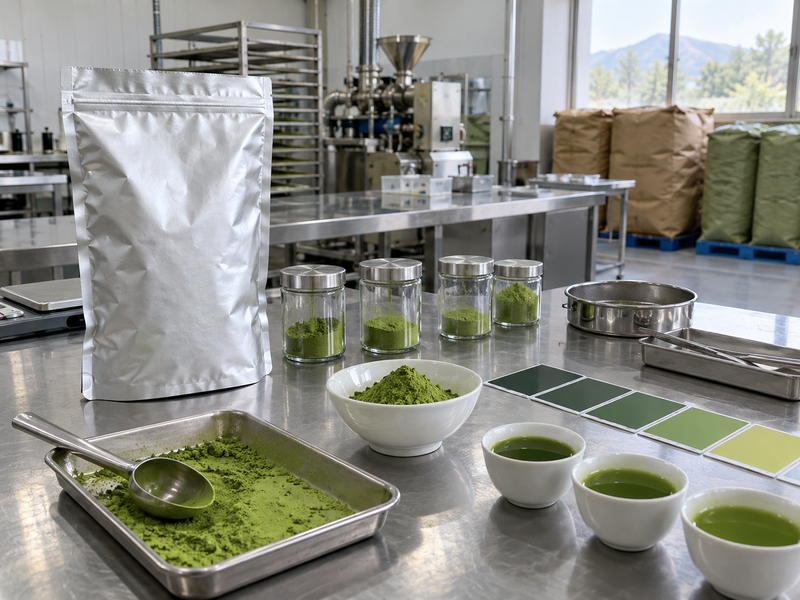
A buyer can approve a matcha sample in February and still receive a disappointing production lot in May. The difference may be a changed blend, a long warehouse stay, a damaged inner bag, or simply a different cup test. Bulk matcha quality control starts by defining what an acceptable shipment looks like before the purchase order is placed. It ends only when the actual lot has been checked against that definition. This guide is for food brands, café chains and ingredient distributors that need a repeatable receiving decision, not a vague assurance that a powder looks green.
There is no single universal grade chart that settles every application. A powder that makes an appealing hot tea can disappear in milk; a strong culinary powder may work in a cookie but taste harsh in a lightly sweetened drink. Write the specification around the finished product and the risks your business owns. Matcha Village’s supplier perspective is practical: keep the sample, the order terms, the laboratory paperwork and the receiving test connected to one lot number.
1. What belongs in a bulk matcha quality specification?
Start with product identity and intended use. State whether the order is pure matcha, a sweetened latte blend or another tea powder. Name the application, the pack format, the agreed reference sample and the documents required with each shipment. Then record measurable attributes that the buyer can actually check: sensory profile, appearance under fixed light, dispersion in a defined recipe, pack integrity and any laboratory parameters required by the destination market or customer. A color photograph on a sales sheet is not a workable acceptance criterion because cameras and screens change green dramatically.
Agree on units and test methods before accepting a numerical limit. “Fine powder” and “low moisture” invite disputes; a method, unit and tolerance make a result comparable. The specification should also say who can approve a deviation. If a lot is slightly different from the reference but still works in a heavily flavored dessert, commercial staff should not silently substitute it into a premium latte program. The team that owns the finished product must approve that use.
| Specification line | Evidence to request | Receiving check |
|---|---|---|
| Identity and formulation | Product sheet and ingredient declaration | Match label and purchase order |
| Reference quality | Approved, dated retained sample | Side-by-side cup or application test |
| Safety parameters | Lot-specific certificate and methods | Check lot, units and required results |
| Packaging | Pack drawing and seal requirements | Inspect inner bag and outer carton |
2. How should a buyer sample an incoming lot?
Do not open the easiest carton and call it representative. First identify the supplier lot, number of cases, pallet arrangement and any visible damage. A practical sampling plan should spread selected units across pallets or production positions rather than taking every unit from the front row. The right statistical plan depends on lot size and risk, so use your quality team’s approved procedure rather than a universal sample count copied from a blog. Record which cases were opened and keep the original labels visible.
Use clean, dry tools and containers. Powder exposed to moisture during sampling can clump, making a good lot appear defective. Separate the portion used for sensory tests from a sealed retained portion that may be needed for a dispute. If the order includes multiple lot codes, sample each code independently. A distributor may receive one purchase order containing several manufacturing lots; averaging their results hides the very variation the test is meant to find. Hold stock from sale until the agreed release checks are complete.
| Sampling step | Record | Why it matters |
|---|---|---|
| Identify lot codes | Code and case count for each lot | Prevents mixing distinct batches |
| Select units | Pallet and case locations | Reduces convenient-sample bias |
| Split sample | Test and retained portions | Preserves evidence for later review |
| Seal and store | Container, date and conditions | Limits sample deterioration |
3. Which packaging faults should stop receiving?
Look at the outer carton before opening it. Water marks, crushed corners, torn tape or an unexplained relabel deserve a note and photograph. Inside, check whether the pouch or liner is sealed as specified, whether powder has leaked, and whether the printed lot code matches the shipping documents. A small split in a foil bag matters more than a scuff on a cardboard box because it can expose the powder to air and moisture. Do not judge a suspect bag by smell alone; keep it isolated and follow the supplier’s nonconformity process.
Check pack weight according to your receiving procedure and verify that the unit of sale in the quotation matches the actual delivered net mass. Buyers sometimes compare one-kilogram prices while receiving different inner-pack sizes, which changes handling and waste after opening. Photograph the complete label, seal and damage in the same frame. That record is more useful than an email saying “some cartons looked bad.” If a damaged pallet arrives with otherwise sound pallets, segregate the affected units rather than rejecting the whole shipment automatically.
| Observation | Immediate action | Decision owner |
|---|---|---|
| Outer carton dent, inner seal sound | Document and inspect affected units | Receiving quality |
| Open or leaking inner bag | Quarantine unit and retain evidence | Quality manager |
| Lot code mismatch | Hold linked stock and request trace | Quality and supplier |
| Missing required document | Hold release pending verified record | Quality manager |
4. How can a team compare color without fooling itself?
Color is useful when observed consistently. Place equal amounts of the approved sample and incoming lot in identical dishes under the same neutral light. Record powder color before water or milk is added, then repeat in the finished recipe. A bright powder can look dull in a plant milk with a gray cast; a darker powder may still deliver an acceptable drink. Compare on the same day, in the same room, with the same camera settings if photographs are part of the record.
Do not invent an exact “good green” from a screen image. If a colorimeter is part of your program, define its preparation method and tolerance in the specification. If the business uses visual assessment, train assessors with reference samples and simple descriptors: vivid green, yellow cast, brown cast, or visible specks. A color change can signal many things, including raw material and processing differences. It should trigger a closer review, not a diagnosis based on appearance alone. The article on bulk matcha shelf life explains why storage history belongs beside color observations.
5. What should a sensory test actually compare?
Use the product as the customer will use it. For a café latte, fix matcha dose, water, milk, ice, sweetener and serving time. For bakery production, bake a small standard test batch rather than tasting dry powder. Blind-code the approved and incoming samples so the panel does not reward the supplier it expects to prefer. Ask assessors to describe aroma, bitterness, astringency, sweetness, aftertaste and texture in ordinary language. “Premium” is a sales category, not a sensory observation.
Test enough repetitions to see whether the result is stable. One cup made by the most experienced employee can conceal a powder that clumps during a rush. Note preparation mistakes separately from ingredient faults. If the incoming lot differs but remains acceptable, record the business decision and where it may be used. A switch from a delicate tea service to a strongly flavored dessert is a formulation change, not a routine warehouse substitution.
| Attribute | Controlled test | Useful note |
|---|---|---|
| Aroma | Smell equal fresh portions | Describe tea, toasted or stale notes |
| Bitterness | Taste fixed unsweetened recipe | Mark onset and persistence |
| Texture | Compare equal mixing times | Note grit and clumps |
| Application fit | Test the sold drink or food | Accept or reject by use case |
6. What can a certificate of analysis confirm?
A certificate of analysis is useful only when it belongs to the lot in front of you. Match its product name, batch code, date and quantity to the pack labels and purchase order. Read the result, unit, method and applicable limit for every parameter your contract requires. “Pass” without the underlying result may not answer a customer’s question. Likewise, a certificate for a sample lot does not release a later production lot. Ask who performed each test and whether it was in-house or external; do not assume every line came from the same laboratory.
Document requirements vary by market and use. Build the acceptance list with the importer, customer and qualified regulatory team rather than copying another buyer’s threshold. If a result is absent, place the lot on hold while the supplier provides a corrected record or a mutually agreed retest. For a practical document checklist, see matcha supplier certifications. A certificate supports a decision; it does not replace physical inspection, sensory testing or traceability.
7. Why test dispersion and particle behavior?
A powder can pass a lab sheet and still fail in a drink. Test with the actual equipment, water temperature and liquid used in service. Weigh the dose, use the same mixing time, then inspect the cup immediately and after a normal holding period. Record dry clumps, sediment, foam and mouthfeel. A stronger mixer can hide one problem but may create another, such as excessive foam or a slower cleaning cycle. If the line uses an automated dosing hopper, check flow through that hopper as well as cup texture.
Ask the supplier for its particle-size method if fineness is part of the specification. Two numbers from different instruments or sample preparations may not be comparable. The buyer’s goal is not to chase the smallest possible particle. It is to get an accepted cup or finished food without avoidable waste and process trouble. Keep a short video of the mixing step when a new lot behaves differently; it helps the supplier reproduce the problem without guessing from a photograph of settled powder.
8. What happens when an incoming lot fails a check?
Write the decision path before the first failure. A damaged bag, a missing document and an out-of-spec laboratory result are different problems. Quarantine affected stock, keep the lot code and samples, and tell the supplier exactly which criterion failed. Do not “use it up” in a less visible recipe until the responsible quality team approves that deviation. A purchasing deadline is not a release test. If a retest is appropriate, agree who takes the sample, which laboratory or method is used, and how the result will be judged.
For a material difference, ask the supplier to explain the cause and proposed corrective action. Possible dispositions include rejection, replacement, controlled use in another agreed application, or acceptance with a documented concession. The buyer should consider labeling, customer contracts and traceability before changing use. Record the final decision and who authorized it; the same issue is likely to recur if the first case disappears into an email thread.
| Failure | Hold scope | Next evidence |
|---|---|---|
| Single damaged inner pack | Affected unit and related cases | Photos, seal inspection, count |
| Color or flavor drift | Named production lot | Reference test and application trial |
| COA mismatch | Lot until identity is resolved | Corrected lot-specific record |
| Required lab result outside limit | Lot under quality control | Approved investigation and disposition |
9. How should the buyer document release?
Create one record that links purchase order, supplier lot, received quantity, pack photos, sample IDs, certificate, test results and final decision. A spreadsheet can work for a small operator if access and version control are clear; a larger distributor may need a quality system that tracks pallets and customers. The important point is retrieval. If a café later reports an unusual flavor, staff should be able to identify which lot reached that store and what the receiving panel found.
Retain samples under specified conditions for the period set by your own quality program. Label them so they cannot be confused with fresh stock. Record when stock was released and whether a concession restricted its use. If product is repacked, carry the original lot identity into the new code mapping. For an importer, the handoff between overseas factory lot and domestic warehouse lot is a frequent place for traceability to break. Test that link before it is needed in a complaint.
10. How can repeat failures improve the next purchase?
Review failures by supplier, product, season, pack format and application. A single complaint may be an isolated handling error. Several complaints after a pack change point to a different question. Share a clear trend with the supplier: lot numbers, test conditions, photos and the business effect. Ask whether the corrective action changes raw material selection, grinding, blending, packing, storage or transport. Then define how the next lot will prove the change worked.
Do not turn every minor variation into a new hard limit. Tightening a specification without testing the finished product can raise cost while missing the actual failure. Improve the parts of bulk matcha quality control that predict accepted cups, sellable food and reliable delivery. Matcha Village can discuss matched samples and application trials with buyers who provide a target recipe and expected volume; start with the supplier contact page. The purchase specification should remain yours, with a named owner and a clear release rule.
FAQ
Q1. Is one approved sample enough for future bulk orders?
No. Retain it as a reference, then check each incoming production lot against the agreed specification and documents.
Q2. Can a green powder be accepted without a sensory test?
Color alone does not show how the powder tastes or disperses in the customer’s finished product.
Q3. Does a COA replace incoming inspection?
No. It supports specified laboratory checks; pack condition, lot identity and application performance still need review.
Q4. Should every damaged carton be rejected?
Inspect the affected inner packs and follow the written hold and disposition procedure. The damage pattern matters.
Q5. Who should approve a different use for an off-spec lot?
The team responsible for product quality and customer commitments should document and authorize any concession.