
The best matcha green tea powder factory for a brand is the one whose powder works in that brand’s actual recipe and can be supplied again under agreed controls. Directory lists help build a shortlist; they do not reveal how a powder tastes in oat milk or survives a bake. This guide turns supplier comparison into a series of practical application tests, with records that connect a sample to future production. The matcha sensory evaluation guide offers a way to compare powders in a repeatable trial.
Contents
- 1. What should the finished product do?
- 2. How should you shortlist powder candidates?
- 3. What makes a sample trial comparable?
- 4. How should cafes test hot and iced drinks?
- 5. What should food manufacturers test after processing?
- 6. How can a buyer judge color without being misled?
- 7. Which powder properties need documented limits?
- 8. Can the factory repeat the winning sample?
- 9. What changes when the order scales?
- 10. How do you turn test results into a purchase?
1. What should the finished product do?
Write a product brief the factory can use
Describe the consumer experience and production method before selecting a grade. A café may need a vivid iced latte that still tastes balanced with sweetener. A chocolate producer may want a clear tea note after mixing with cocoa butter. A bakery may accept a muted baked color but reject a dry, bitter finish. State serving size, dose, other ingredients, equipment and shelf or serving time. If one powder must cover multiple applications, say so; that constraint can change the choice.
Separate a sensory preference from a manufacturing gate. “Bright green” needs a reference and fixed lighting, while an allergen or ingredient restriction may be a pass-or-fail requirement. Ask purchasing, product development and quality to approve the brief together. A factory can recommend among its grades only when it knows what outcome matters. Matcha Village’s supplied product range includes pure matcha, latte powders and blends; ask which exact product is proposed for the brief rather than comparing category labels.
2. How should you shortlist powder candidates?
Request products, not general factory claims
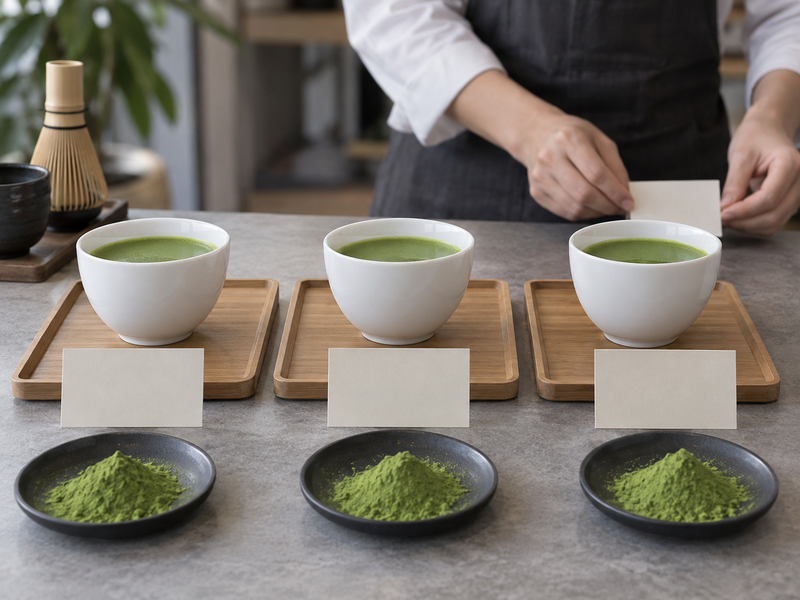
Send every candidate the same application brief. Ask for the proposed item code, composition, pack size, current specification, sample lot and a contact who can explain the choice. A directory listing may show that a company supplies matcha, but it cannot tell you whether the listed business mills, blends, packs or resells your proposed SKU. Map the operating site and any outsourced stage for each product.
Keep the shortlist manageable. Three coded products with complete records can teach a team more than a shelf of anonymous powders. If a supplier proposes two grades, ask why each might fit your use and test both under the same method. Record which claims require verification, including organic status or a named origin. Set a deadline for technical answers before ranking price. Otherwise a cheap quote can occupy attention while its product identity remains unclear.
| Shortlist field | Ask for | Reason |
|---|---|---|
| Product identity | Code and composition | Compare like items |
| Manufacturing route | Site and activities | Know record owner |
| Sample | Lot and pack date | Link trial to supply |
3. What makes a sample trial comparable?
Control preparation and observation
Blind-code the samples and use identical dose, water temperature, mixing time and equipment for an initial test. For each finished product, follow its real preparation procedure. Record the recipe version, taster, date and serving condition. Run a repeat on another day or with another operator. A sample that wins only under a skilled demonstration may not suit a busy shop or automated line.
Retain one unopened unit and photograph its lot label. Ask the factory whether the sample represents routine production or a special trial. If the commercial lot will come from a different line or input blend, plan a bridging test. A sensory form should leave space for precise comments: “sediment after five minutes” helps more than “average texture.” Have product and operations reviewers score independently before discussing preferences. Price can be added after the technical result is recorded, so it does not change what tasters think they observed.
4. How should cafes test hot and iced drinks?
Reproduce store service
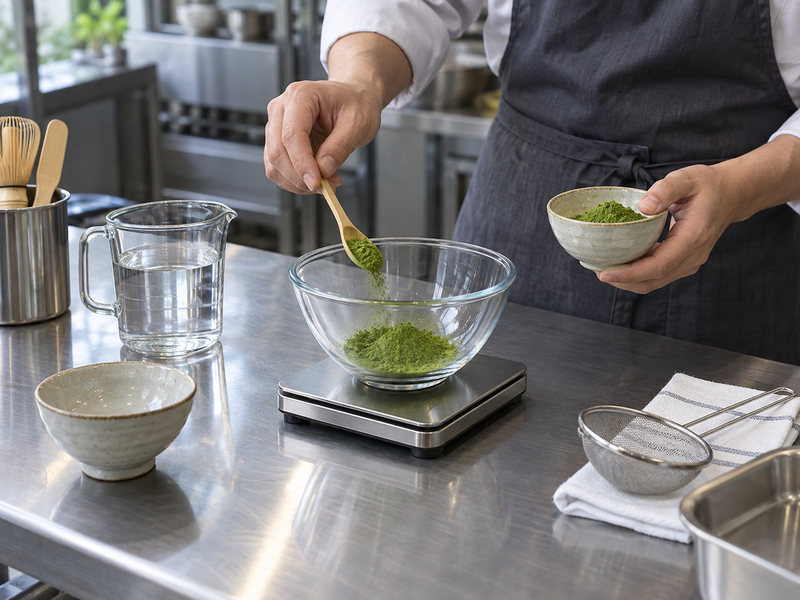
Prepare hot and iced versions with the cups, milk, sweetener and tools staff actually use. Note whether powder disperses without extra labor, whether foam or clumps appear and how flavor changes as the drink sits. Test with the plant milk used on the menu if it is a standard option. A powder that seems smooth in plain water may act differently in a cold, sweet dairy drink. Use the same stir, whisk or blender time for each candidate.
Ask two staff members to prepare the drink from written instructions. If only the product developer can make it look right, the menu may need a different method or powder. Record dose per serving and powder cost using the actual yield, including any waste from opened packs. Check whether a pack size fits store turnover. This is where a factory’s application recommendation becomes testable. Keep the winning recipe with the coded sample so later lots are judged against the same preparation.
| Drink condition | Observe | Record |
|---|---|---|
| Hot milk | Flavor and dispersion | Dose and mixing time |
| Iced milk | Clumps and sediment | Ice and serving delay |
| Store repeat | Operator variation | Written instruction result |
5. What should food manufacturers test after processing?
Judge the finished food
A manufacturer’s bench test should follow the production sequence as closely as practical. Add powder at the planned point, use the real mixing shear or a documented laboratory equivalent and finish the heating or freezing step. Then evaluate the product after normal cooling or storage. A vibrant dry powder may yield a different color in baked dough; a pleasing tea in water may be buried by chocolate or sugar. Those outcomes are recipe questions, not proof that a supplier’s grade is poor.
Record dose, batch size, processing conditions, visual result and sensory comments. If the process itself changes, do not compare results as though only the powder changed. Ask whether the factory can provide another sample for a pilot-scale run. Discuss whether the finished product needs one powder for flavor and another for color; if that complicates labels or handling, record the trade-off. Approval should be based on the food customers will buy, with a specification that can support repeat batches.
6. How can a buyer judge color without being misled?
Fix lighting, background and timing
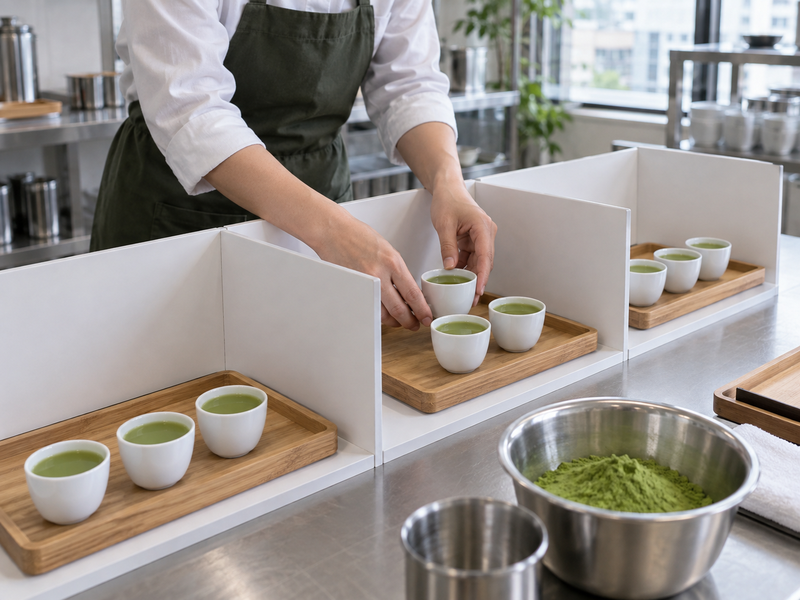
Compare equal powder amounts under the same neutral light and on the same background. Photograph samples with an identifier and reference card if your team uses images for later review. Then compare the finished recipe at the same stage: immediately after mixing, after baking or after the intended serving delay. Do not compare a supplier’s edited product image with another supplier’s physical sample. Color may matter commercially, but it must be judged where it will appear to the customer.
Ask quality whether a color measurement belongs in the specification and what method would be repeatable. A visual acceptance reference can be useful when staff are trained to use it consistently. Keep a reasonable range rather than promising an exact shade across all recipes and storage conditions. If a supplier changes input material to improve color, repeat flavor and process tests as well. The best-looking powder on a white saucer is not automatically the best product in a dark chocolate bar.
| Color check | Fixed condition | Decision |
|---|---|---|
| Dry powder | Light and background | Compare offered samples |
| Fresh product | Recipe and preparation | Approve launch appearance |
| Held product | Time and storage | Check customer experience |
7. Which powder properties need documented limits?
Build a usable specification from trial results
Ask for the supplier’s current product specification and identify which fields your team must accept. Composition, sensory profile, physical behavior, pack and lot tests may all matter. Avoid asking for a long list of values that no one will use. For a beverage, dispersion and texture may merit an agreed method. For a dry food mix, consistent distribution and absence of unwanted lumps may matter more. Ask how sampling and measurements are performed before comparing numbers from different factories.
Document the approved sample code beside the specification revision. Ask which changes to tea source, blending, grinding or pack would trigger notice. A certificate of analysis should state the finished lot, method, unit, limit and result for agreed tests. The Codex hygiene principles are a useful general reference for controlled food production, but your purchase needs an item-specific acceptance record. Give every technical exception a named approver.
8. Can the factory repeat the winning sample?
Request a production link
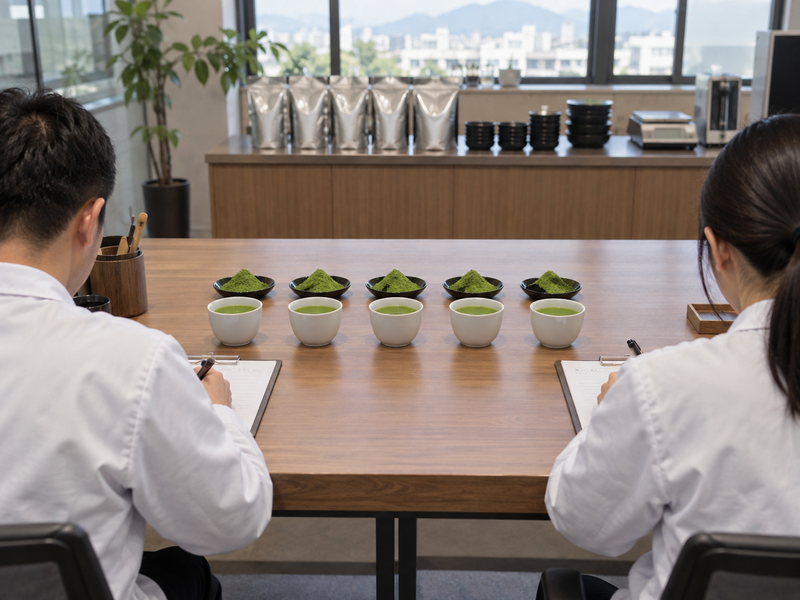
Once a sample passes, ask where and how it was made. Request the process site, input identity, finished lot, batch record format and release procedure. If the winning sample was a small formulation trial, plan a production-scale sample before committing to a full launch. The buyer should be able to trace an ordinary packed unit backward to its material lots and forward through shipping documents.
Ask for a second lot when timing permits. Repeat the key application test blind against the retained reference. This does not prove every future lot will behave identically, but it tests whether the agreed range has practical meaning. Discuss change notice, complaint handling and requalification if the supplier alters raw material or process. Avoid a vague promise of “consistent quality.” Define which outcomes the factory controls, how it checks them and what your team will do if a future lot falls outside the agreed result.
| Repeatability check | Evidence | Buyer action |
|---|---|---|
| Same item | Product code and revision | Confirm no substitution |
| Later lot | Lot report and sealed sample | Repeat key recipe test |
| Process change | Written notice | Decide requalification |
9. What changes when the order scales?
Test operations and commercial reality
A good bench result can fail at the handoff to larger orders. Ask whether the proposed grade has available input material, whether the planned packaging line can handle your format and what approval starts scheduling. Share launch and replenishment ranges. Ask how the factory handles a seasonal rise without changing your approved powder. If the answer involves a new source or line, decide whether a bridge trial is needed.
Compare quoted pack sizes with warehouse and production handling. Opened bulk bags may create waste for small cafés; too many small units may burden a food plant. Determine the packed unit cost, freight basis and importer’s responsibilities. Keep these calculations separate from the sensory score, then decide whether a technically strong option works commercially. Matcha Village’s supplied material describes scale and several product formats, but you should request a current, SKU-specific supply plan before treating those capabilities as a delivery commitment.
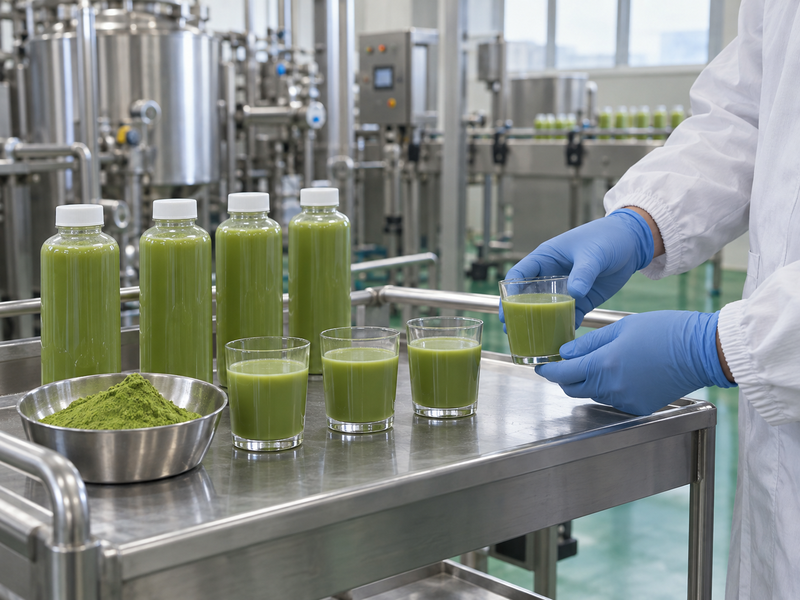
10. How do you turn test results into a purchase?
Preserve a recipe-to-lot approval chain
Write a product approval sheet with the application, recipe version, coded winning sample, supplier item, specification, pack and required lot documents. Name the decision makers and any open conditions. The first purchase order should reference these items. Ask for a final packed sample or pilot lot if production differs from the initial trial. At receipt, reconcile the lot on packaging with the report and run the agreed verification test.
Set a notice procedure for material, milling, formulation and pack changes. Store trial photos with their conditions rather than treating them as a universal color standard. If your team is comparing Matcha Village with other candidates, give each the same brief and trial method. The best matcha green tea powder factory is identified through a product that works, records that follow it and a supply agreement that preserves those conditions on repeat orders.
| Approval record | Keep with the order | Recheck later |
|---|---|---|
| Recipe result | Dose and process conditions | New production lot |
| Powder identity | Code, lot and sample | Any proposed substitute |
| Pack and supply | Approved unit and schedule | Scale-up plan |
FAQ
Q1. Should I taste every sample in water? Water can help initial screening, but approval must use the intended finished product.
Q2. Does a brighter powder always make a better latte? No. Test flavor, dispersion and color in the actual milk drink.
Q3. How many lots should I test? Begin with a coded sample and seek a later production lot when repeatability matters for launch.
Q4. Can I use the supplier’s application recipe? It can guide early work; your own recipe and equipment should determine approval.
Q5. What if the best-tasting powder costs more? Compare full cost per finished unit and operational waste after required quality gates pass.
Send a short application brief, run blind-coded trials and keep the winning recipe with its sample identity. The next factory conversation can then focus on reproducing that result at commercial scale rather than debating a grade name.