
A matcha tea factory visit should settle buying questions that photographs and sales decks cannot answer. Buyers often see attractive equipment yet leave without knowing which site handled their sample, who released its lot or how a complaint would be traced. Plan the visit around one proposed product and a short evidence list. The Japanese Ministry of Agriculture’s description of tencha gives useful process context, while your own specification defines what the factory must demonstrate. The matcha supplier audit guide can help turn a facility visit into a documented decision.
Contents
- 1. What should the visit establish before anyone enters production?
- 2. Which legal entity and sites handle the proposed powder?
- 3. How do leaves, tencha and powder move through the site?
- 4. What hygiene controls can a visitor actually observe?
- 5. How does milling stay linked to a defined product?
- 6. Where are batches separated and identified?
- 7. How are samples and laboratory records connected to release?
- 8. Who decides what happens to a nonconforming lot?
- 9. Does the packing room protect the approved powder?
- 10. What should the buyer request after the visit?
1. What should the visit establish before anyone enters production?
Turn the tour into a decision
Begin with your product brief, not a camera. State whether the powder will go into a straight tea, a milk drink, a dry blend or a baked product. Bring the sample code, expected pack format and intended market. Ask the host which rooms and records relate to that exact item. A broad tour may show excellent equipment that never touches the powder you plan to buy. The visitor from purchasing should also know which questions belong to quality and which require a formulation trial later.
Start with the proposed SKU. Agree on the route you will follow, the records you may inspect and any areas that cannot be entered. If access is limited, ask for the relevant procedure and a live explanation from its owner. Photographing a room rarely establishes how a batch gets released. Write down unanswered questions in real time, with the employee who can answer them and a date for follow-up. A useful visit ends with fewer assumptions, even when it ends without an approval.

2. Which legal entity and sites handle the proposed powder?
Map the commercial and physical chain
The seller, mill, packer and exporter may carry different names. Ask for each name before discussing capabilities. Record the address of the site receiving leaves, the site milling tencha and the site sealing final packs. Some operations combine these steps; others use partners. Neither arrangement settles a quality question by itself. What matters is whether responsibilities and batch links are clear. A company profile showing several facilities should not be read as proof that every facility produces the proposed SKU.
Match each claim to a place. If a certificate appears in the meeting, inspect the current entity, address, activity and product scope. Ask quality to decide whether that scope covers your material. Request a simple flow diagram identifying handoffs between companies, and ask who issues the invoice and who signs product documents. A visit can reveal an honest specialist network; it can also expose gaps hidden by one brand name. Treat missing site information as an open item, not as a reason to improvise a conclusion on the factory floor.
| Identity question | Evidence to request | Buyer use |
|---|---|---|
| Who sells? | Quotation entity | Contract review |
| Who mills? | Site and batch record | Process trace |
| Who packs? | Packing site and code | Label review |
| Who exports? | Document issuer | Shipment planning |
3. How do leaves, tencha and powder move through the site?
Follow material rather than machinery
Walk the route in production order. Ask where incoming tea arrives, how staff identify it, where tencha waits and when the material becomes finished powder. Matcha production can involve shaded tea leaves that are steamed and dried without rolling before grinding; the Japanese agriculture ministry describes that route for tencha. A factory’s own route still needs explanation, especially if it receives prepared tencha rather than fresh leaves. Ask what arrives at this site instead of assuming that every stage happens under one roof.
Trace one real batch. Have the host show how an intake code follows material into a milling order and finished pack code. Where material is blended, ask how source lots and blend proportions are recorded. Look for points where open powder, waste or returned material could cross paths. Note whether rooms and containers are labeled clearly enough for staff on a busy shift. Your goal is a reproducible map: given a carton code, can the team identify the material and production records behind it? If the answer depends on one employee’s memory, request a written trail.

4. What hygiene controls can a visitor actually observe?
Compare the written rule with the shift
Ask for visitor instructions, then watch whether your own group follows them. Clothing changes, handwashing, tool handling and traffic rules have value only when people use them. Observe how staff move between receiving, milling and packing areas. The question is not whether a room looks spotless during a tour. Ask when cleaning occurs, who signs it off and what happens before the next product or batch starts. A working area can look orderly while its records are weak; a busy plant can have sound controls that require explanation.
Ask for an ordinary shift record. Review a recent cleaning entry and the related production sequence, with sensitive customer details hidden if necessary. Ask how the factory controls foreign material and who investigates a broken tool or damaged package. Quality staff should explain the action threshold and where an affected lot is held. Record what you saw separately from what staff said they do. This distinction makes the post-visit discussion fair and gives the supplier a chance to provide records for any step you could not observe.
| Observation | Follow-up question | Useful record |
|---|---|---|
| Entry controls | Who checks compliance? | Visitor or training rule |
| Changeover | Who releases the line? | Cleaning sign-off |
| Open product | How is exposure limited? | Batch operation record |
| Incident response | Where is product held? | Deviation record |
5. How does milling stay linked to a defined product?
Ask what the mill must achieve
Several mills in a room do not prove capacity or quality for your item. Ask which equipment made the submitted sample and which equipment would make a production lot. Discuss fineness in a defined measurement method, then verify powder behavior in your application. A fine powder that performs well in whisked water may behave differently in a cold milk base or dry mix. Milling method alone cannot substitute for a finished specification and comparative sample trial.
Connect settings with results. Ask what staff monitor during a run, including feed material identity, mill condition and heat control where relevant. Learn when a run stops for maintenance or adjustment and how product made during a deviation is identified. If the facility offers several powder grades, request the criteria used to separate them. Avoid accepting a single adjective such as “ultrafine” without a method, range and sample code. Leave with a question that production can answer later: can the process repeat the approved powder across more than one lot?
6. Where are batches separated and identified?
Test the trace using a finished code
Choose a sealed pack or carton during the tour and ask staff to follow its code backward. They should be able to identify milling date, source material, packing run and quality decision. Then trace forward from a tencha lot to every finished product containing it. Ask how codes change after blending, rework or repacking. You do not need customer names to understand the logic; masked records can show whether the system holds together.
Look at a real handoff. A label on a vessel may be accurate at the start of a run yet lose its connection when material moves into an unmarked bin. Ask how operators prevent that break. Record the location and status of held material, released stock and rejected stock. If electronic records are used, ask who can edit them and how changes appear. If paper records are used, check whether signatures and dates identify a responsible person. A neat trace diagram is useful only if an ordinary shift follows it.
| Trace direction | Starting point | Record that should connect it |
|---|---|---|
| Backward | Finished carton | Packing and milling lot |
| Backward | Milling lot | Tencha intake or blend |
| Forward | Tencha lot | Finished product codes |
| Status | Held pallet | Release or rejection record |
7. How are samples and laboratory records connected to release?
Separate a sales sample from an approved lot
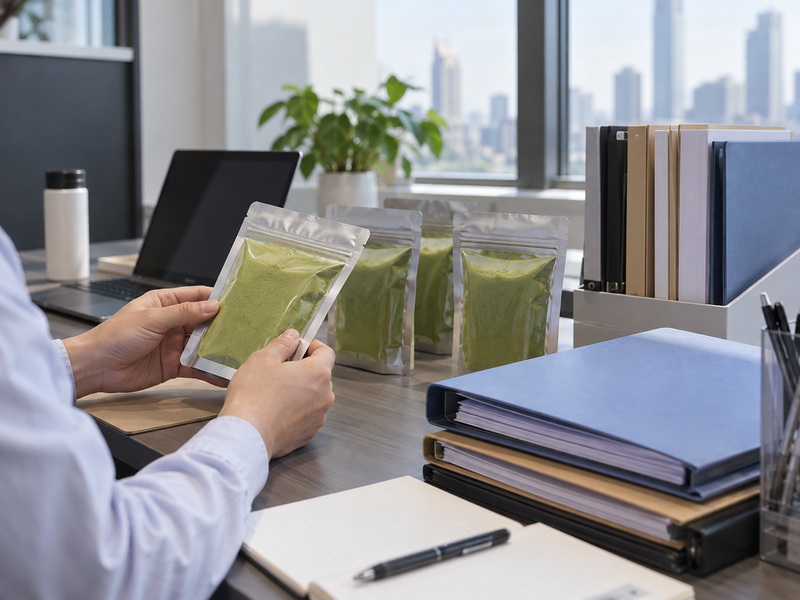
Ask who takes the sample, when it is taken and which lot it represents. A sales pouch may have been packed from a different run than the bulk powder later offered. That is manageable if both are identified and compared. Request a sample label with product code, lot or trial number, packing date and intended use. Quality should define which specification fields matter for your destination and application before the visit or soon after it.
Follow one result into a decision. Ask the laboratory or quality lead to show how a reported value links to method, units, limits and lot status. If testing goes to an outside laboratory, ask who sends the sample and who reviews the report. A certificate of analysis is useful when it describes the actual lot and can be checked against an agreed specification. Do not infer that a certificate list, website badge or sample result covers every future order. Make release responsibility explicit and record any tests that remain pending.
8. Who decides what happens to a nonconforming lot?
Ask about the uncomfortable case
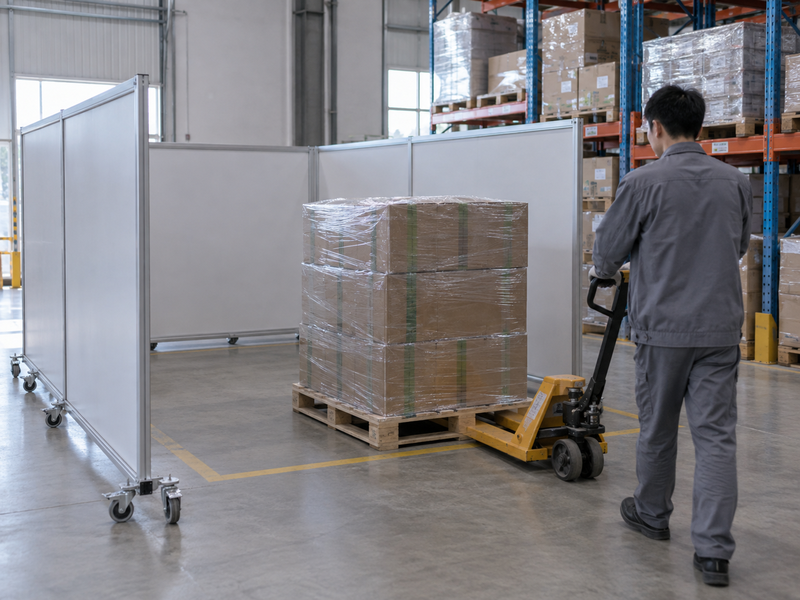
A factory visit becomes more informative when the discussion moves beyond normal flow. Ask what happens if color drifts, a packaging seal fails or a test result falls outside a chosen limit. Where does the material wait? Who may authorize retesting, rework, downgrade or disposal? Your quality team should distinguish supplier investigation from buyer acceptance. A lower grade may suit another customer; it should never enter your order through a quiet substitution.
Use a hypothetical case. Say that a lot matches taste but fails your agreed appearance range. Ask production, quality and sales to describe their steps independently. Their answers should converge on a documented decision and notification route. Ask how complaints from shipped product feed back into retained samples and batch records. You are looking for an accountable procedure, not a promise of zero deviations. Record whether the proposed commercial agreement will require notification before any process, site or specification change relevant to your SKU.
| Event | Immediate control | Buyer question |
|---|---|---|
| Test outside limit | Hold affected lot | Who reviews it? |
| Damaged seal | Segregate packs | How far does the check extend? |
| Color shift | Preserve comparison | Is substitution proposed? |
| Complaint | Trace shipment | When is buyer notified? |
9. Does the packing room protect the approved powder?
Review the last open-product step
Packing is where an approved powder becomes a unit your team receives. Ask when open powder enters the room, how packaging materials are checked and how the correct label is matched to the correct batch. Review the proposed bag, pouch or carton with the person who actually runs the line. Your artwork approval, pack barrier choice and case marking need separate checks. A polished retail sample does not prove that the bulk format for your order has the same controls.
Inspect a sealed unit. Read the code, check the closure and compare net-weight and item labels with the order brief. Ask about in-process checks during a run and how staff record rejected units. Request storage instructions based on the proposed packaging and product specification; do not invent a shelf life from appearance. If a third-party packer will complete this stage, arrange a separate document review or visit. The factory tour should identify that handoff clearly, including who owns any packing complaint.

10. What should the buyer request after the visit?
Convert notes into a short action list
Send a visit record within a few days while both teams remember the discussion. Separate observations, supplier statements and documents still needed. Give each open item an owner and a practical due date. Request only evidence that affects the buying decision: for example, the proposed SKU specification, a sample-linked lot record, current certificate scope, packing format and a representative quote. An enormous generic questionnaire can bury a genuine gap.
Close the loop with a trial. Let operations test the sample in the intended recipe while quality reviews documents and purchasing reviews the offer. Record the sample code in every trial note. If a factory capability looked promising but could not be tied to your product, ask for a production-route explanation before approving it. Matcha Village’s company materials describe raw matcha, blends and private-label formats, along with sample and document support; any proposed SKU still needs its own scope and approval. The visit has done its job when your team can explain why the next step is approval, a targeted follow-up or rejection.
| Post-visit item | Owner | Decision it supports |
|---|---|---|
| Site and process map | Supplier quality | Route acceptance |
| Coded sample | Buyer operations | Application trial |
| Product records | Buyer quality | Material approval |
| Written offer | Purchasing | Commercial decision |
FAQ
Q1: Should every buyer visit a matcha tea factory? No. A remote review may fit a small or early-stage purchase, provided your team can obtain the evidence needed for its risk decision.
Q2: Can photographs replace a visit? They can explain equipment and layout, but batch records and interviews show how a proposed product actually moves through a process.
Q3: Should buyers insist on seeing customer records? No. Masked examples can demonstrate traceability without disclosing another buyer’s information.
Q4: Does a successful tasting approve the factory? No. Tasting addresses application fit; quality documents, product scope and commercial terms require separate decisions.
Q5: What is the best output from a visit? A dated list of observations, open evidence, named owners and the next decision for the proposed SKU.
Final thought
A productive factory visit follows one material from intake to a sealed pack and one decision from test result to release. Keep the notes specific enough that another colleague can repeat the reasoning. Then request the remaining records and run the application trial before placing a routine order.