
Lavender matcha pairs green tea with a floral note, usually in a latte. The risk is easy to taste: a little lavender can frame the tea, while too much makes the drink resemble perfume. Metolius Tea’s iced lavender matcha latte uses unsweetened matcha, lavender syrup, milk and ice in a home recipe. A café version needs a floral dose staff can measure, a matcha that stays recognizable and a service method that survives a busy shift.
For beverage developers and ingredient buyers, the goal is a clear sensory standard and a purchasing brief that keeps the menu item consistent when syrups, milk and matcha lots change.
1. What should lavender contribute to matcha?
Put the flower behind the tea
Lavender has a strong aroma at small doses. In a well-balanced drink, the customer notices a gentle floral top note before the matcha and milk carry the rest of the cup. If lavender dominates every sip, adding more matcha may make the drink bitter without fixing the problem. Write the intended aroma and flavor separately. The nose can register lavender before the tongue reaches a sweet latte, so a team that tastes only after stirring may miss an over-strong first impression.
Run a stepped trial. Keep matcha, milk and cup size fixed. Change the floral component in small measured steps and taste blind. Include a no-lavender control so tasters can identify whether the flower actually improves the product. Taste after a short hold as well as at handoff; volatile aromas and ice dilution can alter the balance. Record a description such as “light floral aroma, tea-forward finish” and reject vague standards like “spring flavor,” which cannot guide procurement or store training.
| Sensory point | Desired signal | Warning sign |
|---|---|---|
| Aroma | Light lavender over tea | Soapy or perfume-like nose |
| First sip | Soft sweetness | Syrup dominates |
| Last third | Matcha still present | Flat milk or bitter tea |
2. Which lavender ingredient is suitable?
Choose food-grade inputs with controlled strength
Commercial lavender syrup, a prepared botanical concentrate and an in-house infusion each bring different controls. Syrup offers fast portioning but includes sweetness and sometimes other flavorings. A concentrate gives more flexibility but can make small dosing errors conspicuous. An in-house infusion needs a documented method, ingredient source and safe handling plan. Confirm that the selected lavender material is food-grade and appropriate for the intended market. Decorative lavender sold for crafts should never be treated as a recipe ingredient.
Ask for a real sample. Review the ingredient statement, flavor profile, pack size and change-notice process. Test the chosen input in the finished latte, not only in water. Milk can soften a sharp botanical edge, while matcha may reveal it. If a syrup has a purple color, check whether that color is part of the intended presentation and whether it remains stable. A clear syrup may yield a calmer-looking drink with the same aroma. Calculate the dose from the supplier’s actual concentration rather than assuming two brands of lavender syrup are interchangeable.
| Input | Operating benefit | Main control |
|---|---|---|
| Ready syrup | Quick measured service | Sugar and flavor consistency |
| Concentrate | Flexible sweetness | Accurate small-dose measure |
| House infusion | Custom profile | Recipe and holding validation |
3. What matcha profile works beneath a floral note?
Keep tea flavor visible and audible
Lavender is aromatic, so a faint matcha powder can vanish even when it leaves a green color. Compare powders at equal grams in the complete latte. Taste the tea phase alone, then the creamier final drink. A strong powder may compete with floral syrup and produce a harsh finish; a mild one may need a higher dose. Select on the whole-cup balance and cost per accepted serving, not a grade label. Ask suppliers for lot-linked documentation and samples that represent repeat supply.
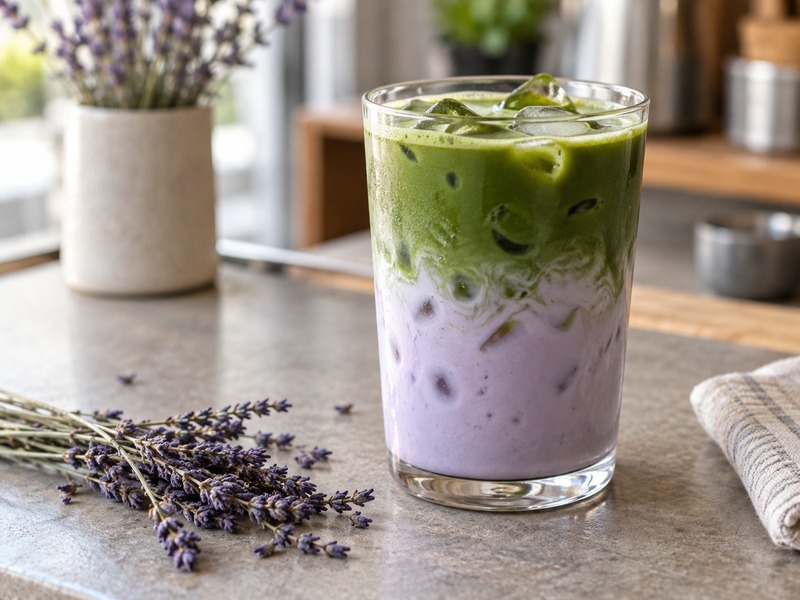
Test visual consistency. Lavender drinks often depend on pale purple and green contrast. Matcha shade can look different once it is suspended in milk and ice. Photograph accepted cups under fixed light and check how they look after the expected service wait. If the powder is poorly dispersed, dark green specks will stand out against a pale lavender milk layer. Record the mixing tool and water used for the matcha base so stores do not try to conceal poor dispersion with extra syrup or prolonged stirring.
4. How should sweetness be divided between syrup and milk?
Count all sources of sugar
The floral ingredient may already carry substantial sweetness. A sweetened milk or pre-sweetened matcha powder can push the drink beyond the intended level. Start with unsweetened matcha and the chosen milk, then adjust syrup at a fixed cup size. If a less-sweet variant is needed, changing only syrup may also remove the lavender aroma. Consider whether a separate botanical input is needed to uncouple floral intensity from sugar. This is a formulation choice, not an instruction for baristas to guess during service.
Taste through the serving route. A layered drink can deliver syrup-heavy milk first through a straw and matcha first through a sip lid. Evaluate both ways if both are offered. Check the last third after ice melt, when sweetness can become thin and lavender may linger. A good benchmark is the brand’s existing latte range: the new drink should have a clear reason to sit beside them, not merely a different colored syrup. The final recipe card should state exact volumes or masses for every sweetened component.
5. Which milk and service format should be used?
Match the texture to the floral profile
Dairy and plant milks differ in sweetness, body and aroma. Oat drinks may add cereal notes; coconut drinks can make the flavor feel tropical; dairy can give a cleaner backdrop. Test each candidate with the selected matcha and lavender input at the intended ice load. Avoid promising identical taste with every milk substitution. If a store offers alternatives, write any necessary adjusted recipe cards and review allergen handling in the actual preparation environment.
Choose cup and lid early. A drink designed for a clear dine-in glass may look dull in an opaque takeaway cup. A sip lid can flatten any foam or decorative garnish. Dried lavender sprigs may photograph well but can shed into the drink and slow service; decide whether garnish adds enough customer value to justify handling. The commercial target should state whether the product is stirred, layered or lightly marbled. Test that presentation with several staff members before approving marketing photography.
| Format | Advantage | Trial concern |
|---|---|---|
| Clear open glass | Visible green and floral layers | Dine-in only |
| Clear takeaway cup | Portable visual appeal | Lid contact and leaks |
| Opaque hot cup | Simple winter service | Appearance no longer sells flavor |
6. How should the drink be assembled during a rush?
Use measured components and a short sequence
Metolius Tea’s home recipe whisks matcha with water, places syrup in an iced glass, adds milk and finishes with matcha. A store can use that as a starting architecture while validating its own ingredients. Specify syrup dose, milk volume, ice fill and matcha base method. If a layered look matters, define the pour point and ingredient temperatures. Staff should not need to hand-build an elaborate gradient at the cost of a slow queue.
Time consecutive drinks. One successful cup made by a developer says little about a morning rush. Ask several baristas to follow the card for a series of orders. Check whether syrup pumps dispense the same amount after an opened bottle sits at the station. Watch for matcha clumps, sticky bottles and extra washing. Measure order-to-handoff time and remake rate. If the recipe repeatedly needs a correction “by eye,” translate that correction into a specification before rollout.
7. What defects should operators recognize?
Separate aroma, mixing and visual problems
An overly floral cup is a dosing or ingredient problem. A chalky green bottom is a matcha dispersion problem. A broken layer may come from density, temperature or pouring. Treat each with a targeted check. Adding more sugar can hide bitterness but does not repair clumps; adding more powder can strengthen tea while making the finish rough. Give store teams two or three concrete reject examples with photos and sensory notes.
Check after a normal wait. Floral aroma may fade or become less pleasant as the drink warms. Milk can separate slightly around ice, and green particles may collect on the lid or glass wall. Sample at handoff and after the intended takeaway interval in the actual cup. A drink that is attractive only for a photograph should not be approved for delivery. Document what remains acceptable, what can be fixed with a stir and what must be remade.
| Defect | Likely cause to inspect | Next action |
|---|---|---|
| Perfume-like aroma | Lavender dose or concentrate | Reduce floral input in trial |
| Tea disappears | Powder choice or syrup strength | Blind compare complete drinks |
| Green clumps | Powder dispersion | Mix before ice and milk |
| Purple-green muddle | Pour order and density | Test ingredient temperatures |
8. What supplier information should the buyer collect?
Make the floral claim traceable
For matcha, request the specification, lot-linked analysis and traceability records required by the buying program. For lavender syrup or concentrate, collect ingredient and allergen statements, botanical source where relevant, concentration or use guidance, pack size and shelf-life information. Milk suppliers need to support the menu’s ingredient and allergen statements. Have a qualified regulatory reviewer examine any “natural,” botanical or wellness wording before it goes on a menu or pack. A pleasant aroma is not evidence of a health effect.
Define substitutions. A new lavender syrup may have different strength even if it uses the same flavor name. A new matcha lot can alter color and tea impact. Require a finished-cup check after any meaningful change. Keep an approved sample or written reference under controlled conditions. If stores run out of one ingredient, the procurement team should either approve a tested substitute or pause the item. A quick untested swap may create the very soapy flavor that a customer remembers.
| Supplier item | Evidence | Finished-drink question |
|---|---|---|
| Matcha | Lot and sensory data | Does tea remain clear? |
| Lavender input | Ingredient and dose data | Is floral strength controlled? |
| Milk | Ingredient and allergen data | Does the texture still work? |
| Cup and lid | Pack specification | Does the presentation survive? |
9. What should the café count in its price?
Include syrup yield and service time
Cost the drink from measured matcha grams, syrup dose, milk, ice, cup and lid. Add syrup lost in pump priming or at end of bottle and matcha lost in a mixing vessel. During a store trial, note cups remade because the floral dose was wrong or the visual layer failed. If a garnish is used, include its purchase, storage, prep and waste. The most expensive component may not be the one causing margin loss.
Compare with adjacent menu items. A floral matcha latte may command a premium for distinctive flavor and appearance, but the brand should validate that through its own selling context. Set one practical cup size before multiplying choices. Larger sizes need their own flavor balance, not just more milk and ice. A recipe that is profitable only with a perfect syrup yield or unusually fast expert barista should be revised before chain-wide purchase commitments.
10. How should a limited rollout be approved?
Test flavor, lot change and real service
Begin with two matcha candidates and a few measured lavender doses in the chosen milk. Blind-taste full cups, then shortlist one combination for a timed barista trial. Evaluate first sip, last third, visual appearance and quality after the expected wait. Test the takeaway cup if that channel matters. Record lot numbers and all component measures. A second syrup or matcha lot trial can show whether the menu remains repeatable when procurement replenishes it.
Release a usable card. The final standard should state ingredient weights, mixing order, accepted aroma, presentation, pack, safe-handling controls and reject criteria. Give staff an approved photo and a soapy over-dose example. If the trial fails, change the lavender input or dose first rather than increasing sugar and tea together. Make the first purchase for a controlled store pilot; expand after ordinary staff can reproduce the flavor without the developer beside them.
Reference
Metolius Tea, “Iced Lavender Matcha Latte” describes a home latte with matcha, lavender syrup, milk and ice. The commercial checks above are proposed development steps, not outcomes claimed by that recipe.
FAQ
Q1: Can lavender matcha be made without dairy?
Yes. Test the complete formula with each plant milk and review allergen and menu claims.
Q2: Why does the drink taste soapy?
Check the lavender ingredient and measured dose before changing the matcha.
Q3: Should the lavender be in syrup or tea?
Either can work; compare dose control, sweetness, label and service speed.
Q4: Does garnish improve the drink?
Only if it adds value without slowing service, shedding into the cup or complicating handling.
Q5: What must be retested after a supplier change?
At minimum, full-cup aroma, flavor, color, dispersion and the intended service presentation.