
Good hojicha powder can arrive with a clear roasted aroma and become dull after weeks near a steamy espresso machine. Storage begins at packing and continues through freight, warehouse, and daily service. The practical question is how to store hojicha powder so the product used in the last cup still matches the approved sample. This guide gives operational checks for each handoff. It does not set a universal shelf life; that requires a separate study for the exact powder and pack. Storage instructions should follow the supplier’s current specification and the buyer’s food-safety procedures.
Contents: risks · pack · freight · receiving · warehouse · opening · station · rotation · problem · standard
1. What can change during storage?
Watch aroma, moisture, and handling
Roasted tea powder is valued for aroma and clean dispersion. Exposure to air, moisture, heat, light, and strong neighboring odors can change the user’s experience. A wet scoop or poorly closed pouch can create clumps; repeated opening can weaken aroma. Not every visible change means the same thing, so staff should record it rather than improvising a fix. A damp or damaged pack should be held for quality review under the operation’s procedures.
Taste the cup, not only the jar. A powder may look acceptable while its roast has faded in milk. A simple controlled cup at receiving and during use can show whether the product still fits the menu. Use the same dose, liquid, temperature, and mixing method as the reference. Sensory checks do not replace safety testing, but they can catch quality drift before customers do. Keep separate records for product quality and safety decisions, because one cannot prove the other.
2. What should the original pack provide?
Ask for a protective, usable format
The supplier should specify the food-contact pack, closure, net weight, lot marking, and storage instructions. A pack should protect the powder during normal distribution and let the user identify the item without opening it. Choose size by expected use rate. A large bulk bag may reduce packaging cost but remain open too long in a low-volume café. Smaller sealed pouches can reduce repeated exposure, though they add materials and handling.
Test the closure in real hands. Staff should be able to open, portion, and close the pack without powder coating the seal. If the pouch is not resealable, define an approved food-grade transfer container and label it with the original lot and opening date. A private-label jar, foodservice bag, and stick pack are different storage systems; do not assume one format’s shelf-life evidence transfers to another. Keep the original specification and pack sample in the purchasing file.
| Pack feature | Practical check |
|---|---|
| Barrier | Supplier specification and trial |
| Seal | Intact after shipping |
| Lot code | Readable without opening |
| Size | Fits use rate |
| Closure | Staff can use consistently |
3. What should happen during freight?
Protect the pack from avoidable exposure
Freight can expose cartons to heat, moisture, compression, and rough handling. The supplier and buyer should agree on outer cartons, pallet protection, and the handling conditions stated in the product file. Record dispatch and arrival dates, route, and any visible damage. If a shipment crosses climate zones, do not assume a cool sampling room describes what the powder experienced. A transport trial or monitoring plan may be appropriate for a sensitive product.
Inspect before storing. Do not place a crushed or damp carton into normal stock because the inner bags look mostly intact. Follow the quality hold procedure and document photographs, lot codes, and affected quantity. A powder that has absorbed moisture may clump even if the outer package later dries. If repeated route problems occur, review palletization or carrier handling rather than blaming each lot of tea. Freight control is part of ingredient quality, not a separate logistics afterthought.
4. How should receiving staff check a delivery?
Reconcile carton, paperwork, and reference
Receiving should verify product code, lot, pack count, seals, dates, and the documents required for the destination market. Record any mismatch before the powder moves to available stock. A sample cup may be prepared according to the approved acceptance card, especially for a key flavor ingredient. Compare the new lot against the retained reference under the same method. If the cup differs, hold the lot while the supplier and quality team investigate.
Do not mix unidentified pouches. A box containing bags with unreadable lot codes creates a traceability problem even when aroma is good. Keep outer-carton labels until all inner packs are accounted for. If a distributor repacks the powder, its process must preserve a link to the original lot. Store the COA and receiving result together. A café chain can simplify this check for stores by having a central warehouse approve lots before distribution, but stores still need clear item and rotation labels.
| Receiving item | Pass evidence | Hold trigger |
|---|---|---|
| Product code | Matches order | Wrong item |
| Lot and COA | Traceable pair | Missing link |
| Seal | Intact | Damage |
| Aroma cup | Matches reference | Material drift |
5. Where should unopened packs sit?
Use a dry, clean, controlled location
Follow the supplier’s stated storage conditions and local food-storage procedures. Keep packs away from direct sun, steam, water, cleaning chemicals, and strong-smelling materials. Place them so staff can inspect cartons and rotate stock without damaging seals. A warehouse may need to monitor temperature and humidity as part of its quality system. Do not store food ingredients directly on a floor or where a spill could soak the cartons.
Walk the route. The ideal storeroom on a plan may be bypassed when a delivery is busy. Follow a carton from receiving door to shelf and then to service. Check whether it waits beside a hot kitchen, a wet sink, or an open loading bay. A written rule is useful only if the physical route supports it. If the operation has several locations, inspect one that is less convenient than the flagship store. Storage problems often appear where space is tight and staff are improvising.
6. What changes when a pack is opened?
Start an opening record
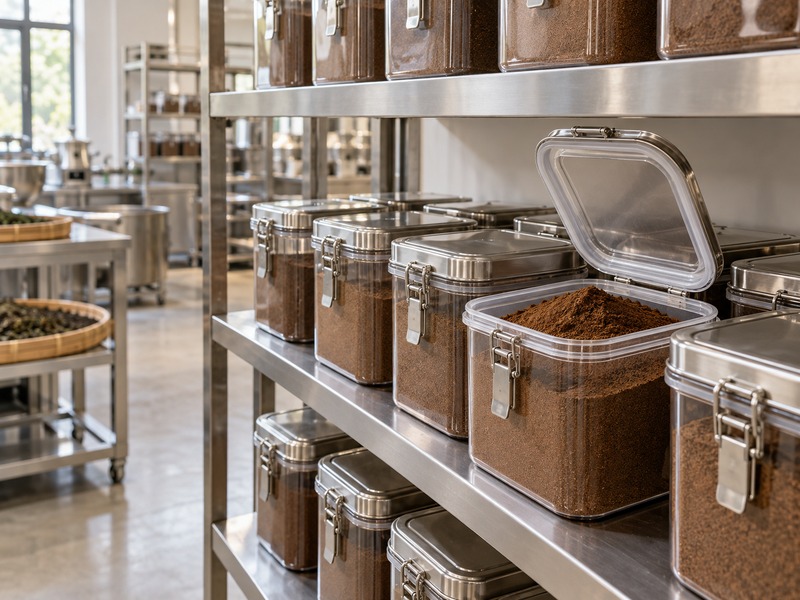
An opened pack faces repeated air and utensil exposure. Mark its opening date and follow the approved use period, closure method, and transfer rule. Use clean, dry tools designated for the ingredient. If a café transfers powder into a smaller working container, retain the lot identity and do not add new powder over old stock without the approved cleaning and changeover procedure. An unlabeled jar near a blender is an avoidable source of both quality drift and traceability loss.
Size the working stock. Keep a small amount at the station and the rest sealed in appropriate storage if the product and process allow it. Do not move the same open bulk pouch back and forth through humid service areas all day. Staff should know what to do if a scoop is wet, the lid is left open, or powder clumps. The answer is a defined quality hold or discard rule, not a quick shake and hope.
| Open-pack field | Record |
|---|---|
| Lot | Original identifier |
| Opening date | First exposure |
| Container | Approved food-grade vessel |
| Use deadline | Validated internal rule |
| Operator | Accountability |
7. How should a café station handle powder?
Keep steam and wet tools away
Espresso machines, sinks, ice wells, and dishwashers make a café humid. Place the hojicha working container where staff can reach it without setting it beside steam or splashes. Use a dry portioning spoon and close the container promptly. If staff pre-portion powder for rush hours, validate the container and time limit. Open cups of powder left on a counter may save seconds while losing aroma or inviting contamination.
Check the last order. Observe a drink made late in the shift, after the container has been opened repeatedly. Compare its aroma and dispersion with an early cup. If the late cup is weaker or gritty, check the work method before altering the formula. A smaller working pack or better station placement may solve the issue. Train a new hire on why the closure matters; “keep it dry” is less useful than showing where the scoop goes and what to do after a spill.
8. How should stock be rotated?
Use lot and date, not memory
Rotate stock according to the operation’s approved rule, such as first-expiring-first-out where appropriate. Keep manufacture, best-before, receipt, and opening dates distinguishable. A newly received carton should not bury an older approved one. If a supplier changes the date format, clarify it before stock enters stores. Track which lots went to which locations so a quality concern can be isolated rather than forcing every store to discard all powder.
Count slow inventory. A low-volume site may not use a bulk case before the approved date. Reorder quantities and pack sizes should reflect actual demand, not a favorable price tier. If the brand launches a seasonal hojicha item, plan what happens to remaining powder when the menu ends. Proper storage cannot extend an unsupported date. Build a small stock report so procurement can see material at risk before it becomes waste.
| Date | Meaning | Common mistake |
|---|---|---|
| Manufacture | Product made | Treated as receipt |
| Receipt | Buyer accepted lot | Used as shelf-life start |
| Best before | Unopened claim basis | Applied after opening |
| Opened | First exposure | Not recorded |
9. What should staff do with a questionable pack?
Hold, record, and investigate
Damaged seals, dampness, unusual odor, heavy caking, or a cup that differs from reference should trigger the quality procedure. Identify the lot and affected quantity, separate it from available stock, and record what was observed. Do not blend the suspect powder with a new lot or add extra sugar to hide a stale note. The quality team can compare the product with a retained sample and review transport, storage, and supplier records.
Look for a pattern. If only one café reports clumps, inspect its station and transfer container. If several sites report the same lot, escalate to the supplier with measured evidence. Either outcome is better than silently changing drink recipes. A complaint from a customer should link back to the powder lot and prepared-product record where possible. Clear storage records make that investigation faster and fairer to everyone involved.
10. What does a usable storage standard contain?
Write a one-page route from dock to cup
The standard should name the pack, unopened conditions, receiving check, open-pack method, working container, portioning tool, use period, lot rotation, and hold triggers. Add a reference cup recipe and an owner for deviations. Test the standard at an ordinary location with regular staff. If the store lacks the shelf space or container it requires, revise the workflow before rollout. A beautiful PDF that cannot be followed on a busy shift will not protect the tea.
Make the next order easier. Matcha Village can provide product and packing information for a proposed hojicha powder. A buyer should send its expected monthly use per location, shipping route, and service setup when discussing bag size. Choose the format that staff can actually store and finish while the roast remains consistent. Keep the shelf-life validation file separately linked to the handling rule so operations know why the dates and closure steps exist.
| Standard item | Owner |
|---|---|
| Supplier pack and conditions | Procurement |
| Receiving and lot release | Quality |
| Warehouse rotation | Operations |
| Café opening and service | Store manager |
| Deviation review | Quality |
Final recommendation
Protect each handoff. A sealed pack, traceable lot, dry working tool, and clear opened-pack rule do more for the last café cup than a vague instruction to “store carefully.”
FAQ
Q1: Can hojicha powder be kept beside an espresso machine?
Only if the station protects it from steam, heat, and splashes under the approved procedure.
Q2: Should a café move powder into a jar?
Use an approved food-grade container if needed and preserve the original lot and opening date.
Q3: Is the printed date still enough after opening?
No. Follow a separate validated opened-pack rule.
Q4: Can clumped powder be shaken and used?
Hold and assess it under the quality procedure; clumping can signal moisture exposure.
Q5: What should purchasing ask about pack size?
Match size to each site’s actual use rate, storage route, and open-pack quality window.