
“One teaspoon per cup” sounds convenient until a café changes powder, milk, cup size, or scoop. Hojicha powder varies in roast and bulk density, while a hot tea and an iced latte need different flavor strength. A dependable answer to how much hojicha powder per cup starts with grams, a defined finished volume, and tasting at the point of service. This guide gives a trial method for beverage teams. It does not promise one dose for every brand or drink; the approved number belongs to a particular powder, recipe, and cup.
Contents: cup · form · starting test · water · milk · ice · mixing · taste · cost · card
1. What does “per cup” mean in the recipe?
Fix the finished serving first
A cup can be a small ceramic tea serving, a tall iced drink, or a takeaway latte with substantial ice. Define its vessel, target finished mass or volume, water, milk, sweetener, and ice. Otherwise, a powder dose has no context. A 2 g trial in a small water drink does not predict the same taste in a large sweet oat latte. The menu team should choose the serving customers will actually receive before asking a supplier for a recommended dose.
Measure the filled cup. Staff may use a line on a pitcher, but development should weigh the components. Record liquid before and after ice or foam. A “12 oz cup” does not mean 12 oz of drink if ice occupies much of it. For a powder consumed in the cup, the tea grams are directly tied to the serving, unlike leaf tea that is brewed and filtered. Keep those two methods separate in nutrition and caffeine discussions.
2. Is the ingredient pure powder or a mix?
Read the ingredient statement
Pure hojicha powder has a different dose from a sweetened latte blend containing sugar, milk powder, or other ingredients. A supplier might recommend a scoop of its mix, but only part of that scoop is tea. Ask for the complete ingredient list and preparation method. If the café switches between pure powder and premix, it needs a new recipe card and allergen review. The same retail term “hojicha powder” is sometimes used loosely, so verify the exact item before calculating.
Keep the scale on the bench. Volume spoons pack fine powder differently and can vary between operators. Weigh a set of ordinary scoops to see the range, then choose a portioning method that fits service. A premeasured sachet can control dose but adds pack cost and waste. A small scoop may be workable after calibration, provided staff check it periodically. The point is a repeatable amount of the actual tea ingredient in every sellable cup.
| Ingredient form | Dose means | Check |
|---|---|---|
| Pure powder | Grams of tea | Roast and dispersion |
| Sweetened mix | Grams of total blend | Tea share and label |
| Leaf tea | Grams brewed, then filtered | Yield and extraction |
| Concentrate | Measured liquid | Tea mass per portion |
3. How can a first dose range be tested?
Use a small measured ladder
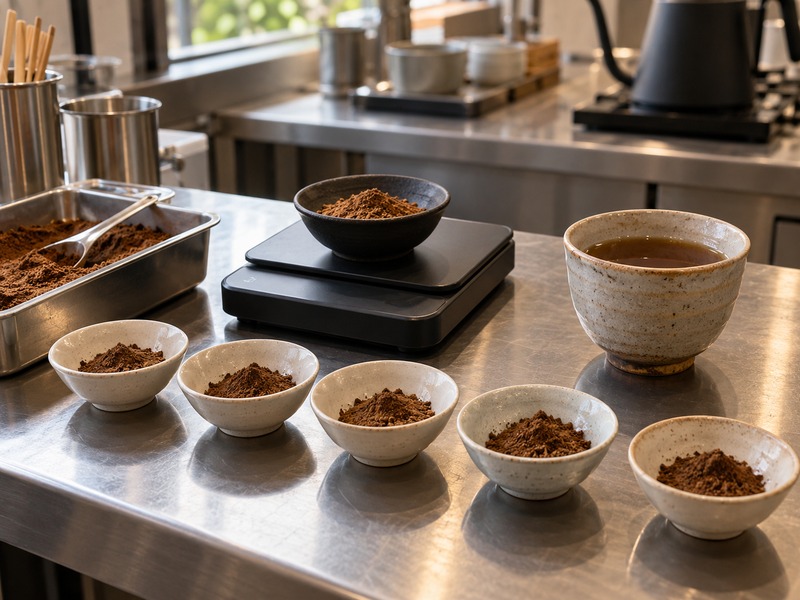
Choose one powder and one finished cup, then prepare several doses around the supplier’s suggested use level. Keep water or milk, sweetener, temperature, cup, and mixing method fixed. Label samples with codes so tasters do not see which is strongest. Ask about roasted-tea recognition, bitterness, body, and residue. If the middle trial is promising, narrow the next round around it. The numbers belong in the brand’s development file; an article cannot choose them for an unknown powder.
Reject the cup that only looks right. A darker powder can make a dramatic color while tasting ashy. A lighter one may taste cleaner at a slightly higher dose. Taste the first sip and last sip. A dose that initially seems perfect may settle into a rough bottom layer. Keep the supplier item and lot with each trial. If the powder changes, rerun the ladder rather than copying the prior gram value into a new product.
4. How does a water-only cup differ?
Let tea flavor show without milk
A plain powder drink reveals roast, bitterness, and texture directly. Prepare it at the intended temperature with measured water. A small warm dispersion step can reduce clumps if the powder needs it. Taste promptly and after the expected service delay. If the concept is a clear tea, remember that powder gives suspended particles; a filtered leaf infusion may be the better form. A customer expecting a clean transparent cup may be surprised by a cloudy powder drink.
Check the vessel. A wide ceramic bowl, paper cup, and glass can change perceived aroma and show sediment differently. Use the actual serving ware. If the drink will be chilled, run a separate trial rather than assuming the warm dose works. Tea concentration should be discussed as powder grams per finished serving, with liquid mass recorded. That lets stores reproduce the cup and procurement calculate cost.
| Water-cup variable | Fix for comparison |
|---|---|
| Powder lot | One coded sample |
| Water mass | Same scale |
| Temperature | Measured at mixing |
| Tool | Same whisk or frother |
| Delay | Same tasting interval |
5. What changes when milk is added?
Taste the tea through the chosen base
Dairy and plant milks contribute fat, protein, sweetness, and their own aroma. A powder that is clear in water may fade in a sweet milk. Hold the milk brand, volume, temperature, and sweetener fixed while testing tea dose. If the cup becomes bitter at the amount needed for tea recognition, a different roast may solve the problem better than more sugar. The final ratio should work for the actual milk sold, not a neutral test liquid.
Stir after the carry. Taste immediately and after a normal service interval. Sediment can hide below foam or ice. Compare hot and iced versions separately; their dilution and aroma are different. A café with multiple milk options may need either an approved base recipe for each or a clear substitution rule. Do not assume one tea dose makes the same cup in dairy, oat, and coconut. Train staff on the difference if it affects the menu promise.
6. How does ice affect the dose?
Measure dilution rather than guessing
An iced cup begins with powder, liquid, and ice that gradually melts. The customer’s first sip and last sip can differ substantially. Set ice mass, cup fill, liquid temperature, and mixing order for the trial. Taste at handoff and after a realistic wait. A stronger tea base may be needed, but it should remain pleasant before dilution and not leave an overconcentrated sediment layer. Measure the amount of water added by melt in a test rather than assuming every ice size behaves alike.
Use the store’s ice. A laboratory freezer can make larger or colder cubes than a café bin. Test the normal station and a busy-shift cup. If staff scoop different ice amounts, standardize the tool or fill line. A small recipe change can have more effect than a costly new powder. Keep the approved iced recipe separate from the hot one, even if both appear under one menu name.
| Iced test | Record |
|---|---|
| Powder | Grams |
| Liquid | Grams and type |
| Ice | Grams and type |
| Handoff | Taste and texture |
| Later sip | Tea clarity and dilution |
7. Does mixing method change the answer?
Use the tool staff can repeat
A blender, frother, whisk, or shaker can produce different dispersion and foam. Test the intended tool before finalizing powder dose. A well-blended high-dose cup may feel smoother than a lower-dose cup mixed poorly, which can confuse tasting results. Hold mixing time and tool constant during a dose ladder. Check whether the equipment warms the drink, introduces air, or leaves powder on its walls. Count cleaning time in service cost.
Watch ordinary staff. A developer may whisk more thoroughly than a barista during a queue. Ask several operators to prepare the chosen dose without coaching. Weigh their portions and taste the cups blind. If variation is large, simplify the recipe or change the portioning system before approving it. A precise written gram value has little value if the station cannot deliver it consistently.
8. What should a tasting panel record?
Keep questions tied to the product
Ask whether the tea is recognizable, whether the roast is clean, whether sweetness and milk are balanced, and whether the last sip is smooth. A simple scorecard with short free-text notes is enough for a small trial. Avoid asking only “Which one do you like?” because the sweetest cup may win despite hiding tea. Include the control drink without hojicha and a reference sample if the brand has one. Taste blind at the same temperature and serving delay.
Listen for the wrong words. If tasters say smoky, burnt, chalky, or watery, note when those impressions appear. They may indicate roast, dose, dispersion, or dilution problems. Change one factor at a time in the next round. A supplier can help with another roast or grind if the current powder cannot meet the target. The goal is a dose that delivers a consistent cup, not the highest concentration a customer will tolerate.
| Tasting point | Question |
|---|---|
| Aroma | Is roasted tea clear? |
| First sip | Is balance pleasant? |
| Mid-cup | Does tea persist? |
| Last sip | Is residue acceptable? |
9. What does the selected dose cost?
Calculate per sellable cup
Multiply powder grams by the actual purchase cost, then add milk, sweetener, cup, ice, labor, and normal waste. A higher-priced powder can be cheaper per cup if it works at a lower dose. A cheaper powder that needs more grams and leaves sediment may be a poor buy. Run the calculation for each cup size. If the recipe uses a concentrate made in batches, include unused concentrate at the end of its safe quality window.
Do not cost an idealized scoop. Check portions during a busy shift. Overdosing can erase margin and make the drink bitter; underdosing can disappoint customers. A calibrated scoop or sachet may cost more to implement but reduce variation. Compare that operational cost with the value of a consistent drink. Procurement should receive the approved dose and forecast volume before negotiating a wholesale pack size.
10. What belongs on the final cup card?
Write the complete recipe and change triggers
List powder item and lot, grams per cup size, water or milk, ice, sweetener, mixing tool, temperature, sequence, serving vessel, and acceptable residue. Keep separate hot and iced methods if needed. Add the sensory reference and an owner for updates. If milk, powder, cup, or equipment changes, retest before assuming the same number works. A claim about caffeine or nutrition needs separate product-specific review.
Make the next lot easy. Matcha Village can supply hojicha powder samples and discuss roast choices. Give the supplier the cup size, base, trial range, target flavor, and mixing method. When a new shipment arrives, make the approved cup beside the reference. The question “how much per cup?” then has a defensible answer for this menu and this ingredient, rather than a spoonful copied from another brand’s recipe.
| Card item | Why it stays |
|---|---|
| Tea grams | Dose control |
| Finished cup mass | Size control |
| Method | Dispersion |
| Sensory standard | Lot comparison |
| Change triggers | Prevent silent drift |
Final recommendation
Weigh a small dose ladder in the cup you sell, taste after service delay, and keep the winning method on a recipe card. Change the dose only after checking powder, milk, ice, and mixing.
FAQ
Q1: Is one teaspoon of hojicha powder a universal dose?
No. Spoon mass and cup formulation vary. Weigh the actual product.
Q2: Should a latte use more powder than plain tea?
It may need a different dose because milk changes flavor. Test both as separate recipes.
Q3: Does a darker cup always taste better?
No. Color cannot prove clean roast or smooth texture.
Q4: Can the same dose work hot and iced?
Possibly, but ice dilution requires its own trial.
Q5: When should the dose be retested?
After a change in powder, roast, milk, cup size, ice, or mixing equipment.